Get Full Government Meeting Transcripts, Videos, & Alerts Forever!
Get email alerts on the Zoning Ordinance Rewrite topic
No spam. Unsubscribe anytime.
Leesburg launches zoning ordinance rewrite and online review platform; draft text targeted for Feb. 20
Summary
Town staff presented the work plan for a comprehensive zoning ordinance rewrite tied to Legacy Leesburg and the recently adopted Crescent District Master Plan. Staff plans to release draft text on Feb. 20 through an online ENCODE Plus platform and to seek a commission public hearing in August 2025.
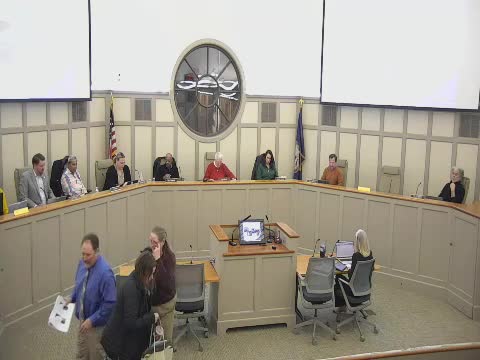
Director David (planning director) told the Planning Commission that staff will “kick off our zoning ordinance rewrite” and outlined a six-to-eight-month work plan intended to align zoning regulations with the 2022 Legacy Leesburg town plan and the newly adopted Crescent District Master Plan.
David said the consultant and staff will deliver a new, consolidated ordinance (reduced from 18 articles to 9 articles in staff presentation) and that the first full draft of the new text is targeted for release on Feb. 20. He emphasized a 60-day public comment period and three rounds of community outreach, including focused stakeholder workshops. David described March–August work sessions for commissioners to review the draft “article by article,” with a target for a planning commission public hearing in August and town-council consideration in fall 2025.
Staff previewed an online review tool (ENCODE Plus) that will host the new text, the existing ordinance, the Legacy Leesburg plan, the Design and Construction Standards Manual (DCSM), and the Subdivision and Land Development Regulations (SLDR). David and staff demonstrated that the platform will allow keyword search, hover-tooltips for definitions, an archival versioning feature, and a comment function tied to specific code sections. Commissioners were shown sample navigation of the existing ordinance in the system and told the new ordinance will be available in a clean form at release; tracked-change legislative drafts can be supplied on request. David asked commissioners to use the platform for comments and said staff will compile and circulate comment reports.
Key inputs to the rewrite cited by staff include the 2022 Legacy Leesburg town plan, the Crescent District Master Plan, a consultant code audit previously delivered to the town, and adopted capital-intensity factors. Staff said they will propose renaming and consolidating some zoning districts to better reflect the town plan’s character areas and indicated an intent to reduce reliance on planned-development overlay districts (PEC/PRN/PRC) by aligning base districts with plan policy; legacy planned-development districts will be retained in an appendix.
David noted that focus areas include uses (article 3), development standards (article 4), zoning districts and dimensional standards (article 2), and review and decision-making procedures (article 6). He recommended commissioners consider forming subgroups for detailed review of the larger articles but left the decision to the commission. Staff said they will provide cover memos highlighting the most significant changes for each work session so commissioners can focus on the intended policy shifts rather than wading through tracked redlines.
The system demonstration included searchable definitions, a map interface (parcel-level zoning query), and an archival tool to view prior adopted code versions. Staff said exported PDFs and printed packets will be made available for commissioners who prefer offline review; staff also agreed to produce an Excel extract of public comments for commission use. Questions raised by commissioners included how state code references and “shall/shall not” language will be flagged and whether the online tool allows tagging other users; staff said they are investigating hyperlinking to specific state-code references and clarified the platform’s current comment-notification behavior.
Ending: Staff asked commissioners to review materials and to submit questions or comments through the ENCODE Plus system or by email so staff could respond before the Feb. 6 meeting. The commission scheduled article 1 and 2 review for March 6 and agreed to consider workload and possible subgrouping ahead of that session.