Get Full Government Meeting Transcripts, Videos, & Alerts Forever!
Get email alerts on the Capital Improvements Plan topic
No spam. Unsubscribe anytime.
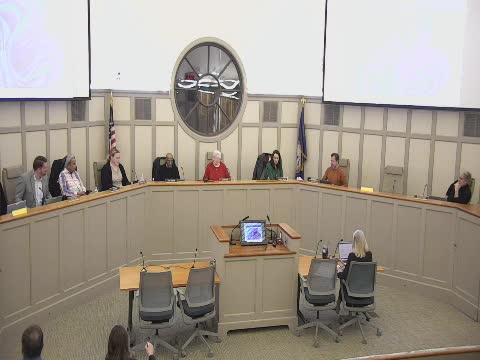
Leesburg planning commission reviews proposed 2026–2031 capital improvements plan
Summary
Town staff presented a draft 2026–2031 Capital Improvements Plan proposing 92 projects, with streets and highways accounting for about half of the plan. Staff asked the commission to review the draft for consistency with the town plan ahead of a public meeting on Feb. 6 and a likely commission vote that night.
Doug Wagner, the assistant director of capital projects for the Town of Leesburg, briefed the planning commission on the proposed 2026–2031 Capital Improvements Plan (CIP), saying, “This year's CIP, we currently propose 92 projects.”
Wagner described the CIP threshold and composition, telling commissioners that the town defines a capital improvement as “any construction, renovation or demolition or acquisition of assets property more than $60,000 with a useful life of more than 5 years.” He said roughly 54% of the current plan’s budget is allocated to streets and highways, followed by utilities, general government, parks, the airport and drainage. He listed 13 projects added this year, including electrical vehicle charging installations at several locations, a town-hall roof replacement, Ida Lee Park tennis-court and fence rehabilitation, a milling-and-paving program, the Lee Avenue sidewalk “missing link” near White Oak, Liberty Lot resurfacing and safety improvements, Battlefield Parkway safety projects, townwide bridge maintenance and drainage work intended to help the town meet its 2028 TMDL goals.
Wagner identified completed items from 2025 — East Market Street Battlefield interchange and apron paving at the airport — and utility projects completed in 2025, including enhanced multi-barrier treatment technology at the water pollution control facility, dry-drum replacement, and water-tank recoating and rehabilitation. He said the Town Branch stream restoration project, previously in the plan, was removed after strong opposition from adjacent residents and council action; the removal led staff to add alternative drainage projects to maintain progress toward the town’s 2028 TMDL objectives.
On scheduling and funding, Wagner said some projects have full funding and are under construction or in land acquisition (he cited Evergreen Mills Road as fully funded). Other large projects lack full funding. He described one interchange project — the Edwards Ferry/Fort Evans bypass interchange — as on hold while the town seeks funding, noting it is a multi-hundred-million-dollar effort. Wagner also said project schedules have shifted because of staffing, grant timing and material lead times — for example, some components such as traffic-signal poles can take six to eight months to procure. He told the commission the CIP group has eight staff members and that a “junior construction manager” would start soon.
Wagner outlined the timetable for review: a public meeting on Feb. 6, a Planning Commission recommendation to the town council (staff requested the commission be prepared to vote on the draft at the Feb. 6 meeting if possible), a town-manager presentation to council on Feb. 11, a council public hearing on March 11 and adoption tied to the 2026 budget process (staff’s proposed adoption date: March 25). He asked commissioners to review the draft for consistency with the Legacy Leesburg town plan and the incorporated transportation improvement plans.
Commissioners pressed staff on priorities and the likelihood of cuts during the budget process. Wagner said projects already in land acquisition or construction have secured funding and will proceed, while projects in design may rely on anticipated grants such as the SMART SCALE program. Council member Steinberg, who has been involved in Liberty Lot discussions, told the commission that the performing-arts center conversation is “at best… permanently on hold” and that remediation and structured-parking costs could approach tens of millions; he said council nonetheless favored resurfacing and safety upgrades to the existing Liberty Lot as an interim step.
Several commissioners requested additional detail before the Feb. 6 meeting, including funding breakdowns, updated schedules, project prioritization if funding tightens, and the location-level parks and recreation project list (Wagner identified Ida Lee Park as a focus with parking-island refurbishment, playground upgrades and continued work on pickleball facilities). Wagner said staff would provide additional data and encouraged commissioners to submit questions ahead of Feb. 6 so staff could respond before the public meeting.
Ending: Wagner closed by repeating the request for commission review and by noting the town’s tight schedule for the CIP work cycle. He invited commissioners to bring questions to staff before Feb. 6 and reminded the commission that their recommendations will be forwarded to council after the public meeting.