Get Full Government Meeting Transcripts, Videos, & Alerts Forever!
Get email alerts on the Homelessness Shelter Capacity topic
No spam. Unsubscribe anytime.
Richmond council committee hears urgent calls for more shelter capacity as EBT thefts worsen
Summary
Richmond’s EHS committee heard public pleas and a staff update on shelter capacity, coordinated entry and a recent spike in EBT thefts. Officials said the city provides roughly half of local shelter beds, described limits on staffing and space, and promised a stakeholder meeting and follow-ups on emergency options.
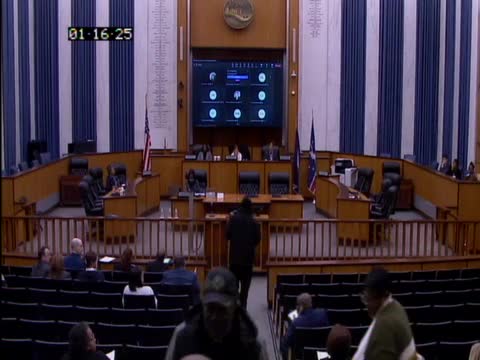
The Richmond City Council’s Emergency & Human Services Committee on Thursday heard sustained public criticism over shelter closures and hunger alongside a briefing from city staff on shelter capacity, coordinated entry and a recent spike in electronic benefits (EBT) thefts.
Advocates, service providers and residents told the committee that existing shelter and outreach systems are not meeting urgent needs. “It is really not making any sense to me,” said Leron Gibson, who identified himself as unhoused during public comment. “You have 1 shelter, Salvation Army Shelter, 60 beds for men, 40 for women, yet we cook and feed 3–400 people a day.” Gibson added: “$3,000,000 for a pet shelter. $0,000,000 for people. How does that make sense?”
The committee’s deputy chief administrative officer for human services, Tracy DeShazer, acknowledged the depth of the problem and said city staff heard the public’s concerns: “We wholeheartedly agree with absolutely everything that’s been said today,” she told the committee, adding that the city is both operating shelters and working on longer-term housing solutions.
Why it matters: Committee members and stakeholders said the city must urgently balance life‑saving short‑term shelter capacity for extreme weather with investment in permanent, deeply affordable housing that reduces chronic homelessness. Several speakers described people sleeping outdoors during a recent cold snap and asked the city to expand walk‑up access points and emergency overflow capacity.
What city staff told the committee
Tiffany Ford, director of the newly formed Department of Neighborhood and Community Services, said the city recently ran two overflow shelters, serving “between 45 to 50 at the 900 East Marshall location” and an average of about 10 at a south‑side site that had capacity for 21. Ford said everyone at those sites received three meals a day and a cot, but added that staffing the sites at the intensity needed was “hard” and that volunteers are not a sustainable long‑term solution.
Steve Harms, senior policy advisor to the chief administrative officer, said the city has expanded capacity in recent months but remains short of demand. “We have added 100 beds of year‑round shelter capacity. Now we have over 300 beds operating year round throughout the city,” Harms said, describing a mix of year‑round and inclement‑weather surge beds. Harms said the Salvation Army site started as an inclement‑weather shelter and now provides both year‑round and surge capacity, and that the city also leased a former hostel building to bring a year‑round family shelter online with operator Home Again.
Staff repeatedly described three constraints providers face: suitable space with favorable zoning, experienced staff, and funding to sustain operations. Those limits shaped why some providers prefer year‑round, full‑service shelters for prioritized clients over short‑term “inclement weather” only models, staff said; but staff and advocates also said walk‑up access points are needed so people do not rely solely on a call line.
Advocates and providers urged a faster, more coordinated response. Beth Van Turnbull, executive director of Housing Families First, said her nonprofit spends nearly $1 million a year helping families move to permanent housing and estimated an average cost of about $4,000 to move a family into housing through her programs. Francis Marie Pew, director of coordinated funding for Homeward, emphasized that “safe and affordable housing solves homelessness” and urged continued investment in proven, monitored programs.
Coordinated entry and a planned stakeholder meeting
Committee members and staff discussed limits of the regional coordinated entry system (Greater Richmond Continuum of Care, GRCOC) as a single phone intake point. DeShazer said the city does not operate the regional homeless connection line but participates in the continuum and asked GRCOC representatives to brief the committee in a future meeting. Council chair and committee members asked administration staff to convene a broader stakeholder meeting in the next two to three weeks to pursue immediate site options, updates to the city’s RFI for faith‑based or community spaces, and other short‑term mobilization.
EBT thefts and emergency food responses
Committee members and staff also described a recent spike in EBT (SNAP) benefit thefts. DeShazer said the city treats these incidents as theft, not beneficiary fraud, and attributed the program administration to the US Department of Agriculture and the state. “Since December 21st,” she said, “our Richmond Department of Social Services has received 151 claims,” an increase that city staff described as a rapid spike requiring emergency food distribution while investigations proceed and federal reimbursement for theft claims remains unavailable.
To address immediate food needs, staff said the city has ramped partner distributions with FeedMore and other food banks, and social services has used pantry and partner networks to supplement meals. DeShazer said the federal reimbursement program that helped replace stolen benefits ended Dec. 21 and is not currently funded, leaving local jurisdictions to pursue temporary assistance or philanthropic supports.
What the committee plans next
Committee members asked staff to (1) schedule a public, stakeholder convening in the next two to three weeks to identify immediate site options and faith‑based partners; (2) re‑issue or publicize an RFI for potential community or faith‑based shelter sites and operators; and (3) invite representatives from the GRCOC and the Commonwealth’s attorney’s office to brief the group on coordinated entry, prioritization and investigation/prosecution of benefit thefts. Members also raised interest in pilot ideas — including locally controlled housing subsidies and hospital partnerships used in other jurisdictions — to expand long‑term options.
Speakers and source notes
Speakers at public comment included unhoused residents, advocates and providers who identified themselves on the record: Leron Gibson; Tracy Hartney Scott (housing chair, Virginia State Conference NAACP, Richmond branch); Charles Willis (NAACP advocate); Omar El Kadafi (community organizer, Legal Aid Justice Center); Nancy Williams (3 Gifts to You); Beth Van Turnbull (executive director, Housing Families First); Francis Marie Pew (director of coordinated funding, Homeward); Choice Eric East (CoC referral and lived experience coordinator, Homeward); and Pastor Daniel Holmes (Operation Thunder at Mount Gilead Full Gospel International Ministries). City staff who briefed the committee included Deputy CAO Tracy DeShazer; Tiffany Ford, director of the Department of Neighborhood and Community Services; and Steve Harms, senior policy advisor to the chief administrative officer.
Ending: The committee closed public comment and directed staff to return with concrete next steps — a stakeholder meeting, a refreshed RFI for potential shelter operators/locations, and briefings from GRCOC and prosecuting authorities on EBT theft investigations. Council members said the city must move rapidly on short‑term shelter access while continuing to invest in the longer‑term supply of deeply affordable housing.