Get Full Government Meeting Transcripts, Videos, & Alerts Forever!
Get email alerts on the Prior Authorization And Licensure topic
No spam. Unsubscribe anytime.
Committee hears competing views on bill to require in‑state licensure for reviewers who decide prior authorizations and appeals
Summary
Representative Brandon Brown introduced House Bill 76 to require clinicians who make prior-authorization or external-review determinations affecting Wyoming patients to hold Wyoming licenses, saying the change would give patients local recourse.
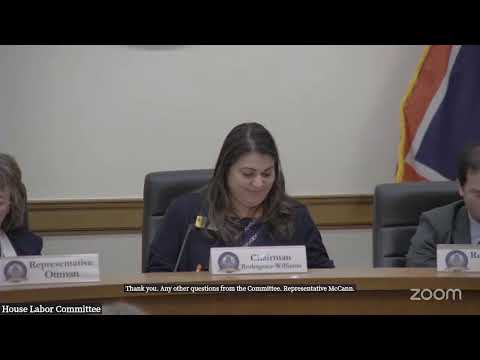
CHEYENNE — Lawmakers heard extensive testimony on House Bill 76, a bill from Representative Brandon Brown that would require clinicians making prior-authorization determinations or reviewing appeals for Wyoming patients to hold a Wyoming license.
Representative Brown framed the measure as a consumer-protection bill prompted by constituent cases in which out-of-state clinicians denied approvals and left Wyoming patients with limited local recourse. “Patients in Wyoming are being denied by doctors in other states,” Brown said, urging the committee to forward the bill and allow stakeholders to refine its language.
Why it matters: The bill seeks to give Wyoming patients greater ability to file complaints or seek discipline against clinicians who make decisions that affect Wyoming patients. Proponents described scenarios in which an out‑of‑state reviewer denied a preauthorization and the in‑state patient experienced harm or financial consequences.
What state officials told the committee
- The Commissioner of Insurance (identified in testimony as “Jeffrey,” Commissioner of Insurance) explained the state’s appeals framework and independent review organization (IRO) process. He said registered IROs handling external appeals are typically nationwide organizations and told the committee many IROs have declined to commit to ensuring that reviewers are also licensed in Wyoming because the state’s small population makes that request impractical. He warned requiring Wyoming licensure could make it difficult to find specialists to perform independent reviews and could reduce consumers’ access to external appeals.
- Kevin Bohnenblust, Executive Director, State Board of Medicine, told the committee that the Wyoming Medical Practice Act already treats certain determinations that affect an individual patient as the practice of medicine in Wyoming and said physicians making decisions that affect Wyoming patients should be licensed in Wyoming. He said the board can investigate and enforce against physicians licensed in Wyoming and offered to work with the sponsor on narrower drafting or alternative oversight mechanisms that provide investigatory access without unintended consequences.
Stakeholder and public testimony
- Insurers (Blue Cross Blue Shield of Wyoming, Cigna and others) and insurance-industry representatives argued the bill would impede access to specialists for external review, increase administrative costs and risk unintended consequences. They urged an interim process to consider revisions.
- The Wyoming Hospital Association and hospital leaders said hospitals have existing transparency tools and compliance activity; they cautioned against duplicative or premature state mandates.
- Public commenters and a retired state health-plan official warned that requiring in‑state licensure for IRO reviewers could reduce the pool of available specialists for appeals and make some external-review services impractical in a low-population state.
Panel takeaways and next steps
Board and agency officials offered to work with the sponsor to refine language. The Board of Medicine said the Medical Practice Act currently provides investigative authority in many cases; the Commissioner of Insurance cautioned that registered IROs may not be able to comply with a Wyoming-licensure requirement.
The committee did not take a final vote on House Bill 76 during the session. Representative Brown said he was open to compromise and to working with interested parties to craft language that addresses constituent concerns while addressing access constraints.
Ending
Public comment and stakeholder testimony concluded without a committee motion; the bill remains pending and the sponsor and agencies indicated willingness to pursue drafting options in the interim.