Get Full Government Meeting Transcripts, Videos, & Alerts Forever!
Get email alerts on the Enhanced Infrastructure Financing District Eifd topic
No spam. Unsubscribe anytime.
Santa Rosa PFA reviews state changes to EIFD process, sets draft and hearing timeline
Summary
City staff outlined 2024 state law changes that compress the enhanced infrastructure financing district (EIFD) process, explained new 40‑day noticing and protest rules, and proposed a schedule for releasing the draft infrastructure financing plan and holding required hearings.
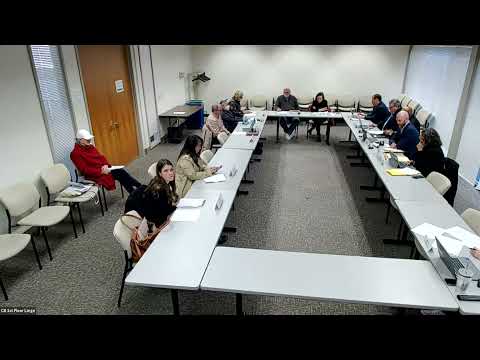
Santa Rosa City Public Financing Authority members on Tuesday reviewed recent state law changes that shorten the formation process for an enhanced infrastructure financing district and discussed a proposed timeline for releasing the draft infrastructure financing plan and holding the required public hearings.
Gabe Osborne, director of the Planning and Economic Development Department, told the authority that “we did have some state changes that came into play towards the end of last year that affect the processing of EIFDs.” He said those changes, consolidated in legislation discussed as Senate Bill 1140, compress the previously four‑meeting structure used to introduce and adopt an infrastructure financing plan (IFP).
Why it matters: the changes affect how the city will notice and run hearings, how and when taxing entities (the county board of supervisors and the city council) will consider the IFP, and the schedule that determines which tax year serves as the base for tax‑increment revenues. Staff emphasized that missing the cycle tied to the county’s equalized tax roll could delay capturing incremental tax revenue for one year.
Osborne summarized two key procedural changes. First, the new law allows a 40‑day advanced notice that can act as the single notice for the introduction meeting and the two required public hearings if date, time and location remain unchanged. “What the state added is really a 40 day prior to publishing the IFP noticing allowance, and that acts as the noticing for all future meetings,” Osborne said. Second, the law compresses and clarifies when the PFA may receive written comments, oral comments, and formal written or oral protests during the hearing where the PFA considers adoption.
Staff described how protests are counted and what they trigger. If written or oral protests representing more than 50% of the cumulative number of landlords and residents in the district are received, the formation is terminated. If protests are fewer than 25%, staff said the process moves forward. Protests in the 25–50% range trigger a balloting procedure or election; if that election results in a majority protest, formation is terminated and the PFA cannot reintroduce an IFP for 12 months.
DeWolfe, the staff lead on timeline, presented proposed dates and internal deadlines. Staff’s target schedule discussed in the meeting was: finalize the draft IFP and be ready to post and mail notices by approximately February 6; hold the IFP introduction meeting in March (staff proposed March 20, 2025, at 9 a.m.); hold the first public hearing April 24, 2025; and hold the second public hearing June 26, 2025. Staff noted that the effective date for an adopted IFP would be 31 days after adoption and that under the tax roll schedule the city is trying to align the IFP adoption so the last equalized roll (typically in August) establishes the base year for increment calculations.
Board members asked procedural and outreach questions. Vice Chair Futrell asked whether the 40‑day notice to property owners and residents also covers subsequent hearings; Osborne confirmed the single 40‑day notice would meet the state requirement for all hearings provided dates do not change. Futrell also asked whether protests are counted for property owners and residents; staff confirmed the protests are the cumulative count of those groups.
Staff also said notices will include a summary stating that the IFP and EIFD formation do not increase individual property tax rates, will explain how to submit written and oral comments, and will include translation where state‑code thresholds require it. “We are prepared to translate in Spanish,” Osborne said when asked about non‑English language notices.
Board discussion covered how and when the PFA can modify the plan. Staff said the introduction meeting is a non‑binding discussion where the PFA may suggest changes; the first public hearing is where the PFA may take formal action to modify or reject the IFP. The second public hearing is the meeting at which the PFA votes to adopt or reject the final IFP and the EIFD formation, subject to the protest rules described above.
Staff and members noted schedule flexibility but warned that changing dates after issuing the 40‑day notice requires additional 10‑day re‑noticing. The board agreed to hold the introduction meeting on March 20 (morning), use April 24 and June 26 as placeholder hearing dates, and directed staff to post the draft IFP and begin the noticing and mailing process. Staff said hard copies of the draft IFP would be made available on request and that the city will create dedicated email channels and an EIFD web page with FAQs to help residents follow the process.
The meeting closed with staff directed to publish the draft IFP and notice the hearings; the PFA will revisit the schedule or add meetings if substantive policy questions require further discussion.