Get Full Government Meeting Transcripts, Videos, & Alerts Forever!
Get email alerts on the Strategic Planning topic
No spam. Unsubscribe anytime.
Consultant proposes equity-focused strategic plan for School City of East Chicago
Summary
Revolutionary Ed presented a timeline and approach for a culturally responsive, equity-focused five-year strategic plan for the School City of East Chicago, proposing a process of data analysis, targeted focus groups, and board validation with adoption by June and implementation July 1.
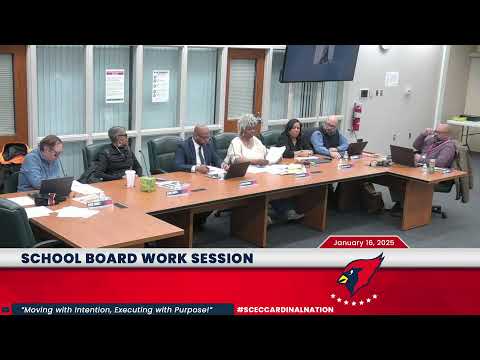
Revolutionary Ed founder and CEO Dr. Gregory Hutchings presented a proposal Thursday for a culturally responsive, equity-focused strategic plan aimed at guiding the School City of East Chicago over the next five years.
Hutchings told the School City of East Chicago Board of Trustees the firm would use district data already gathered during the superintendent’s 100-day review and the district’s leadership-profile materials to begin a comprehensive needs assessment as soon as late January and to convene focus groups starting the following month.
The proposal, Hutchings said, centers on collecting and analyzing state performance, attendance, discipline and curriculum data; holding targeted focus groups with students, staff, families and other stakeholders; developing mission, vision and core values in March; drafting areas of focus and theories of change in April; validating and refining components in May; and presenting a final plan for board adoption in June so implementation could begin July 1. He said the timeline depends on rapid start-up and that the district’s recent outreach and data from the superintendent’s 100-day work would accelerate the schedule.
Hutchings described Revolutionary Ed’s stated mission to pursue “true systemic transformational change” and its emphasis on culturally responsive practice and anti-racism. He said the firm’s core values are “vision, integrity and passion,” and that the firm would provide an implementation framework including accountability structures, key performance indicators, an action-plan template and monitoring and evaluation support designed to keep the plan from becoming a document that “sits on a shelf.”
Board members asked about the firm’s experience with districts that have large populations of non-English-speaking families. Hutchings described prior work in Alexandria, Virginia; Isaac School District in Arizona; and other districts where translators, multilingual materials and community-specific engagement strategies were used. He told trustees that translation costs are typically not built into Revolutionary Ed’s fee and that districts often provide translators or bilingual outreach staff; Trustee Taylor confirmed the district would use its bilingual family outreach coordinators and community engagement liaisons for that work.
Trustees also asked about the board’s role in the process. Hutchings recommended that one or two board members serve on the strategic-planning committee (rather than the whole board, to avoid public-meeting law conflicts), provide periodic updates to the full board and use the plan to shape annual board and superintendent priorities and evaluation measures.
Hutchings said Revolutionary Ed has completed strategic-plan work in other states but had not previously worked in Indiana; he said the firm would rely on district staff expertise about Indiana standards and rules. He offered to share a full written proposal with the board and opened the floor for follow-up questions.
No formal decision or contract award was taken at the work session. Trustees thanked Hutchings for the presentation and indicated follow-up would occur through the superintendent and future board agendas.