Get Full Government Meeting Transcripts, Videos, & Alerts Forever!
Get email alerts on the Housing Policy topic
No spam. Unsubscribe anytime.
Tulsa staff outline yearlong plan to create preapproved building program to speed infill housing
Summary
City staff and consultant J Griffin Design presented a preapproved building (PAB) program meant to accelerate middle-scale infill housing across Tulsa; staff intend a 12-month development process with a public kickoff and targeted outreach to developers, nonprofits and neighborhoods.
City housing staff and a consultant team presented a plan to develop a preapproved building program — a catalog of predesigned, prereviewed building types — intended to lower costs and speed permitting for infill housing in Tulsa.
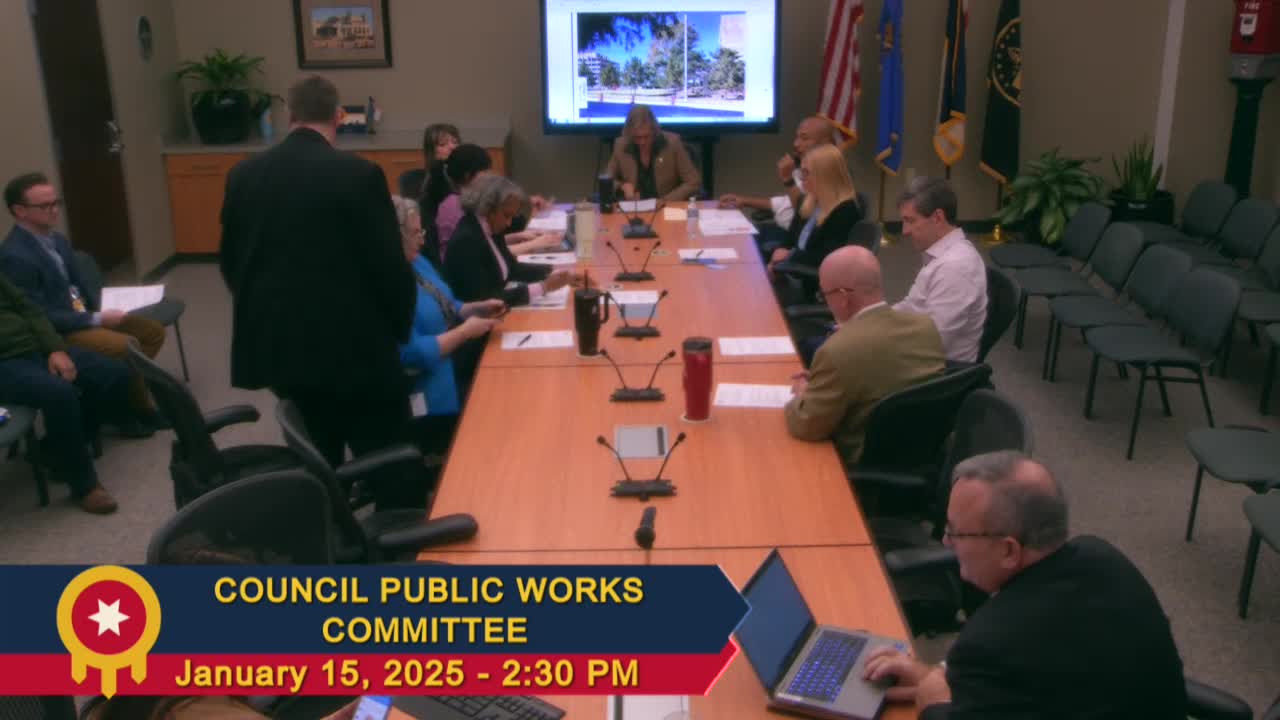
Travis Holson, housing manager for the City of Tulsa, introduced the program and said it came from the city's task force on housing, homelessness and mental health. "We will have a official launch event for this program the end of this month," Holson said, and added staff plan to bring regular implementation updates to council as the work progresses.
Jennifer Griffin, an architect and principal of J Griffin Design, described preapproved building programs (PABs) as a tool to provide a broader range of housing types — townhouses, duplexes and small multifamily — calibrated to local lot sizes and market conditions. "PABs are essentially tools that are used to help to, essentially support and incentivize better built in, outcomes in your community," Griffin said, explaining the approach they used in other cities and how preapproved plans can reduce design fees and holding costs.
Griffin outlined a development timeline and examples from South Bend and Kalamazoo, where similar programs were launched. The consultant team recommended a 12-month development process in Tulsa with community engagement and a catalog of building types designed to fit older, narrow-lot neighborhoods and other in-town areas. Examples presented from South Bend showed 18 constructed units and roughly 98 additional units in pre-construction or planning after program uptake; staff emphasized results vary by local market and may accelerate after an initial launch.
Council members asked about pricing, customization, permitting and equity. A council member cited a price figure discussed in other cities: "a $179,000 for, 2 bedroom, 2 bathroom" plan, and Griffin said price points, build quality and neighborhood targeting will be refined with local market analysis. Staff and consultants discussed options for site-specific permitting, pre-review flags in development services to accelerate permit checks, tools to support builders and nonprofits as early adopters, and complementary programs such as sewer-lateral reimbursements or targeted infrastructure investment.
Councilors urged the team to prioritize outreach to small local builders, the Home Builders Association and historically underserved communities; members asked for bilingual materials and a web-based catalog upon launch. Staff also noted accessory dwelling units (ADUs) can be included in the catalog; consultants said jurisdictions on the West Coast and other U.S. cities already use preapproved ADU plans.
Ending: Staff recommended a community-engaged, 12-month development schedule with a public kickoff; they will return with a program launch timeline, outreach plan and implementation tools to fast-track permitting for preapproved building types.