Get Full Government Meeting Transcripts, Videos, & Alerts Forever!
Get email alerts on the Mental Health Crisis Response topic
No spam. Unsubscribe anytime.
Healthy Minds briefing outlines child mental-health expansions, crisis-system growth and overdose response in Tulsa
Summary
Healthy Minds Policy Initiative presented data and local initiatives to the Urban and Economic Committee, highlighting children's urgent recovery capacity, COPES mobile response expansion, Project AWARE and local efforts to scale suicide prevention and overdose harm reduction.
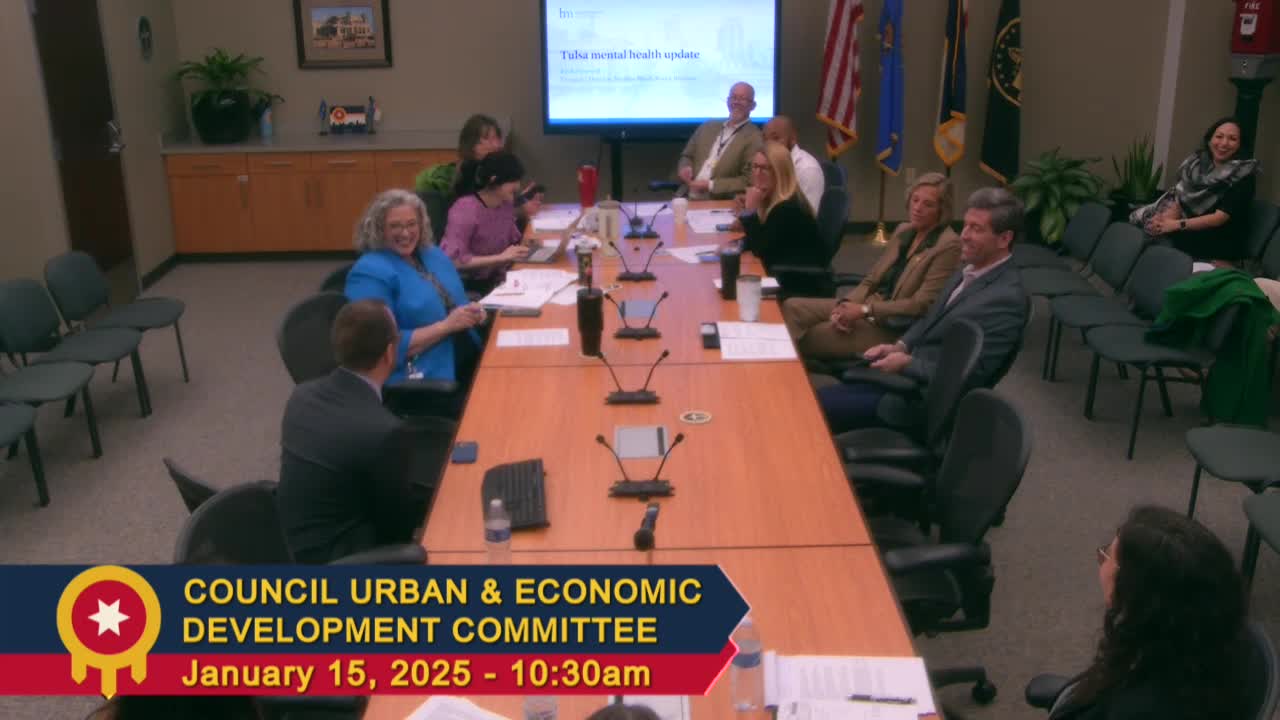
Representatives from the Healthy Minds Policy Initiative briefed the Urban and Economic Committee on the state of mental health and substance use in Tulsa, and described local initiatives to expand children's behavioral-health capacity, strengthen crisis response, and scale overdose-prevention strategies.
Presentation highlights: Jeff (Healthy Minds) opened with prevalence data for Oklahoma and Tulsa, noting that roughly one in four adults in Oklahoma experienced a mental illness in the past year and that more than half of people who experienced mental illness did not receive treatment. He emphasized three local priorities: children and youth behavioral health, crisis-system capacity and coordination, and overdose prevention strategies tied to the city's META plan.
Children's services: Healthy Minds and partners used city ARPA funding and other federal grants to establish an urgent recovery center for children operated by Counseling & Recovery Services; committee speakers said the center has diverted more than 1,000 children from hospital emergency rooms. Committee materials and presenters also discussed Project AWARE funding to Tulsa Public Schools (TPS) to expand school-based mental-health services (described in the briefing as —TPS Thrive'), and the city's role as fiscal agent for a $4 million federal children's behavioral-health award.
Crisis system and COPES: Presenters described three linked crisis-system pieces: telephone access (988 and COPES), mobile response (COPES mobile teams) and safe places to go (urgent recovery centers and crisis care centers). Committee discussion noted that COPES had greatly increased its field response since 2022 and that the city and partners had been building dispatch integration so alternative responses can be routed through 911.
Overdose and harm reduction: Healthy Minds staff said methamphetamine and illicit fentanyl mixes have driven recent increases in unintentional overdose deaths and that Tulsa is implementing overdose-prevention and harm-reduction measures at scale. Presenters noted expansions in detox and inpatient capacity and described local projects to expand harm-reduction availability across community providers.
Council engagement: Multiple councilors asked for ride-alongs, facility tours and additional data. Presenters offered to coordinate site visits with COPES, Counseling & Recovery Services, Crisis Care Center, Parkside and other partners; councilors also requested ZIP-code-level referral data and details on workforce strategies to increase clinicians and post-doctoral training slots in Oklahoma.
No formal committee action was recorded in the portion of the transcript provided; the presentation was a briefing and planning discussion.