Get Full Government Meeting Transcripts, Videos, & Alerts Forever!
Get email alerts on the Public Safety Health Social Services topic
No spam. Unsubscribe anytime.
City to use Ascension Saint John grant to fund two social-service positions for fire department's CARES program
Summary
The Urban and Economic Committee discussed a proposed budget amendment to accept an Ascension Saint John grant aimed at funding two social-service positions inside the Tulsa Fire Department's CARES program, a team that pairs case managers with first responders to reduce repeat 911 calls.
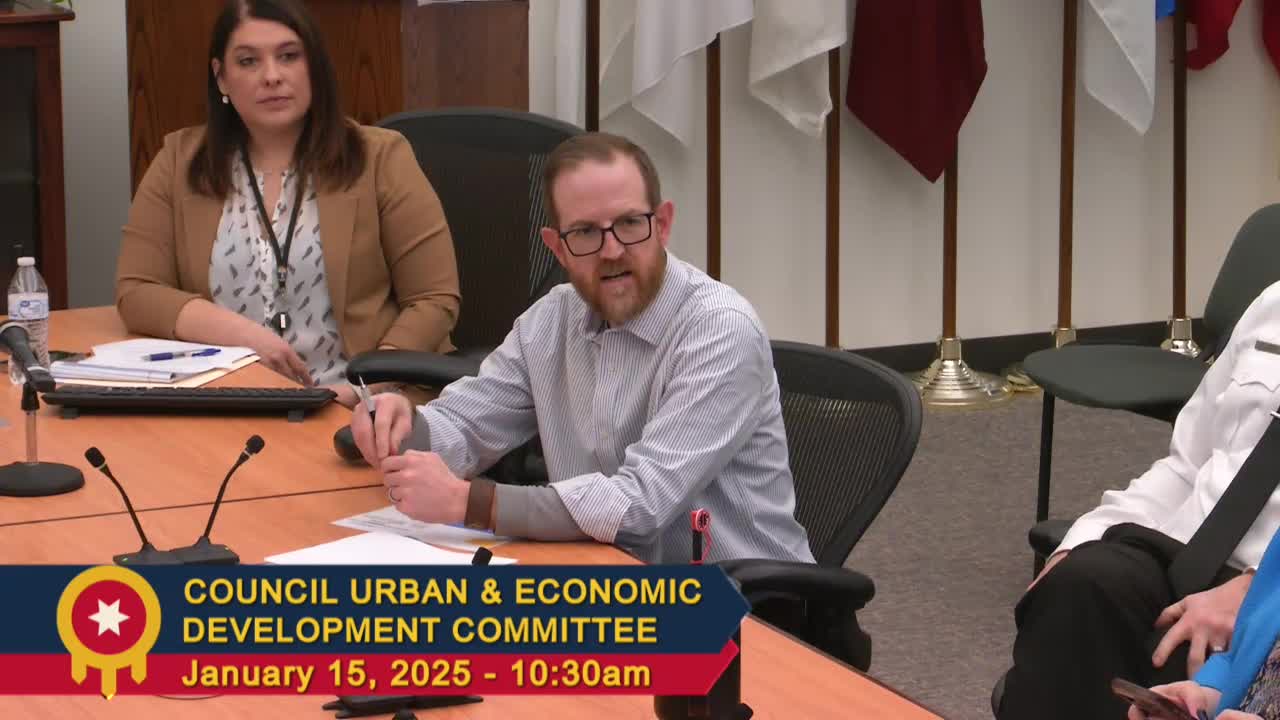
The Urban and Economic Committee discussed on Jan. 29 a proposal to accept a grant from Ascension Saint John to fund two social-service positions embedded in the Tulsa Fire Department's CARES program, which pairs case managers with first responders to address frequent 911 users.
Committee discussion and staff remarks: Committee members heard a presentation from city staff explaining that the Ascension Saint John community health equity catalyst grant would cover salaries for two positions described in committee discussion as a case coordinator and a case navigator. Committee materials and staff said the grant requires a local match of $46,000; the ordinance before the committee would transfer those match dollars from the fire department's operational budget into the grant project fund so the program could be operated on grant accounting.
Why it matters: Committee members pressed on whether the CARES program, which pairs firefighters and case managers to reduce repeat 911 use, is sustainable if it depends on annual grant renewals. Fire department speakers described measurable reductions in 911 use among enrolled clients and said the program reduced worker's-comp claims and overtime related to repeated calls. Councilors asked whether some or all program costs could be covered through Medicaid or other reimbursements and whether internal savings (fewer overtime calls or lower workers'comp costs) could be redirected to sustain positions.
Program details and outcomes discussed: Fire department staff said CARES focuses on high-utilizer referrals and social determinants of health; case managers develop and follow plans to connect people to services until the individuals' needs are met. Committee remarks cited a 74% reduction in 911 calls among enrolled clients over a 12-month period after engagement. Staff said the department currently employs two case managers for CARES and uses additional clinical and EMS staff in assessments and home safety visits.
Cost and grant mechanics: During the presentation staff described two job classifications for the funded positions: a case coordinator (described in committee discussion as the lead role) and a case navigator; salary figures discussed in committee were approximately $53,000 for the coordinator and $45,000 for the navigator. Officials said the Ascension Saint John grant covers the positions for one year and must be reapplied for annually.
Council reaction and next steps: Several councilors said the program demonstrated measurable cost savings and operational benefits for police and fire dispatch workloads, and urged staff to identify options to stabilize funding, including exploring Medicaid reimbursement and reallocating local savings. Staff offered to provide ZIP-code-level referral data and other program metrics to council members and to coordinate a deeper briefing and ride-along opportunities with CARES teams.
No formal vote outcome was recorded in the committee transcript. The ordinance language presented to the committee described the budget transfers and the required local match; final committee action and any subsequent council votes were not specified in the record reviewed here.