Get Full Government Meeting Transcripts, Videos, & Alerts Forever!
Get email alerts on the Stormwater topic
No spam. Unsubscribe anytime.
Plantation council presses for interim backflow preventers as stormwater master plan advances
Summary
City staff told the Plantation City Council they expect a draft stormwater master plan by summer and recommended interim one-way backflow valves while they work with the Turnpike Authority and South Florida Water Management District on long-term fixes to repeated flooding in Plantation Park and other neighborhoods that border the turnpike.
Plantation city staff told the City Council on Jan. 15 that a draft stormwater master plan will be presented by summer and proposed interim installations of one-way backflow valves to reduce recurring residential flooding in neighborhoods adjacent to the Florida Turnpike.
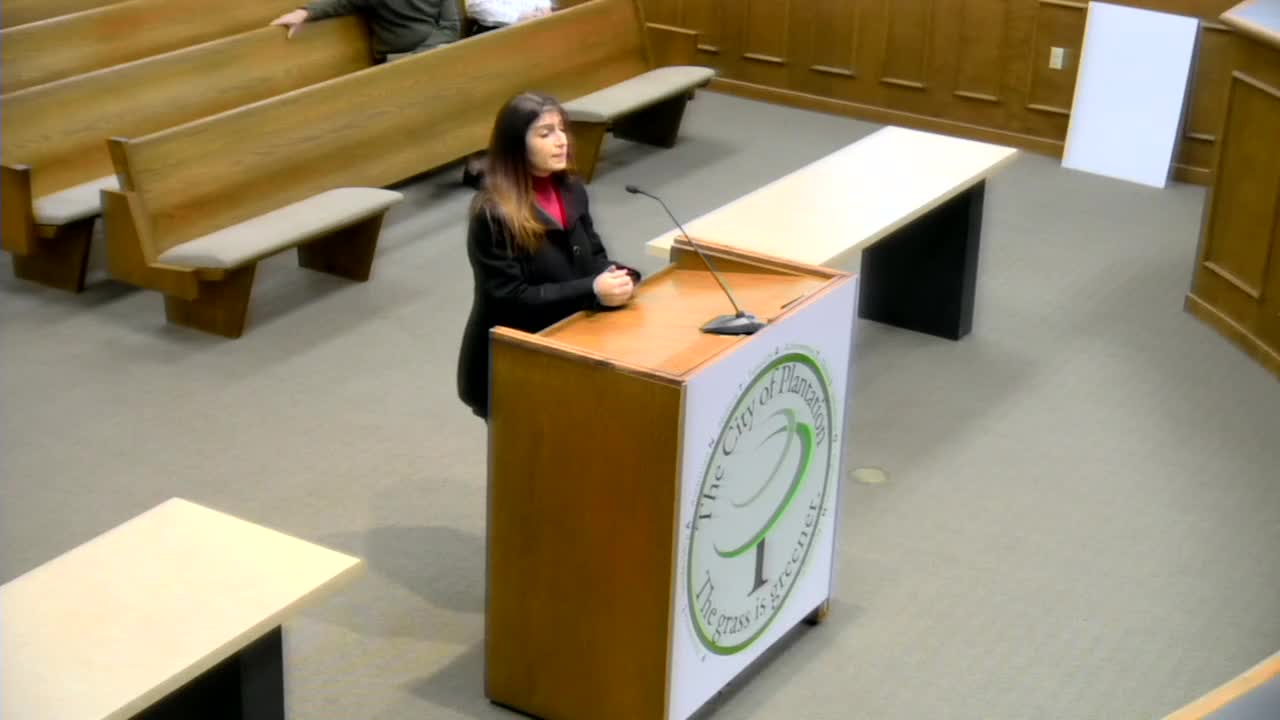
The issue drew sustained public comment and council discussion after residents from Plantation Park and Park East described standing floodwater following intense rain events and urged faster action. City Engineer Samira Shalan told the council the city is in year three of the stormwater master plan and expects to present a draft and associated capital improvement plan by summer.
Nut graf: The city said long-term solutions depend on larger regional infrastructure — notably the C-12 canal operated by the South Florida Water Management District (SFWMD) and the Turnpike Authority — but recommended an interim fix: installing one-way gate valves, often called backflow preventers, on outflow pipes to stop backwater from regional canals entering neighborhood storm systems.
Shalan described the December event that flooded parts of Plantation Park: the SFWMD C-12 canal rose rapidly after several inches of rain in less than two hours, producing flash flooding across areas tied to that system. She and the stormwater manager inspected drains and cleared leaves and debris; they said much of the remaining flooding is backwater from the canal system rather than local pipe clogging.
"Until C-12 receded, the community did not receive relief," Shalan said. She said the city is in ongoing communication with the Turnpike Authority and SFWMD about ultimate system fixes and is evaluating interim valves that would stop backflow when regional waterways are high.
Council members pressed for speed. Council President Horland and others urged administration to look for existing contracts the city can piggyback to buy valves quickly; Shalan said procuring valves could exceed the city's $35,000 informal-purchase threshold, in which case a bid would be needed and the work might take a few months. She said staff hopes to install the interim valves before the June 1 start of the rainy season.
Mayor Sordle and multiple council members noted the increasing intensity and density of rainfall in recent years and the role of the turnpike widening, which replaced open canals with piped systems in some locations. Shalan and the mayor said the problem is regional in scope and requires coordination with state agencies and the Turnpike Authority.
Residents described neighborhood impacts. Roger Borrello called flooding near his home "severe" and said Plantation Park and surrounding blocks flood even in moderate storms. Dennis Conklin and other residents described historical drain arrangements and repeated requests for city action.
City staff also described short-term operational steps: rotating inspections and clearing of drains, targeted outreach when flash flooding risk rises, and a plan to propose funding options — including a request for state appropriations — while acknowledging that state-funded projects could take months into the next fiscal year to materialize.
Ending: Council members said they want staff to pursue both regional coordination with SFWMD and the Turnpike Authority and faster local work to reduce near-term risk, including identifying a contract to procure and install backflow preventers before the next rainy season.