Get Full Government Meeting Transcripts, Videos, & Alerts Forever!
Get email alerts on the Gaza Humanitarian Ceasefire topic
No spam. Unsubscribe anytime.
UN says ceasefire offers 'opportunity' to scale aid to Gaza but warns access and security remain barriers
Summary
The United Nations urged full implementation of a newly announced ceasefire and warned that scales of humanitarian relief hinge on safe access, fuel and removal of restrictions. Agencies reported large food stocks and medical evacuation activity, while questions about UNRWA's future and replacement reports were raised.
The United Nations urged all parties to fully implement a newly announced ceasefire in Gaza and called for immediate, safe access for humanitarian relief, while stressing that the scale of aid will depend on conditions on the ground.
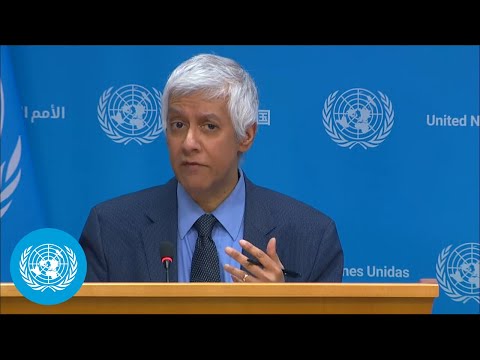
At a press briefing, the UN said the secretary-general welcomed the ceasefire and called on “all relevant parties to uphold their commitments and ensure that this deal is fully implemented.” The office emphasized that ‘‘our priority must be to ease the tremendous suffering caused by this conflict’’ and that the UN stood ready to support implementation and scale up sustained humanitarian relief.
UN humanitarian officials warned that securing access requires removing multiple impediments, including restrictions on the entry of goods, lack of fuel, breakdowns of law and order and safety risks for aid workers. Tom Fletcher, the UN under-secretary-general for humanitarian affairs, urged parties to adhere to international humanitarian law and to allow ‘‘rapid, unhindered, and safe humanitarian relief for all civilians in need,’’ language the briefing repeated from senior UN statements.
Agencies reported pre-positioned supplies and patient evacuations. The World Food Programme said it has about 80,000 tonnes of food waiting outside Gaza or en route, which the WFP described as enough to feed more than 1,000,000 people; the briefing noted that the WFP’s stockpiles are typically intended to sustain people for weeks rather than provide a single meal. The World Health Organization and partners facilitated medical evacuations of 12 patients and nearly three dozen companions to hospitals in Albania, France, Norway and Romania; most evacuated patients were described as having cancer or immunological disorders. UNRWA reported more than 1,070 health staff working in clinics and temporary medical points across Gaza and said those teams provided more than 16,000 health consultations in a single day.
UN officials said planning for delivery is ongoing and that details such as which border crossings will open remain under negotiation. Mohammed Hadi, the deputy special coordinator for the Middle East Peace Process and humanitarian coordinator for the occupied Palestinian territory, was reported to be in Cairo coordinating logistics ahead of the ceasefire. The briefing said the UN is coordinating with non-governmental organizations and partners and that implementation will depend on whether security conditions permit movement from entry points to people in need.
Reporters asked about media coverage that Israel and the United States were discussing alternatives to replace the UN Relief and Works Agency for Palestine Refugees in the Near East (UNRWA). The UN briefed that it is aware of reports but maintained that ‘‘UNRWA is unreplaceable’’ because of its scale of services, including shelters, clinics and education programs. The briefing noted that Philippe Lazzarini, UNRWA commissioner-general, would brief the UN press the following day.
UN spokespeople also said the organization intends to conduct damage and needs assessments in Gaza ‘‘as soon as it can’’ after a cessation of hostilities, to estimate reconstruction needs and funding requirements.
Ending: The UN framed the ceasefire as an opportunity to increase lifesaving assistance but made clear that the magnitude of any relief operation will depend on sustained security guarantees, fuel supplies and the removal of administrative and physical obstacles to aid delivery. Philippe Lazzarini was scheduled to address the press the next day for further detail on UNRWA operations.