Get Full Government Meeting Transcripts, Videos, & Alerts Forever!
Get email alerts on the Substance Use Prevention topic
No spam. Unsubscribe anytime.
Committee approves $200,000 in Drug Free Community grants; chair and staff outline application process
Summary
The committee approved $200,000 in public-purpose grants for Drug Free Marion County, detailed how funds are distributed across prevention, treatment/intervention and justice/law enforcement categories, and discussed declining fine revenues that reduced the fund.
The Public Safety and Criminal Justice Committee voted Jan. 15 to approve $200,000 in public-purpose grants administered by Drug Free Marion County and the Marion County Prevention Alliance.
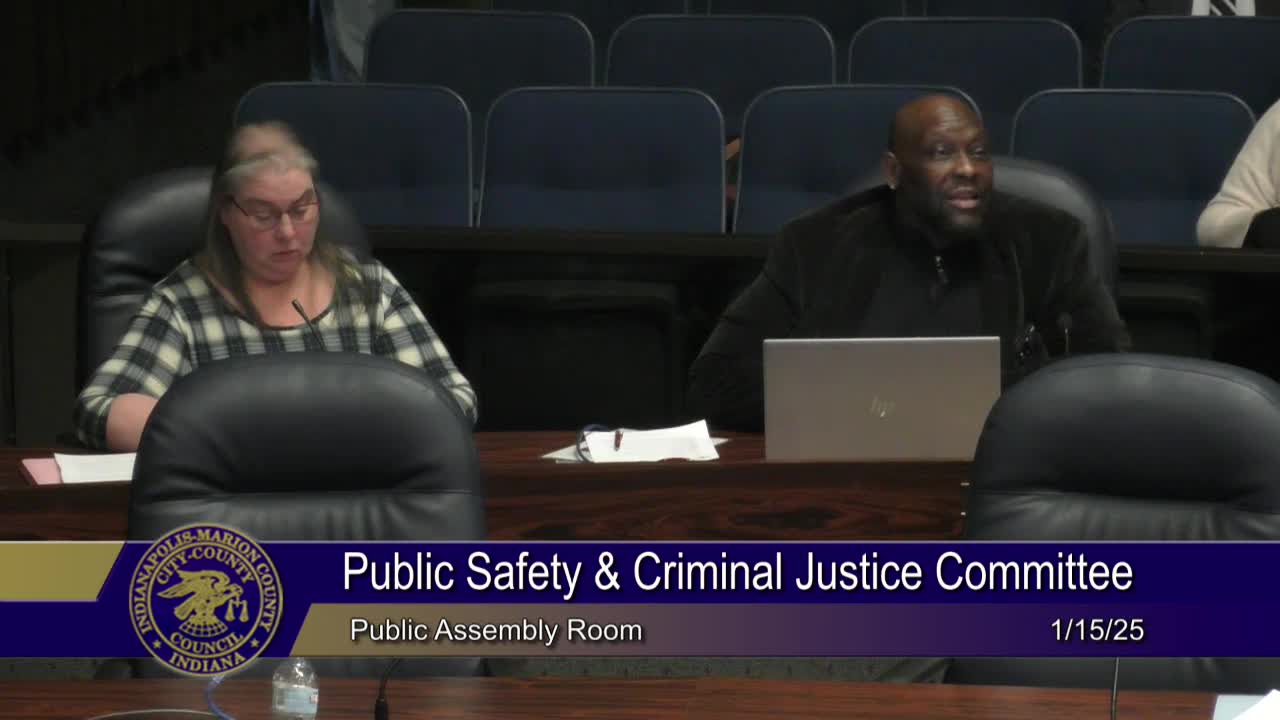
Michael Angelo McClendon, executive director of Drug Free Marion County and local coordinating council coordinator, presented the recommendations and described the grant process and eligibility. He said the coalition uses a data-driven comprehensive community plan and that grants are reviewed by volunteer committees before the agency board makes final recommendations.
McClendon and Deborah Hall, grants administrator, explained the fund's revenue decline: assessed fines that historically support the program have fallen because fewer drug cases were filed and prosecuted, which reduces the assessed fines flowing into the Drug Free Community fund.
The committee packet and McClendon's presentation broke the $200,000 into three $50,000 category allocations and other awards: prevention/education, treatment and intervention, and law enforcement/justice. McClendon described grantees recommended for funding, including Experience, Strength and Hope (an app-based outreach program), Pathway Recovery (reentry and case management), Pathway Resource Center (community-based health and anti-violence work), Ambassador of Hope (teen support groups) and LifeSmart Youth (youth mental-health first-aid training). The Marion County Prosecutor's Office received $25,625 for a felony diversion pilot and the Marion County Sheriff's Office received funding for a gun-lock and safety program.
Councilors raised questions about application outreach and reimbursement logistics. McClendon said the grants are reimbursable and that small agencies sometimes find the reimbursement model a barrier. Councilors suggested sending grant information directly to district offices and exploring additional funding sources such as opioid settlement dollars.
Councilor Josh Behn and others noted a small discrepancy between an award listed in the narrative and the total; staff confirmed the proposal as presented equaled $200,000. The committee approved the grants by voice vote without roll-call tallies.
The committee did not change the allocation structure during the meeting. Several councilors urged broader outreach to potential applicants and additional reporting on the data that guides funding priorities.
Votes on the motion were taken by voice; the motion carried.