Get Full Government Meeting Transcripts, Videos, & Alerts Forever!
Get email alerts on the Zoning Code Update topic
No spam. Unsubscribe anytime.
Waukesha Plan Commission reviews preliminary zoning code recommendations tied to city strategic plan
Summary
City staff and consultants presented a preliminary recommendations report for a broad zoning code update intended to implement Waukesha—s 2024 strategic and comprehensive plans. The presentation reviewed public engagement, code goals, and next steps for drafting district and development standards.
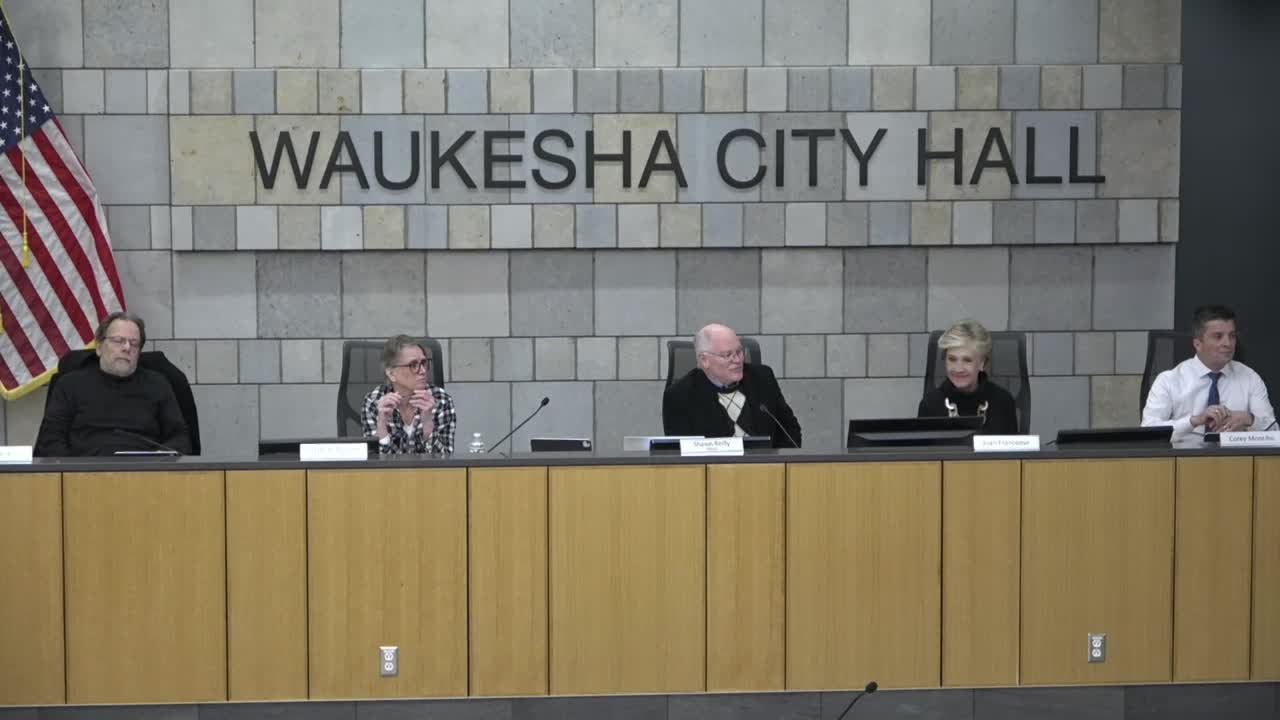
The Waukesha City Plan Commission on Jan. 15 reviewed a preliminary recommendations report designed to guide a comprehensive zoning code update that staff and consultants say will implement the city—s 2024 strategic plan and recently adopted comprehensive plan.
City planner Jennifer (staff) and consultant Carrie Papelbaum outlined the project scope, public engagement and next steps. Jennifer said the strategic plan—s emphasis on —people-centered development— informed the zoning work and that the code update is intended to provide the regulatory framework to achieve the comprehensive plan—s goals. "The city completed a 5 year strategic plan in 2024 and it's really our internal focus," Jennifer said during the presentation.
The consultants summarized engagement completed to date: an April open house with visual preference boards, 22 stakeholder interviews, and two online questionnaire rounds (November 2023 and March 2024) that produced 147 responses. The report frames the code update as aiming to simplify and modernize the ordinance, make review processes clearer and more predictable, allow a hybrid of code approaches, and provide objective design and development standards.
Key themes the report will address include housing diversity and affordability, land-use alignment, site and building design standards, community nodes and mixed-use corridors, parking modernization, and improved landscape and buffer standards. The consultants recommended consolidating some districts, replacing certain outdated use categories, and developing objective standards that could allow administrative approvals for projects that clearly meet code requirements.
Next steps outlined to the commission called for iterative drafting: staff and consultants will return with proposed district and use tables first, then development and natural resource standards, followed by sign and process updates. The team said it plans staged public engagement so stakeholders and the commission can review code sections in manageable pieces before a final consolidated code is released for adoption.
Commissioners and attendees were invited to use an interactive nonconformity viewer the consultants demonstrated; the tool shows parcels that are nonconforming under existing district standards and the effect of alternative lot-size or width standards. Staff said formal drafting will proceed in sections so the commission can refine individual elements before the full ordinance is compiled.