Get Full Government Meeting Transcripts, Videos, & Alerts Forever!
Get email alerts on the Budget topic
No spam. Unsubscribe anytime.
Talbot County schools present $8.7 million FY25 request with pay increases, new positions and security, tech and curriculum investments
Summary
Talbot County Public Schools delivered a first‑reader budget on Jan. 15 seeking an $8.7 million increase in local/unrestricted spending for fiscal 2025, citing systemwide pay placeholders, dozens of new or grant‑converted positions, higher benefits costs and investments in curriculum, security and technology.
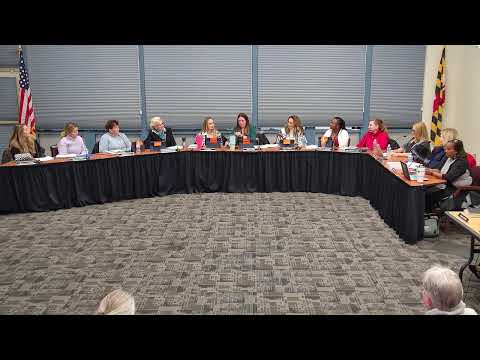
Talbot County Public Schools officials on Jan. 15 presented a first-reader FY25 budget request that would raise local, unrestricted spending by about $8.7 million to cover salary placeholders, a number of new staff positions, higher health- and benefits-related costs, and a series of technology, curriculum and transportation investments.
The presentation, made during the district’s regular board meeting at the Talbot County Education Center, outlined several specific drivers: a roughly $2.1 million placeholder for across-the-board salary increases, about $2.075 million in new positions, a $1.3 million projected increase in health insurance and approximately $500,000 for an Other Post‑Employment Benefits (OPEB) contribution. District staff also cited a $376,000 rise in pension and payroll-related fixed charges and increases tied to summer school, community schools, and contracted services.
Why it matters: the proposal shifts costs into the local/unrestricted portion of the budget as several federal COVID-era revenue sources (ESSER) expire. Staff framed the request as necessary to sustain recent programs and to preserve staff capacity created by prior grants.
District staff walked the board through line-item drivers. Notable figures presented by staff included: - Salary/raise placeholder: ~$2,100,000. - New positions (salaries): ~$2,075,000 (includes roles for ESOL, special education, interventionists, social workers, community school coordinators and administrative support). - Health insurance increase (5–7% premium estimate plus new positions): ~$1,300,000. - OPEB contribution: ~$500,000 (not currently in FY25 because it was prepaid in FY24). - Pension/FICA/related fixed charges: ~$376,000. - Summer-school teacher wages: ~$270,000; summer transportation roughly $83,000. - Materials of instruction increase: ~$289,000 (including a four‑year ELA renewal for secondary grades estimated at ~$160,000). - Software increase: ~$488,000 (many prior software costs covered by ESSER funds are no longer available). - Security equipment and monitoring contract: ~$213,000. - Bus leases increase: ~$241,000 (about $150,700 estimated for new buses).
Staff said that some expenses previously paid from federal ESSER funds — student devices, staff devices, network hardware and certain curriculum software — must now be funded from local dollars, which explains much of the year‑to‑year increase. The district noted it had factored in approximately $700,000 of salary‑vacancy savings when calculating the net impact.
New and shifted positions: the presentation listed additional academic supports at the middle/high school level (math and reading interventionists), an additional instructional assistant, two social workers (one converting from a split/grant role), a supervisor of school counseling, student services workers to support attendance and students experiencing homelessness, bus aides to support special‑education transportation, an art teacher at Easton Middle School, an athletic trainer, and a federal grants supervisor to concentrate oversight of roughly $10 million in federal grants. Expansions to the community schools model would add community‑school coordinators, family navigators and related staff; staff said most of those positions are expected to be largely state‑funded through the concentration‑of‑poverty/community‑school grant program but some local contribution is included.
Board members asked detailed questions about specific items: the sequence and prioritization of capital projects (for example HVAC at Easton High vs. roof work at Easton Middle), whether tax or energy credits might offset capital work, how a federal grants supervisor might interact with potential grant‑writing needs, whether summer school will be available at all sites (staff said principals will identify students who would most benefit and some students may be bused to consolidated summer programs), and how conscious discipline programming ties to community‑school funding. Staff said conscious discipline training is part of the community‑school program and that training scheduled for late June would put more than 100 educators through the program as it scales at Easton Elementary.
Board members and student representatives also asked about supports for high‑achieving and honors students (pathways, AP, dual‑enrollment, and Gateway to Technology Project Lead The Way offerings), and whether the proposed staffing mix balanced supports for both high‑achieving and high‑need subgroups.
Next steps and timeline: staff said the FY25 budget would return for further discussion at a joint meeting with the county council on Jan. 22 and a public budget hearing and work session on Feb. 10. Board members were asked to submit additional budget questions ahead of that hearing; staff said official county revenue numbers were expected imminently and would be reflected in later drafts.
Clarifying note: this was a first‑reader presentation; no formal budget vote occurred on Jan. 15.
Ending: district leaders said they will provide additional detail on grant‑funded positions that are being requested in the local budget, cost estimates for items the board asked for (for example after‑school transportation), and more granular revenue data before the February public hearing.