Get Full Government Meeting Transcripts, Videos, & Alerts Forever!
Get email alerts on the Property Tax Exemptions topic
No spam. Unsubscribe anytime.
Revenue Committee advances long‑term homeowner tax exemption amid fiscal and constitutional concerns
Summary
The Wyoming Senate Revenue Committee voted to advance Senate File 67, which would revise the long‑term homeowner property tax exemption and remove its sunset, after testimony highlighted definitional questions, fiscal uncertainty and possible constitutional challenges.
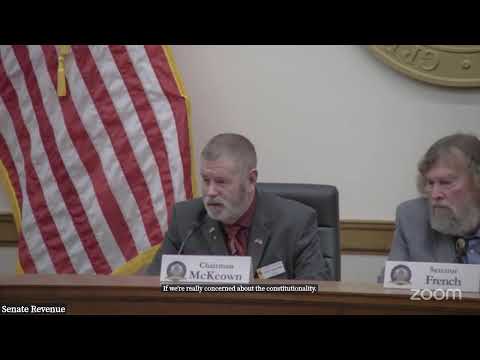
The Wyoming Senate Revenue Committee voted to advance Senate File 67, a measure revising the long‑term homeowner property tax exemption, sending the bill to the Senate floor after a 3‑2 roll call in committee.
The measure would change how the exemption is applied and eliminate the bill's current sunset provision. Supporters said the change would provide long‑term relief for older homeowners on fixed incomes; opponents and local officials urged caution, citing uncertain fiscal impacts for counties and potential constitutional problems.
Committee testimony raised several technical questions the committee said need clarification before final passage. County officials asked whether the bill's definition of “owner” would allow shareholders of corporations, partnerships or limited liability companies to claim the exemption when the deed records corporate ownership. A county representative said the situation can arise when a dwelling is occupied by a shareholder as a primary residence while the deed lists a corporation as owner. The committee also discussed whether “associated residential land up to 35 acres” in the bill would apply to multiple adjoining lots that do not contain dwellings.
Jeremiah Grama, appearing on behalf of the Wyoming County Commissioners Association, told the committee the fiscal impact remains uncertain and could be larger than originally estimated. "Last year, when you passed the bill, there was a fiscal note on that of $10,700,000," Grama said. "The Department has indicated that that impact could perhaps be as large as twice as large... This bill alone for fiscal year 27 and beyond, indicates a fiscal impact of $31,500,000." He urged the committee not to remove the sunset until more complete fiscal data are available and suggested counties that would be hardest hit may need backfill.
Several committee members echoed concern about removing the sunset while fiscal effects remain unclear. Committee discussion also covered program administration: county officials asked that the statute include language similar to the state veterans exemption so previously approved recipients could report no changes rather than refile a full application each year.
Senator Case raised constitutional concerns, citing Article 15 of the Wyoming Constitution and arguing the exemption structure could create unequal valuation treatment of neighboring properties. "The constitution does allow us to create exemptions, but that...is limited," Case said, arguing the measure risks an equal‑protection or valuation conflict and saying the issue may need litigation to resolve.
Supporters emphasized the policy's intent to protect long‑time residents on fixed incomes. Chair Powell said the exemption grew from constituent requests by seniors facing steep tax increases and that the committee should move the bill forward so the Senate can consider amendments.
Votes at a glance
The committee recorded a roll call on Senate File 67, Long Term Homeowner Tax Exemption Revisions. The motion to advance the bill passed 3‑2 and the committee will send the bill to the Senate floor for further consideration. Recorded committee votes were:
- Senator French: Aye - Senator Pappas: No (seconded the motion) - Senator Case: No - Chairman McKeown: Aye - One absentee aye vote was recorded by staff during the roll call
What the committee directed next
Committee members said they plan to bring the bill to the floor with suggested amendments to address constitutional questions, the corporate/owner definition, residency thresholds (discussed at 8 months vs. 6 months in testimony) and administrative procedures for renewals. Committee leadership also signaled interest in additional fiscal detail from the Department of Revenue and in consultation with county assessors.
The committee adjourned after advancing the bill.