
City staff propose lower procurement thresholds, faster contracting process after council feedback
Get AI-powered insights, summaries, and transcripts
Subscribe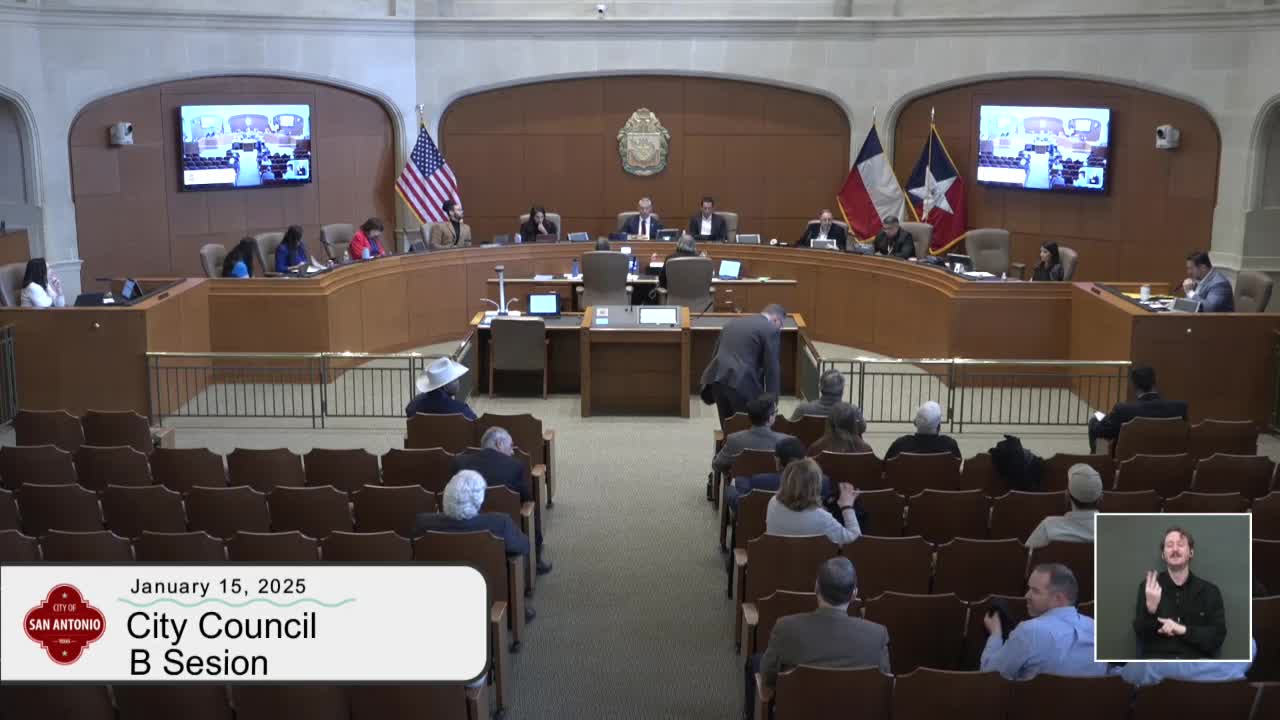
Summary
City staff presented recommended changes to procurement delegations and thresholds intended to speed up routine purchases and contractual work; councilmembers expressed support but asked for metrics and clearer reporting on projects and impacts.
City procurement staff presented proposed revisions to purchasing authorities and solicitation thresholds to the San Antonio City Council on Jan. 15, seeking to speed contracting and reduce council agenda items for routine purchases while preserving transparency and protest rights.
Troy (procurement staff) described three focus areas: streamlining high-profile procurement processes, clarifying contract authority and adjusting dollar thresholds that determine whether a contract must come before the council. The staff recommendation reflects feedback heard from the council in December and would lower some delegated thresholds for architecture, engineering, construction and professional services from a previously discussed $2.5 million to $1 million for those categories.
Troy said the city would keep a $2.5 million limit for goods and materials in some categories such as vehicle fleet purchases while shifting authority for many recurring and routine contracts to the city manager for amounts below the newly proposed category thresholds. He also described plans for quarterly public reporting on delegated purchases and noted an intention to return to the council with an ordinance on the changes that staff aims to have considered on Jan. 30 and implemented in April.
Councilmembers generally welcomed the changes as a way to get work underway faster. Councilmember Rocha Garceda said she was comfortable with lowering the threshold to $1 million but asked staff for metrics showing time and cost efficiencies resulting from the change. Several councilmembers asked for clearer tables and online dashboards that trace proposals back to the budget and show when an item was planned versus when it reaches agenda.
Troy said procurement has been working with finance and outside reviewers to identify improvements and that the department can provide the requested comparative metrics. He also said vendors would retain a protest process and the ability to appeal procurement recommendations.
No formal vote was taken on Jan. 15; staff requested direction and said they would prepare an ordinance for council consideration.