Get Full Government Meeting Transcripts, Videos, & Alerts Forever!
Get email alerts on the Facilities Planning topic
No spam. Unsubscribe anytime.
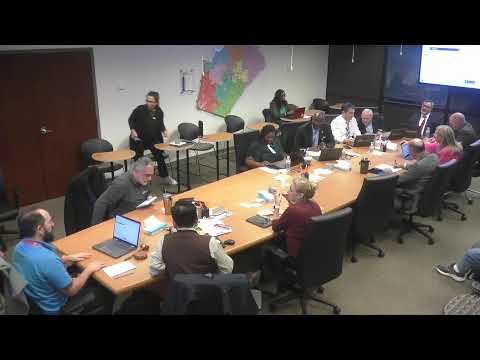
Board begins roundtable on 20-year facilities master plan to guide growth and reuse of district properties
Summary
Board members and staff discussed developing a 20-year facilities plan to align school construction, real estate, operational sites and long-term staffing needs; staff will draft a framework for board feedback and propose follow-up updates to committees.
Wake County Schools board members and senior staff began a roundtable discussion about creating a 20-year facilities master plan intended to guide decisions on school sites, administrative and operational properties, and long-term capital priorities.
Doctor Chenow (role: senior staff speaker) framed the discussion as a forward-looking approach that helps the district identify future needs and make evidenced-based requests for resources. "When I think about a 20 year facility plan, it really is about making sure we understand our current facility issues and our needs," he said, urging the board to provide input that administration could use to draft a road map with a specific first five-year phase and periodic pivots thereafter.
Board members described the kinds of properties and issues the plan should address beyond school construction: potential reuse of retired school sites, locations for transportation and maintenance operations, satellite service centers, professional development space, and possible staff housing or workforce-support uses for central sites such as the Capitol Boulevard parcel and Piney Plains. Chair Hagerty said a consolidated plan would prevent future leaders from "having to reinvent the wheel" as the county grows.
Several board members recommended broad staff and stakeholder engagement: internal departments (transportation, facilities, student assignment, security, student services) and targeted external outreach. Staff suggested an initial inward-facing inventory and needs assessment from departments, followed by more targeted public comment on higher-level scenarios rather than asking the public to prescribe technical solutions.
Timing and next steps: staff said they have begun informal internal meetings and planned to return with a curated set of big-picture options the board could narrow. Board members suggested regular updates to the Facilities Committee and proposed a year-long horizon for development; one member suggested a target of early 2026 for a draft, while staff cautioned the work could take longer.
Ending: Board members supported developing an aspirational, data-driven 20-year plan and asked staff to prepare options and a timeline for committee review and community input.