Get Full Government Meeting Transcripts, Videos, & Alerts Forever!
Get email alerts on the Elections topic
No spam. Unsubscribe anytime.
Wyoming committee advances bill requiring proof of residency and 30‑day durational requirement for voter registration
Summary
The Corporations, Elections & Political Subdivisions Committee advanced House Bill 156, which would require documentary proof that a registrant has been a bona fide Wyoming resident for at least 30 days and give rulemaking authority to the secretary of state to define acceptable proof.
At a meeting of the Corporations, Elections & Political Subdivisions Committee, members voted to advance House Bill 156, a measure that would require documentary proof of Wyoming residency when registering to vote and add a 30‑day durational residency requirement.
The bill, presented to the committee by Representative Bair, would insert language across Title 22 of the Wyoming statutes defining a “qualified elector” as someone who “has been a bona fide resident of the State of Wyoming for not less than 30 days before the date of the election in which he offers to vote.” It also grants rulemaking authority to the secretary of state to specify documents or other proof that establish residency.
Representative Bair said the measure was intended to move beyond attestation and to “press and test the system,” adding that the change is needed so “we know” registrants are bona fide residents. Secretary of State Chuck Gray told the committee the bill implements priorities from his office’s election integrity plan and argued that “Wyomingites and only Wyomingites should be allowed to vote in Wyoming elections, period.”
Committee members and witnesses focused on how the residency requirement would be implemented. Questions centered on administrative details: whether the 30‑day durational standard applies to primary as well as general elections, how same‑day registration at polling places would be handled, and how people who lack standard proof (for example, elderly residents, people who rely on PO boxes, residents of long‑term care facilities, and tribal members without street addresses) would establish residency.
Secretary Gray and Joe Rubino, policy director and counsel for the secretary of state, said the bill intentionally gives the secretary of state rulemaking authority to be nimble in identifying acceptable forms of proof (for example, contracts or intake documents from long‑term care facilities). Clerk representatives said they supported the policy goal but urged that any rules be “reasonable and inclusive” so the requirement does not prevent eligible voters from registering.
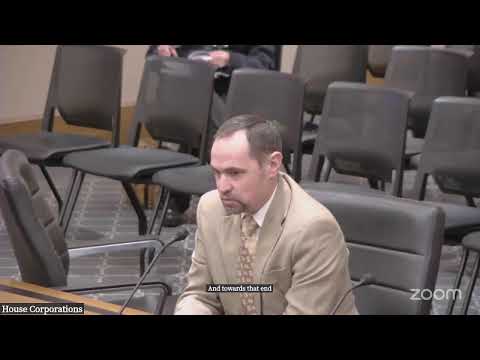
Witnesses who testified included Mary Langford of the County Clerk’s Association, who said clerks need a clear standard for what constitutes a bona fide resident and noted practical concerns such as PO boxes appearing on driver credentials; Misty Zimmerman of Wyoming Driver Services, who explained current credentialing and said a system modernization planned for later this year will allow a physical address to be stored separately from a mailing address; and representatives of the League of Women Voters and other civic groups who supported secure elections but urged caution that the bill not have the effect of disenfranchising eligible voters.
Committee members also discussed whether federal law on voting for president and vice president would require an exemption from a durational residency rule. Joe Rubino reviewed the Voting Rights Act provision and related U.S. Supreme Court discussion (Oregon v. Mitchell) and said that other states with 30‑day durational residency requirements direct affected voters to vote in their prior state for president if they moved within 30 days.
The committee voted to advance the measure. The roll call recorded in committee was: Representative Gary Brown — yes; Representative Tony Locke — yes; Representative Paul Heft — yes; Representative Steve Johnson — yes; Representative Anne Lucas — yes; Representative Joe Webb — yes; Representative Nina Weber — yes; Representative Mike Yin — no; Chairman Knapp — yes. House Bill 156 passed committee and will move forward for further consideration.
The committee deferred a fuller administrative implementation discussion to the rulemaking process that the bill would authorize. Supporters said that giving the secretary of state authority to adopt rules will allow officials to address practical problems raised in testimony, while several witnesses asked the legislature to ensure lists of acceptable documents are inclusive of people who lack conventional proofs of residence.
House Bill 156 was presented for floor consideration by Representative Bair, who told the committee he would be available to carry the bill on the House floor.