Get Full Government Meeting Transcripts, Videos, & Alerts Forever!
Get email alerts on the Executive Session Litigation Personnel topic
No spam. Unsubscribe anytime.
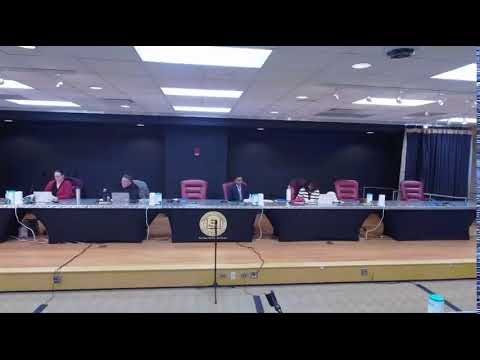
Proviso Township HSD 209 board retires to executive session to discuss litigation and employee salary schedules
Summary
The Proviso Township High School District 209 Board of Education voted to enter executive session Wednesday to discuss pending litigation and salary schedules for one or more classes of employees under exceptions in the Illinois Open Meetings Act.
The Proviso Township High School District 209 Board of Education voted Wednesday to retire into executive session at 5:32 p.m. to discuss pending litigation and salary schedules for one or more classes of employees pursuant to exceptions in the Illinois Open Meetings Act.
The closed session was authorized under the Open Meetings Act exceptions cited by the board during the motion to adjourn to executive session, specifically to address litigation and personnel matters. The board took the action by roll call; the motion’s mover and seconder were not specified on the public record.
Board members recorded as present during the roll call were Missus Hixson, Miss Grant, Mister O'Connell, Miss Arbohan, Miss Graham, Mister Ocampo and Miss Bartman. Members recorded as absent were Miss Wagner, Mister Alexander, Mister Gutierrez, Miss Patterson and Mister Bill Harris. The board announced it was in executive session at 5:32 p.m.
The board’s stated reasons for closing the meeting were litigation and discussion of salary schedules for at least one class of employees. The public record provided during the meeting did not identify the specific litigation matter, the affected employee classifications or any concrete changes to pay schedules; those details remained in closed session.
The board’s decision to move into a closed session means the public will not have access to the discussion or record of the deliberations except as permitted by law. Under the Illinois Open Meetings Act, certain topics including litigation strategy and personnel matters can be discussed in private if they meet statutory criteria.
No formal, public vote on any ordinance, contract or personnel appointment was recorded in the open session portion of the transcript provided. The board’s action in the legislative record consisted of the motion to retire into executive session and the subsequent roll call indicating which members were present or absent at the time the meeting moved into closed session.
The board did not announce a time to reconvene in open session or further public action on the items discussed while in executive session.