Get Full Government Meeting Transcripts, Videos, & Alerts Forever!
Get email alerts on the Land Use topic
No spam. Unsubscribe anytime.
Perris council overturns Planning Commission, approves Case Road mixed‑use project with conditions
Summary
After an hours‑long hearing, the City Council voted 3‑2 to approve a contested mixed‑use proposal on Case Road that includes an industrial building, hotel, self‑storage and retail, adding conditions intended to guarantee the hotel and commercial components and limit truck impacts.
The Perris City Council voted 3-2 on Jan. 14 to overturn the Planning Commission’s denial and approve the Case Road mixed‑use project, a proposal that includes a large industrial building, a 128‑room hotel, a roughly 116,000‑square‑foot self‑storage component and about 27,200 square feet of retail space.
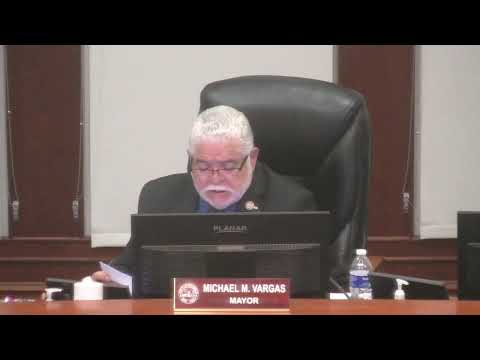
The project, proposed by Richland Communities (presentation led by Derek Barber), drew extended public comment and a divided council debate about traffic, air quality and long‑term benefits. Council members Corona, Rapp and Mayor Vargas voted to approve; Councilwomen Vallejo and Nava voted no.
Why it matters: The project’s industrial building would sit on the parcel nearest the Eastern Municipal Water District (EMWD) treatment plant; opponents told the council they worry about added truck traffic, emissions and precedent for more warehouses. Supporters, including residents and local business groups, said the plan would deliver retail amenities, jobs and infrastructure — and that without the industrial component the developer would not fund or build the commercial and hotel elements.
What the council approved: The council approved the project with a set of conditions negotiated during the hearing and listed in the staff report. Key conditions attached to approval include: a required community‑benefit package that funds roadway and streetscape work (including widening and improvements on Case Road and a traffic signal at Watson and Case), a landscape buffer along Watson Road, a voluntary covenant by the applicant restricting industrial development in a separate Green Valley planning area as an offset, and detailed truck‑routing and enforcement language intended to keep heavy truck traffic off residential or local collector streets.
The council also added conditions during the meeting to press the developer on delivering the hotel and major commercial pads: the developer must either construct one of the specified commercial buildings (or the hotel) concurrently with, or prior to, issuance of occupancy for the industrial building, or deposit money with the city to guarantee those commercial/hotel commitments. The council set the financial backstops at $400,000 tied to the commercial pad requirement in the staff report and added a $500,000 community‑benefit payment that would become due if construction of the hotel is not started within three years after the industrial building begins construction. Council also directed staff to increase the building setback from the future residential area by 100 feet and to require a stronger landscaping buffer.
What opponents and supporters told the council: Opponents — including speakers from environmental justice groups and nearby residents — urged the council to uphold the Planning Commission’s denial, saying the industrial component is incompatible with the Green Valley Specific Plan’s business/professional office vision and would worsen air quality, noise and traffic.
“I am here today to speak in support of the decision by the Planning Commission,” said Joaquin Castillegos of the Center for Community Action and Environmental Justice, summarizing the opponents’ argument that the project’s industrial portion did not fit the area’s intended land‑use pattern.
Developer response and staff findings: Derek Barber, representing Richland Communities, said the project was the result of years of review and stakeholder meetings and that the industrial element was necessary to make the adjacent commercial and hotel financially feasible. “We’ve really studied every aspect of this,” Barber told the council, listing design and mitigation steps his team had added in response to feedback.
City planning staff had recommended the council affirm the Planning Commission denial after preparing an addendum to the Green Valley Specific Plan environmental documents; staff’s analysis and the applicant’s studies were central to the council’s deliberations. EMWD’s water resources manager told the council the agency had worked with the developer on a landscape‑buffer plan to reduce potential complaints related to the treatment plant.
“Sometimes projects that are in proximity to some of our key facilities, we do take a little higher interest,” EMWD’s John Worth told the council, and he described the district’s work with the city on recycled water and buffers.
Vote and next steps: The council vote was 3 in favor, 2 opposed. Councilman Corona moved to overturn the Planning Commission and approve the project; Councilman Rapp seconded. The council’s action adopts the project approvals subject to the conditions listed in the staff report and the additional conditions the council added during the hearing. The developer and city staff will return to finalize permit documents and compliance requirements; building permits and grading approvals remain subject to standard review and inspection processes.
Credits: The project was presented to the City Council by Senior Planner Nathan Perez and by applicant representatives including Derek Barber of Richland Communities. Opponents and public commenters included Joaquin Castillegos (Center for Community Action and Environmental Justice), Franco Pacheco (Inland Valley Alliance for Environmental Justice) and a number of local residents and business representatives.