Get Full Government Meeting Transcripts, Videos, & Alerts Forever!
Get email alerts on the Government Communications topic
No spam. Unsubscribe anytime.
Leesburg staff advises council on social media use and FOIA obligations
Summary
A town staff presentation on Jan. 14 reviewed Leesburg's social media presence, user statistics, department accounts, and legal obligations. Staff warned that posts and comments on government social media are public records subject to the Virginia FOIA and cited recent court rulings on government-run social media forums.
Town staff briefed the Leesburg Town Council on Jan. 14 about the town9s social media use, audience metrics, and legal constraints, telling council that content on official accounts and, in some circumstances, elected-official pages is public information subject to the Virginia Freedom of Information Act.
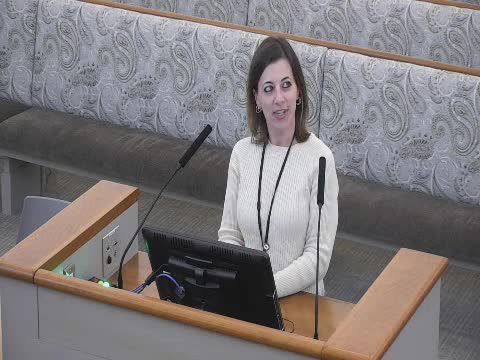
Communications staff member Miss Cozen said the town maintains pages on Facebook, Instagram and YouTube and that the Town of Leesburg Facebook page had "just over 22,000 followers" at the time of her presentation. She described common uses for town social media such as news releases, meeting notices, event promotion, road-closure alerts and emergency updates, and noted that some departments maintain their own accounts, including the Leesburg Police Department on Nextdoor.
Cozen told council that "the town's social media content, including comments posted, are public information, and they are subject to FOIA, including the laws of Commonwealth of Virginia." She cited court guidance in the local context, referencing the case commonly known as Davison v. Randall as an instructive example where a court found a government-linked Facebook page to be a public forum subject to First Amendment protections.
Councilmember Steinberg asked how FOIA and social media interact when a requester could simply copy or "scrape" public content from a site. Cozen said staff must preserve records and that, if posts are deleted, staff should be able to locate and provide them as part of a FOIA request. When Councilmember Krakowski asked for examples of when staff might hide or delete comments, Cozen said the town follows a short list of exceptions for hiding or removing content, such as links that lead to spam or malware; she also said staff would first attempt to contact the poster before taking removal actions.
The town attorney supplemented the response during Q&A, noting that judicially recognized exceptions to protected speech on government forums are narrow and generally include obscenity or direct calls to violence.
Cozen said the town's social-media comment policy is available on the town website under the government tab and encouraged councilmembers who share or cross-post town content to verify source accuracy and copyright permission for images and logos. She also warned that if an elected official uses a personal page primarily to conduct town business and interact with the public, that personal account may be subject to FOIA.
Councilmembers asked follow-up questions about record retention, deletion practices, and how FOIA requests that rely on social-media content would be handled. Staff said the public-information office would assist requesters in locating relevant records and recommended a cautious approach to deleting or blocking content on official town accounts.