Get Full Government Meeting Transcripts, Videos, & Alerts Forever!
Get email alerts on the Cash Proffers topic
No spam. Unsubscribe anytime.
Harrisonburg council approves zoning change to allow cash proffers, 4-1
Summary
City Council voted 4-1 to amend the zoning ordinance to permit cash proffers for certain rezonings, authorizing staff to develop administrative procedures and noting limits set by state code and local practice.
Harrisonburg City Council voted 4-1 on Jan. 14 to amend the city zoning ordinance to allow the acceptance of cash proffers in certain rezonings, a change staff said will require new administrative processes before the city can begin receiving and managing funds.
The measure, which removes language that previously prohibited cash contributions, was introduced by staff and recommended unanimously by the Planning Commission. Council members debated limits on use and implementation before approving the change; Council member Al Sadden cast the lone dissenting vote.
City development director Adam Fletcher told the council the amendment is intended to give the city an optional tool when developers seek to offset impacts from residential rezonings. “The cash proffers, cannot be made for operational costs, and they cannot be made to support water and sanitary sewer systems, stormwater management, or affordable housing,” Fletcher said, and added that cash proffers tied to residential rezonings are governed by Virginia Code §15.2-2303.4. Fletcher also warned that accepting cash for transportation improvements creates administrative and maintenance questions: “We don't believe it should be incumbent upon city staff to then take ownership of those improvements,” he said, arguing the city should generally prefer that developers design and build transportation work as part of development.
Council members pressed staff on timing, accountability and potential market effects. Fletcher noted a 12-year period in state law within which funds must be put into use and that funds not spent within statutory timelines may ultimately be redistributed through the Commonwealth process. He said the city would include accepted funds in the capital improvements program and report as required. On whether cash proffers will increase housing costs, Fletcher said developers commonly pass proffer costs to buyers: “I think the developer will pass on all or a hefty portion of the cost of those proffers to the eventual buyers,” he said, citing examples from Northern Virginia.
Fletcher said the ordinance change does not immediately create a program for collecting or allocating funds; staff must next work with the Department of Finance and other departments to design formulas or evaluation methods, reporting rules, and tracking systems. He described three common approaches used by other localities: the locality calculating an amount, the applicant providing a calculation, or using a fixed formula, and said Harrisonburg may hire outside consultants to develop methodology.
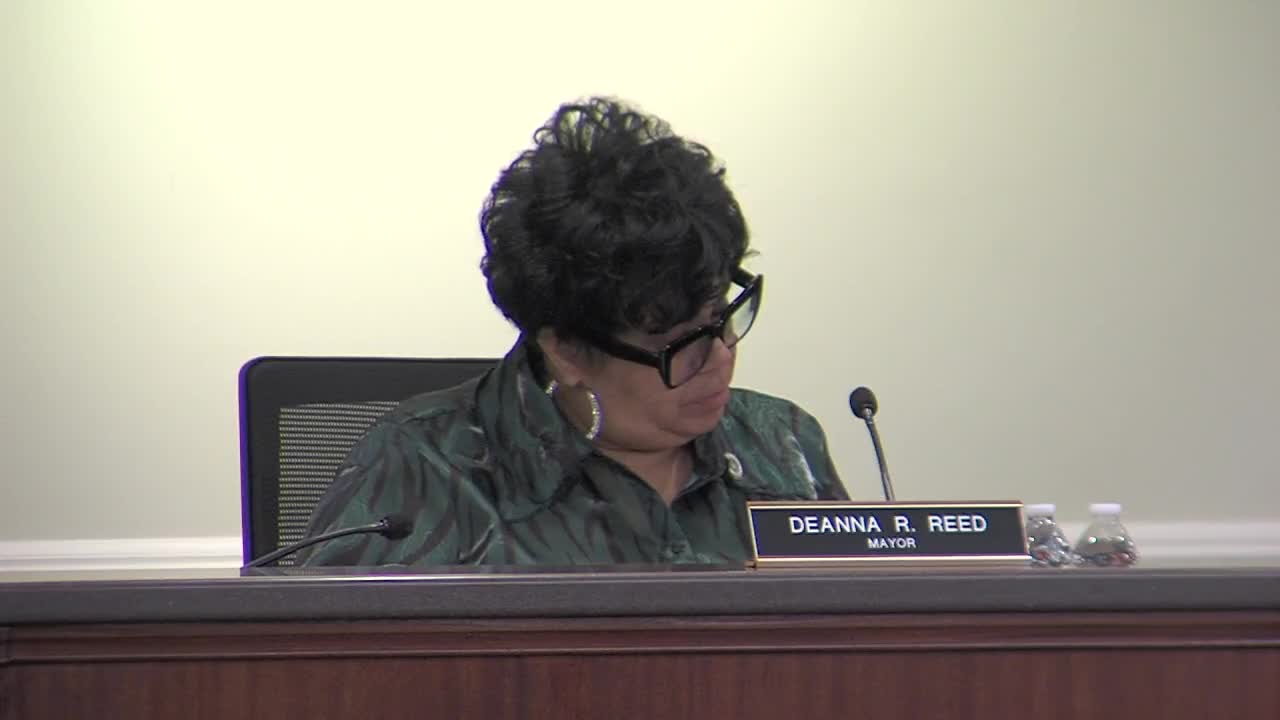
Council approved the ordinance amendment by roll call; Vice Mayor Fleming, Council member Dent, Council member Robinson and Mayor Reid voted yes, Council member Al Sadden voted no. The amendment will allow the city to accept cash proffers consistent with state law, and staff said the change would take effect at the end of the month but that administrative procedures must be finalized before the city begins accepting payments.
The council record and staff presentation note that cash proffers for residential rezonings may be used only for public transportation, public safety, public school facilities and parks (subject to statutory limits), and that separate state-authorized affordable dwelling unit programs could create different mechanisms for housing-related contributions. Fletcher said nonresidential rezonings remain more flexible under state code and local practice.
Council asked staff to return with specific procedural recommendations, including possible formulas for calculating contributions and processes to ensure funds are spent for their proffered purpose.