Get Full Government Meeting Transcripts, Videos, & Alerts Forever!
Get email alerts on the Multilingual Education topic
No spam. Unsubscribe anytime.
Creighton reports mixed progress on multilingual student outcomes; district expands coaching, family engagement
Summary
District staff reported that interim assessments show ongoing challenges for emerging multilingual students; DNA benchmark and AZELa results prompted adjustments to coaching, curriculum pacing and family engagement. The board approved the Goal 3 progress monitoring report.
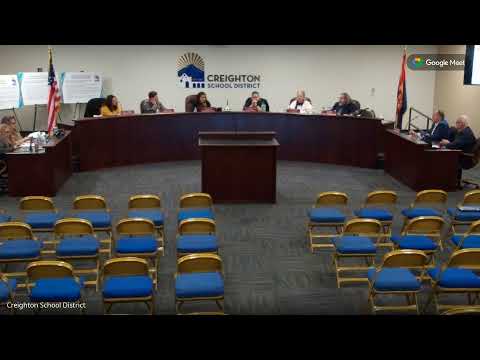
Creighton School District leaders told the governing board on Wednesday that progress for emerging multilingual students is uneven and that the district is adjusting instruction, coaching and family engagement to accelerate gains.
“Goal 3 focuses on increasing proficiency for our emerging multilingual students,” Director of Curriculum, Instruction and Assessment Dr. Larissa Pombo told the board as she introduced the report. The district’s SOFG goal ties growth on the district DNA benchmark and the state AZELa (Arizona English Language Learning Assessment) to a five‑year target: the percent of emerging multilingual students who increase one or more proficiency levels on AZELa is to rise from 25% in August 2023 to 40% by August 2028, with an interim target for 2025.
Dr. Pombo and the language and literacy team said interim DNA results (pretest in August to benchmark 1 in October) showed annual variability: an increase between 2022–23 and 2023–24, then a decline entering 2024–25. The district’s current in‑year DNA benchmark measure requires a student to have both a pretest and the interim assessment to be counted, and staff said incomplete participation — students missing one of the assessment dates because of late entry or attendance — likely undercounts growth.
Sarah Beth George, district coordinator for language and literacy, explained that DNA assesses grade‑level content standards while AZELa measures language acquisition. “When we look at our students being tested on the DNA assessment, they’re being tested for something they haven’t acquired the language yet,” George said. That mismatch led staff to review whether a different formative measure or better use of existing screeners (such as FastBridge) could more closely track language acquisition without adding excessive testing.
To address gaps, the district has: expanded targeted coaching for SEI (structured English immersion) teachers; pursued training with consultant Heidi Koski on language acquisition strategies; implemented small‑group supplemental materials in some classrooms; created a pacing guide for verb‑tense instruction; and increased family engagement nights focused on multilingual learners — efforts staff say have produced incremental gains in December data (9% of students moved up a level during that quarter).
Superintendent Mr. Mann and the instructional team told the board that participation/completeness of assessments is a major variable and that the district will strengthen communication with families and site‑level testing practices to improve capture of student growth.
After questions about instrument choice and timelines, the board voted to approve the SOFG Goal 3 progress monitoring report. President Sofia Carrillo said she was reassured by the additional detail on inputs and expected follow‑up reports.