Get Full Government Meeting Transcripts, Videos, & Alerts Forever!
Get email alerts on the Water And Sewer topic
No spam. Unsubscribe anytime.
Santa Barbara council approves water-meter ordinance introduction; directs staff to study submetering for non-deed-restricted adaptive reuse
Summary
Council introduced an ordinance amendment allowing water-meter waivers for deed-restricted adaptive reuse projects and directed staff to study submetering and permanent exemptions for non-deed-restricted adaptive reuse in the downtown core.
The Santa Barbara City Council on Jan. 14 voted to introduce an ordinance amending water-metering requirements for certain affordable housing adaptive reuse projects and directed staff to return with further study on submetering and exemptions for non-deed-restricted adaptive reuse projects.
Why it matters: The change creates a pathway for deed-restricted affordable housing conversions to be served by a single meter at the property (with submetering on the private side) in cases where city meter placement is infeasible. Council members said they also want a clearer, permanent policy for non-deed-restricted adaptive reuse downtown, where construction constraints and high costs can make individual meter installation impractical.
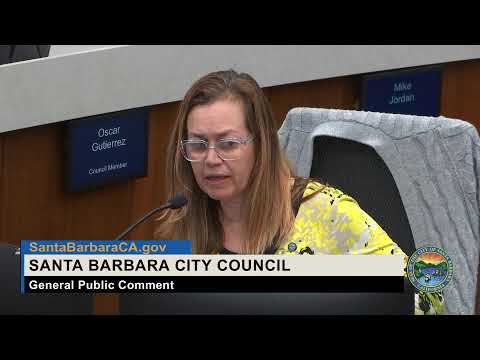
Public testimony and cost examples: At the start of the discussion, developer and resident Ben Romo described a past adaptive reuse project where installing individual city meters for 14 units would have cost "about $25,000 to $50,000," and praised city flexibility that allowed use of "splitters" (submetering technology) to create tenant billing without installing separate public meters. "I hope that you'll continue to allow splitters in all adaptive reuse projects," Romo said.
Staff presentation: Water-resources staff noted the city and the Water Commission prefer individual metering under state law because it promotes individual conservation and helps the city identify leaks and interact directly with water customers. "The water commission in November, when this issue was before them, was unanimous and very clear that they prefer individual metering in accordance with state law," city staff said. Staff also explained that a public-works director exemption would allow limited flexibility in constrained cases.
Council action and direction: Councilmember Wendy Harmon moved to approve the ordinance introduction for affordable adaptive-reuse waivers and to direct staff to study water-metering and submetering issues as they apply to non-deed-restricted adaptive reuse in the downtown core, returning either with the adaptive-reuse ordinance or before it. Councilmember Jordan seconded the motion. The council vote was unanimous among members present; Councilmember Sten was absent.
Outcome and next steps: The ordinance introduction for the deed-restricted adaptive reuse waiver proceeds. Staff was directed to analyze permanent exemptions and return with recommendations during the adaptive-reuse ordinance process or sooner, including technical and fiscal implications of permitting submetering more broadly.
Context: City code section 14.08.150 and the Street Tree Master Plan were discussed in other agenda items the same day; the water-meter amendment is intended to remove one potential impediment to downtown adaptive reuse while balancing conservation and system-monitoring priorities.
Public-record note: Councilmembers asked staff to coordinate with the Water Commission and to provide a comprehensive analysis on how broader submetering would affect conservation programs, billing responsibility, leak detection and customer outreach.