Get Full Government Meeting Transcripts, Videos, & Alerts Forever!
Get email alerts on the School Finance topic
No spam. Unsubscribe anytime.
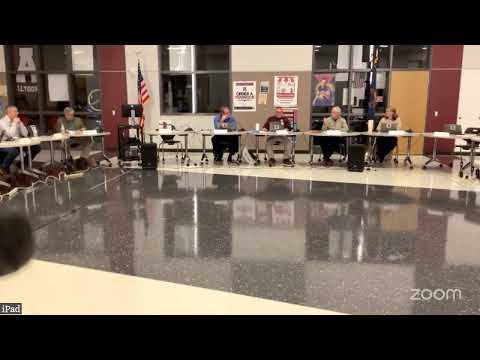
Trustee questions $4 million in cyber-charter tuition during finance discussion
Summary
A board member raised concerns about Altoona Area School District’s payments to cyber charter schools, citing more than $4 million paid last year for 388 students and irregularities in how tuition calculations exclude certain expense categories.
During the finance portion of the Altoona Area School District meeting, a board member raised concerns about the district’s cyber charter expenditures, saying the district paid more than $4,000,000 last year to 11 cyber charter schools and that 388 students were enrolled in those programs.
The trustee urged continued scrutiny of the tuition formulas used to calculate cyber charter payments and contrasted figures the district pays for brick-and-mortar tuition and special-education cyber tuition. "It looks like last year we paid more than $4,000,000 to 11 different cyber charter schools," the board member said. "We had 388 total students in these cyber charter schools across different grade levels. The tuition rate that we pay charter schools, if I read correctly was $10,649 ... Special Ed cyber was $24,149. Starting in January of this year, it went to $18,940 if I am correct. However, when they calculate that rate, they take 78% of the brick and mortar cost. So it's an unfair comparison."
A district administrator confirmed the board had been provided figures and earlier work to produce those numbers. No formal motion to change policy or funding was made during the meeting; the remarks were delivered as part of the finance discussion and the items under finance were approved as presented.
Why it matters: Cyber charter tuition can be a major expense for some Pennsylvania districts. The trustee framed the remarks as a request for continued attention to the district’s charter tuition costs and to the state formulas that produce billing differences between brick-and-mortar and cyber programs.
What the board did: No immediate policy change was proposed. The finance items, including honorarium payments and the broader finance consent items, were approved by voice vote.
Speakers and attribution: The transcript attributes the concern to a board member who said he had asked “Brad’s team” to compile the numbers. The administrator (Brad) was identified in the meeting as the staff member who had prepared the data and who answered follow-up questions about finance reports.