Get Full Government Meeting Transcripts, Videos, & Alerts Forever!
Get email alerts on the High School Program Of Studies topic
No spam. Unsubscribe anytime.
Northern Burlington County Regional School District outlines scheduling, graduation requirements and college-credit options
Summary
District directors and counselors reviewed the 2025–26 scheduling timeline, graduation requirements, AP and dual‑credit offerings, career pathways and counseling supports at a parent information night. Key dates, program options and how students earn college credit were presented.
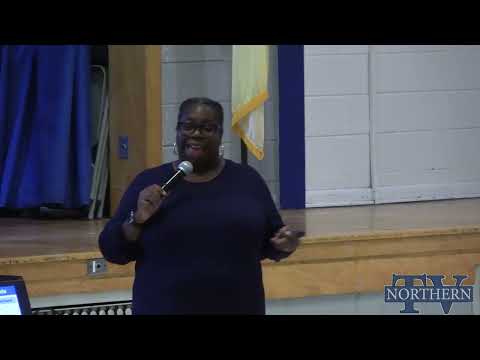
Leaders from the Northern Burlington County Regional School District on an information night presented the high school program-of-studies, including the scheduling timeline, graduation requirements, Advanced Placement offerings, dual‑credit options and career/technical programs.
The presentation, led by district directors and the counseling office, walked parents through registration in PowerSchool and the district’s planning tools, explained required credits and state testing pathways, and described options for earning college credit through the district’s articulation and college‑acceleration agreements.
District officials said the PowerSchool portal opened Jan. 8 and counselors will visit 9th‑ through 11th‑grade classrooms to begin scheduling. “I will continue to post dates so you don’t have to memorize them,” said Miss Fitzgerald, director of counseling. Counselors will start scheduling meetings with 11th graders on Jan. 27, with 10th graders and then 9th graders to follow; rising 9th graders’ portal access is scheduled for Feb. 28 and middle‑school visits for scheduling start March 17. Parents were told additional scheduling resources are available on the district website and in the weekly principal bulletin, and a series of short videos on the district’s Northern TV YouTube channel breaks down the program‑of‑studies book.
The nut of the presentation was the curriculum and options students may use to meet graduation requirements. Officials said students must earn 130 credits to graduate. District presenters listed the minimum course requirements shown in the program book: four years of English, four years of physical education, three years of math (15 credits as a minimum), three years of social studies (15 credits), one year (five credits) in visual and performing arts, and one year (five credits) in 21st‑century life and careers. District staff emphasized these are minimums and many students take additional courses in math, science or other areas.
On state testing and alternative graduation pathways, counselors said every student must take the required state assessment unless they have an IEP that specifies an alternate assessment. If students do not meet the assessment standard, district staff said there are two alternate pathways: SAT/ACT scores or a portfolio option; specific cutoff scores were posted in the program slide deck on the district website.
Advanced Placement and college‑credit options were described in detail. The district will offer a wider AP slate next year, including AP Seminar (available to eligible sophomores as the first half of the AP Capstone sequence) and AP Research as the second year. The district is adding AP African American Studies and AP Microeconomics/Macroeconomics; AP World History: Modern and AP Computer Science Principles will remain available to underclassmen when eligible. Counselors reminded parents that AP courses are college‑level work and that not all students take the end‑of‑course exam.
District officials also reviewed dual‑credit and articulation options. Some courses participate in a college‑acceleration program with Rowan College at Burlington County (RCBC); students may pay a fee (district presenters cited $150) and, if they earn a C or better, receive RCBC credit. Staff noted that transferability of those credits to other colleges varies and parents should check with prospective institutions. The district described an emerging partnership with Rowan University and a newly approved veterinary science program; applied‑agriculture courses may have articulation agreements and internship pathways tied to regional partners.
Career and technical offerings and applied technology were highlighted as part of the 21st‑century requirement. Presenters described material design and engineering, industrial design and architecture, metal and wood production, video production (three sequential levels), graphic design and a senior tech capstone course. The district said agricultural offerings include horticulture, plant science, animal science and a recently developed veterinary‑science connection. The applied‑tech presenters emphasized many courses serve students who plan to enter the workforce directly as well as those headed to college.
Counseling and college planning supports were a major component. The school has six high‑school counselors who are assigned to students for the duration of their high‑school careers, counselors said; two counselors serve the middle school. Staff described the timeline for college planning — intensified meetings in the junior year and senior‑year follow ups — and recommended families begin college planning early when students target selective colleges. The district uses Naviance and NJCAN for career exploration; counselors said Naviance credentials will be provided and the tools help students explore careers, salaries and postsecondary options.
Arts, music, theater and physical‑education programs were described as meeting graduation requirements while also offering sequential pathways. The visual and performing arts requirement (one year minimum) can be fulfilled in several disciplines, and music/theater programs place students into appropriate levels through teacher placement; the district also runs Unified PE and peer‑mentoring options. The director of PE reiterated that students must complete four years of PE.
Presenters repeatedly urged parents to consult the printed program‑of‑studies (the “blue book”), the district website and the Northern TV playlist of short explanatory videos for details. Mr. Conwells, a director of instruction, opened the session by saying the presenters would “cover the highlights of the scheduling process and the high school program of studies.”
The evening included a question‑and‑answer period during which staff clarified prerequisites, sequencing of course levels, summer and online options for meeting semester requirements, the Option‑2 application process for external courses, and how counselors will work with families who want to change counselors or need extra help. Staff encouraged parents with additional questions to email or call the counseling office and to read the principal’s weekly bulletin for updates.
Contact information and next steps provided to parents were: use the PowerSchool portal to enter primary choices and alternates once it opens, review the program book and Northern TV videos, check the parent bulletin for counselor assignments and scheduling dates, and contact counseling staff for help with Naviance or Option‑2 applications.
The district did not take any formal actions or votes at the session; the meeting was informational.