Get Full Government Meeting Transcripts, Videos, & Alerts Forever!
Get email alerts on the Health Insurance topic
No spam. Unsubscribe anytime.
Retirees report coverage disruptions as SFHSS and Blue Shield review Medicare Advantage PPO transition
Summary
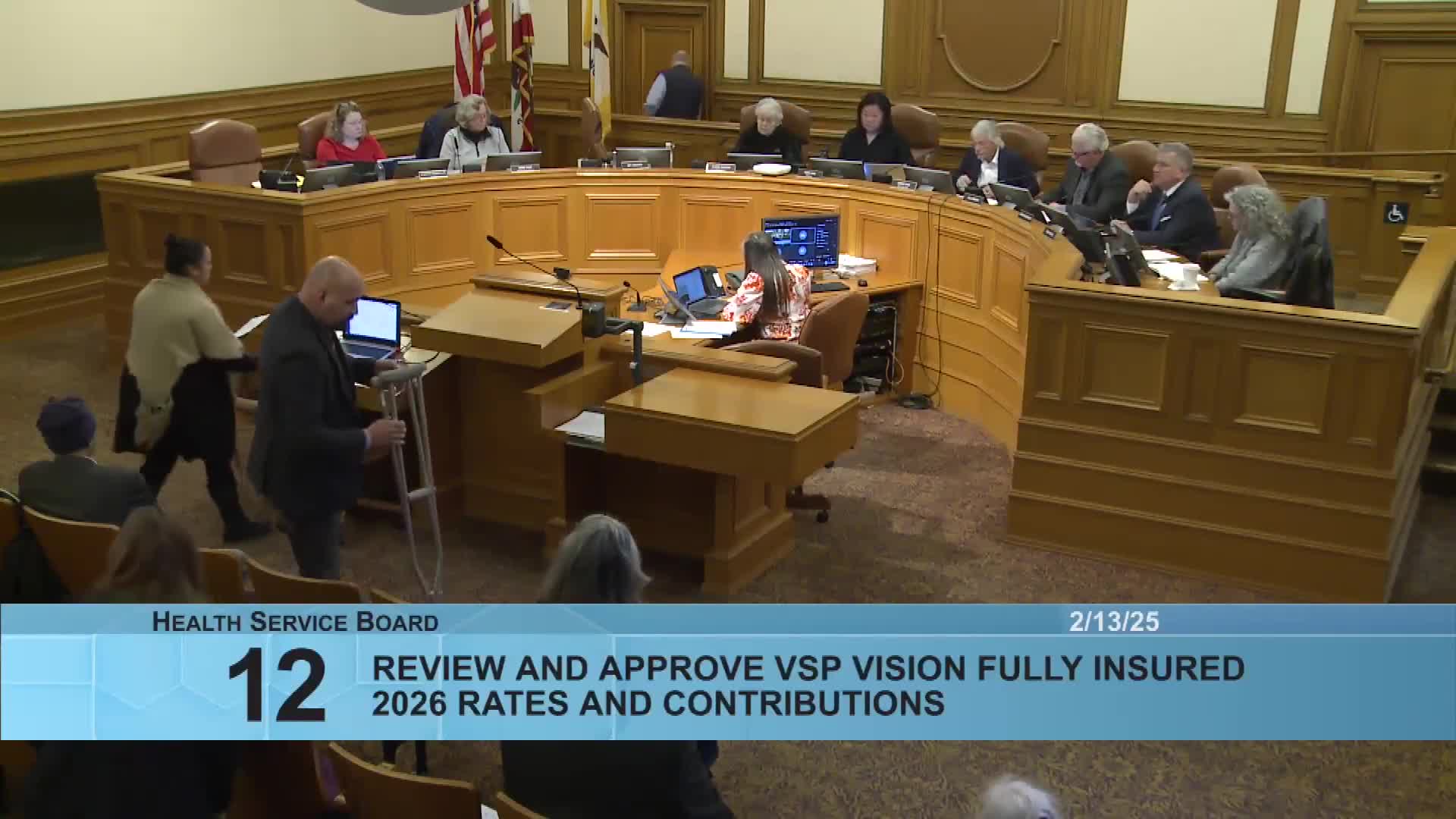
The San Francisco Health Service Board on Feb. 13 heard an update on the Jan. 1 switch of Medicare Advantage PPO benefits to Blue Shield of California, with officials saying the transition covered about 19,100 members but acknowledging continued member disruptions and high call volumes.
The San Francisco Health Service Board on Feb. 13 heard an update on the Jan. 1 switch of Medicare Advantage PPO benefits to Blue Shield of California, with officials saying the transition covered about 19,100 members but acknowledging continued member disruptions and high call volumes.
SFHSS Chief Operating Officer Ray Guillen said Blue Shield’s concierge call center handled most incoming calls after the changeover and that HSS staff handled 139 escalated calls in January. “Following a review of these reports, it appears that most instances relate to the way certain providers, such as UCSF, are billing Blue Shield rather than a difference in the benefits themselves,” Guillen said during the staff presentation.
The board heard details from both SFHSS and Blue Shield staff about where members were experiencing friction. Blue Shield senior manager Tiffany Gill told the board the two plans match on the core benefit structure and copay levels in roughly 98 percent of prescription tiers and copay assignments; the remaining 2 percent represents changes that could affect “close to 400 members” in the Medicare population, she said. Gill said Blue Shield paid more than 37,000 pharmacy claims in January for roughly 11,910 unique HSS members (about 66 percent of the MAPD population in January), and that approximately 8 percent of claims were filled through the Amazon mail-order program and about 3 percent through a CMS transition-fill process.
SFHSS operations manager Olga Stevan Skye Velasquez (operations manager) reported that HSS’s own member-services center struggled in January, with an average speed of answer as high as 14 minutes in early January and later improving toward a current average of about four minutes; she said first-contact resolution remained above the 75 percent goal at about 85 percent. Blue Shield reported it handled 9,333 calls in January, with the largest volumes devoted to provider-access questions and prescription issues.
Where the two organizations diverge is mostly on lower-utilization “value-added” benefits or on vendor choices — for example, Blue Shield uses a different vendor for acupuncture and chiropractic services. Blue Shield also supplies a 100-day supply for maintenance medications (mail order) and offers a preferred-retail pharmacy network that can provide 100-day fills at the same copay as mail order, a service SFHSS staff said UnitedHealthcare had not offered consistently before 2023.
Public commenters described a variety of problems since the transition. Caller Christine Lemenenbach said the conversion had been “a complete disaster” for her 86- and 100-year-old parents and cited trouble obtaining a lidocaine patch and home PICC-line supplies. Fred Sanchez, president of Protect Our Benefits, described casework where Blue Shield staff ultimately helped resolve denials but said the volume of individual problems warranted a special meeting with the board and the insurer. Sanchez said, “There are two class action suits. One's against Blue Shield, and the other one's against UnitedHealthcare,” and said both companies are being challenged over use of automated decision tools.
Tiffany Gill said Blue Shield set up several monitoring steps and is providing a claims-and-appeals dashboard for SFHSS and stepped-up outreach, including in-home visits and targeted phone messaging. She said Blue Shield is matching prior authorizations for 90 days while the transition settles and is performing weekly eligibility-file reconciliations with SFHSS until the parties are confident files are stable.
Board members pressed both HSS and Blue Shield on concrete remedies for members who face a service denial or billing surprise. Commissioner Claire Zavansky asked for clearer escalation pathways and a named phone number for members who need additional help. Ray Guillen acknowledged the anxiety retirees feel after a plan change and asked members who encounter problems to contact SFHSS and Blue Shield, which the agencies say will escalate issues to provider relations or pharmacy teams.
The board did not take action on the item; staff said they will continue monitoring claims, appeals and provider-billing issues and are preparing additional dashboards and outreach materials for members and provider offices.
Member comments and staff answers showed three main themes: (1) most core benefits match between the old and new plans, (2) some disruptions derive from provider billing and vendor differences (including preferred vendors for acupuncture/chiropractic), and (3) prescription and prior-authorization issues remain the most frequent drivers of calls and appeals. Blue Shield and SFHSS said they will provide additional reporting and targeted member outreach in coming weeks.