Get Full Government Meeting Transcripts, Videos, & Alerts Forever!
Get email alerts on the State Legislation topic
No spam. Unsubscribe anytime.
County staff summarizes key 2025 legislative bills—classification, elections, energy, housing and behavioral health among priorities
Summary
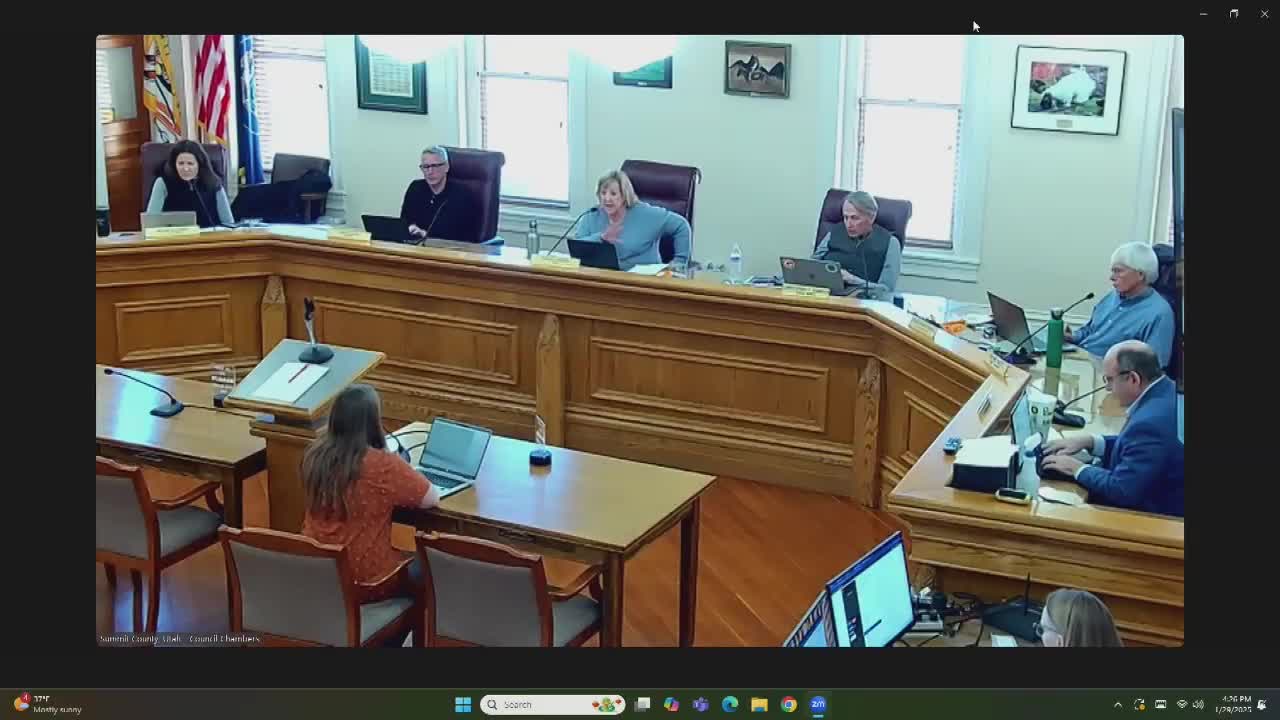
County legislative analyst Jana Young briefed the Summit County Council on mid‑session bills of local importance, urging the council to prioritize outreach on county classification, elections rules, energy projects, housing reporting and Medicaid/behavioral‑health funding.
Jana Young, the county’s legislative analyst, delivered a mid‑session preview and asked the council to prioritize a short list of bills for council action and meetings with sponsors.
Young highlighted HB176 (County Classification Amendments), noting a substitute would keep most counties in their current classification while increasing upper population boundaries; Summit County would remain a third‑class county under the substitute. She asked whether the county should coordinate with neighboring Wasatch County, which faces boundary changes.
Other items summarized: HB88 (changes to moderate‑income housing reporting frequency), HB237 (rollback tax amendments and possible adjustments to how rollback tax/fee‑in‑lieu revenues are allocated to the LeRae McAllister Working Farm and Ranch Fund), and two energy bills (HP241 and HP249) that would limit large solar development on certain agricultural, grazing or forest land and create a state framework for nuclear development; staff cautioned these could conflict with county sustainability goals and existing renewable projects.
Young also reviewed elections legislation including HB300, which would significantly limit mail‑in voting and require voters to hand‑deliver certain ballots to drop sites or polling locations, and SB164, which would change coordination with post offices and allow observers to watch signature verification; county staff said these proposals would increase administrative costs and operational staffing needs. Young asked the council to consider pushing back on proposals that would remove the default mail‑in ballot process the county uses.
Behavioral‑health and public‑health matters were raised: bills under consideration could increase county Medicaid match requirements (with a potential $500,000 impact to Summit County), and other bills could change school‑based health‑services contracting. Young said Public Health supports SB294 (infectious‑disease authority) and county staff are watching several other health‑related measures. Young offered to coordinate council outreach to sponsors on selected bills and asked which issues councilors wanted presented at the upcoming Utah Association of Counties meeting.
Councilors asked staff to brief legislative contacts on county priorities, follow up with Wasatch County on HB176, and provide more detail on the cost impacts of proposed election and Medicaid changes.