Get Full Government Meeting Transcripts, Videos, & Alerts Forever!
Get email alerts on the Economic Development topic
No spam. Unsubscribe anytime.
County and regional partners press plans for Northern Waterfront jobs, green manufacturing and refinery transition
Summary
County staff and regional partners outlined efforts to retain/attract industrial jobs, upgrade priority production areas and plan a “just transition” for refinery‑adjacent land through the Green Empowerment Zone and related initiatives.
Contra Costa County planning staff and regional economic partners used an hour at the supervisors’ retreat to summarize coordinated efforts to preserve industrial capacity, attract clean‑energy manufacturing and prepare for eventual changes at refinery sites along the county’s northern waterfront.
Why it matters: Multiple county and state initiatives aim to protect middle‑wage industrial jobs and direct new investment to the county’s industrial corridors. Local officials said these efforts attempt to convert heavy‑industry land to light manufacturing, logistics and clean‑energy uses while minimizing worker dislocation.
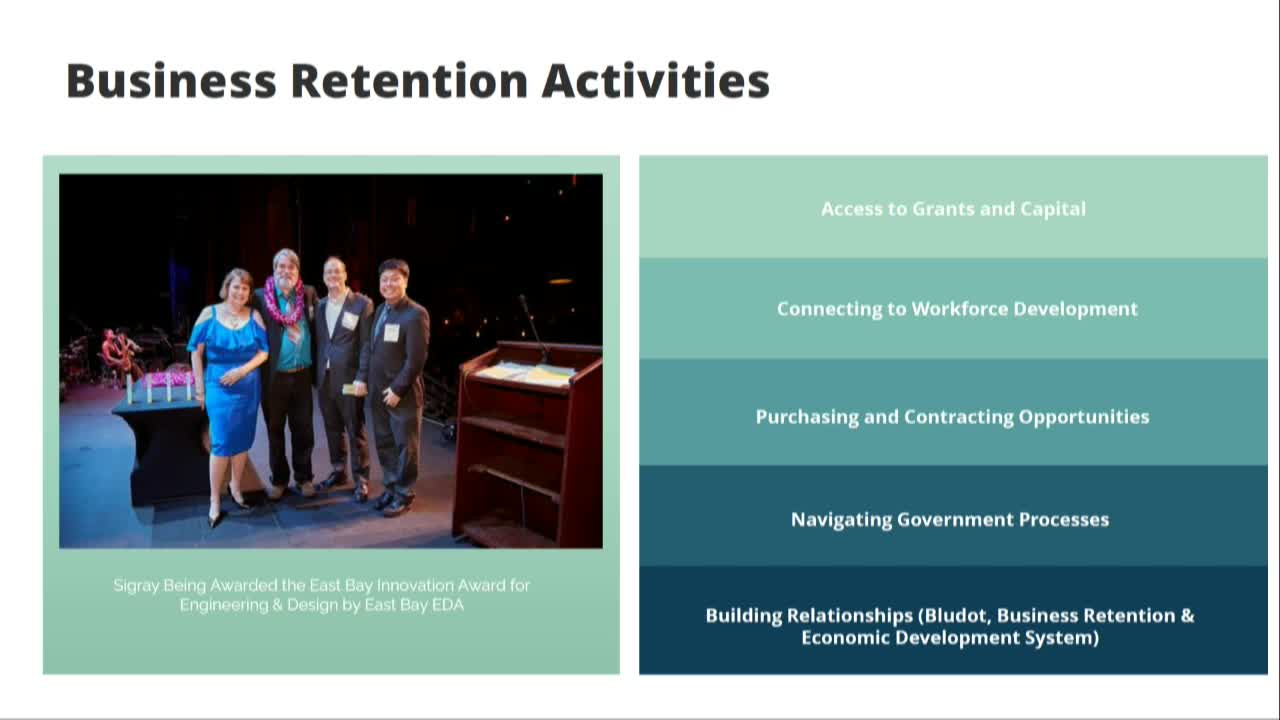
What officials presented: County Economic Development Manager Lisonbee Greenlee summarized the county’s business retention and attraction activities and the Northern Waterfront Economic Development Initiative, which coordinates seven cities and Contra Costa County. The county is also a partner in the state‑funded Green Empowerment Zone (GEZ) proposal, a cross‑sector body charged with supporting cleaner manufacturing and workforce transition on waterfront industrial lands.
Panel of partners: The supervisors heard short briefs from regional partners including the East Bay Economic Development Alliance, county airports (Byron, Buchanan), the county Workforce Development Board, the senator’s district office and the UC Berkeley Labor Center. UC Berkeley’s Labor Center is conducting the GEZ’s research and technical assistance and described a “high‑road” approach that focuses on job quality, equity and sustainability. As UC Berkeley’s Jesse Hammerling put it, the GEZ’s work is designing “high‑road” strategies—meaning good wages, benefits and training—so that new clean‑energy manufacturing can produce comparable work for displaced refinery workers.
Refineries and land reuse: Panelists discussed the long decline in refinery employment and emphasized that regional supply chains have already shifted – meaning simple multipliers overstate local downstream impacts. Multiple speakers argued the county’s priority should be reuse plans for waterfront parcels that preserve industrial opportunity, build a skilled workforce pipeline and increase local housing to support new employment.
Workforce investments: The county and the workforce board highlighted several targeted programs already underway, including apprenticeships, civil‑engineering degree‑apprenticeship partnerships with Contra Costa Community Colleges, and state grants to reskill displaced workers into construction and advanced manufacturing.
Ending: Supervisors and partners agreed the Northern Waterfront, priority production areas and the Green Empowerment Zone give the county an opportunity to shape a transition. Speakers urged the board to pursue housing that supports local workforce growth, align training programs with targeted industry needs, and coordinate land‑use planning to convert heavy industrial sites into higher‑value, locally accessible jobs.