Get Full Government Meeting Transcripts, Videos, & Alerts Forever!
Get email alerts on the Chemical Health Policy topic
No spam. Unsubscribe anytime.
North Kingstown subcommittee questions extracurricular penalties in chemical-health policy draft
Summary
Committee members reviewed a draft chemical-health policy covering alcohol, tobacco and other drugs and spent the meeting weighing whether the policy’s consequences for student-athletes and extracurricular participants should differ from consequences for other students.
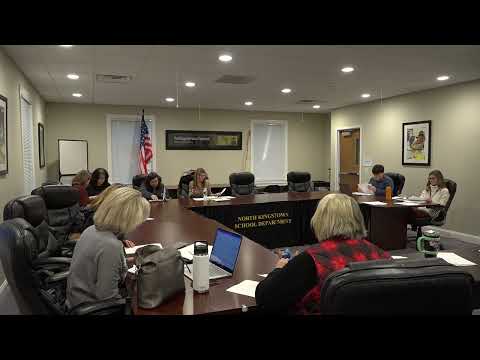
Members of the North Kingstown Health and Wellness Subcommittee spent the Jan. 8 meeting reviewing a draft “Chemical Health/Alcohol and Other Drug Use” policy and debating several implementation and wording issues, notably whether student-athletes and students in extracurricular activities should face separate or enhanced penalties.
The draft sets expectations for all students and also contains a separate section describing mandatory meetings, presentations and a signed contract for students who participate in athletics or extracurriculars. Several committee members said they were uncertain whether those requirements were being implemented consistently across high schools and middle schools and questioned whether excluding non-participating students from similar consequences was equitable or practicable.
Committee members raised these principal concerns: - Separation of sanctions: The draft distinguishes expectations and consequences for “students who participate in extracurricular activities and/or athletics” and for other students. Several members asked why athletics and extracurricular participation were singled out and whether a single policy that covers all students would be clearer and fairer. - Implementation fidelity: The draft says students participating in extracurriculars or athletics will be required to attend a mandatory presentation with a parent or guardian once each year before the first activity or season, and to sign a contract. Multiple members said they had not seen consistent implementation of that meeting or contract across schools and asked staff to check whether the practice is in Aspen or handled locally by athletic directors. - Penalty design and equity: Members debated whether removal from a club or team is an appropriate sanction, noting that some extracurriculars (for example, homework or community-service clubs) are protective factors for students and that removing access can be counterproductive. - Confiscation and police notification: The group discussed whether the policy should explicitly require confiscation and specify destruction or return of confiscated items (for example, prescription medication vs. illicit product), and whether the policy should require or permit notification of the North Kingstown Police Department. The draft currently uses permissive language (the district “may” notify police), and several members favored keeping discretion for administrators. - Wording and definitions: Committee members recommended consistent terminology (for example, “parent/guardian” throughout the document), adding a definitions section to clarify terms such as “substance,” and harmonizing the use of “offense” and “violation.” They also asked whether references to “synthetic marijuana” should be updated or broadened to reflect current usage and legal distinctions.
The subcommittee recommended staff check a set of implementation issues — including whether the athletic/contract requirement is managed centrally (for example, through Aspen) — and suggested adding a clear definition section and explicit guidance about confiscation and handling of controlled substances. No formal vote on the chemical-health policy occurred at the Jan. 8 meeting; the item remained under review.
Committee members said they will follow up by asking the policy subcommittee or district administrators for clarity on where the contract and mandatory meetings are implemented and whether existing interscholastic rules (for example, Rhode Island Interscholastic League provisions) already address some sanctions.