
Commissioners table proposed changes to billboard rules after multi-hour discussion
Get AI-powered insights, summaries, and transcripts
Sign Up Free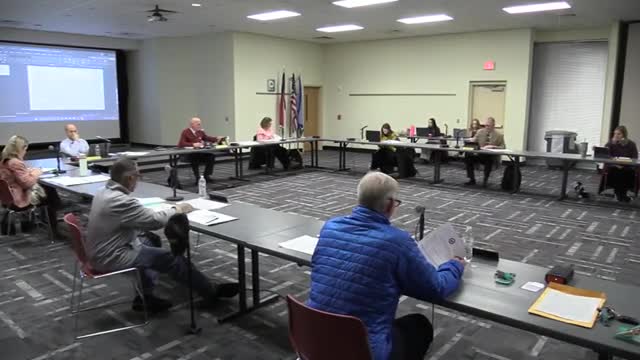
Summary
A developer-backed text amendment to Lee County's unified development ordinance that would change distance limits, allow digital signage and specify construction standards for billboards was discussed in detail; the board voted to table the proposal for further review.
Lee County commissioners on Jan. 6 moved to table a developer-proposed text amendment to Section 11.9.2 of the county’s Unified Development Ordinance that would alter how the county regulates outdoor advertising signs (billboards).
Planning staff presented the application submitted by Warren Stansil of Interstate Outdoor, outlining proposed changes including replacing a 100-foot buffer from residential zoning with a 500-foot buffer measured to dwellings, changing the method of measuring separation between billboards from a 1,000-foot radius to 1,000 linear feet along the same right-of-way, permitting changeable/digital copy subject to light-mitigation technology, requiring 2-mile spacing between digital signs along the same right-of-way, and specifying steel monopole construction for new signs.
Staff research summarized in the packet compared Lee County rules to neighboring counties and found most adjoining counties had stricter standards; the planning board recommended a modified approach that retained zoning-district limits for billboard placement, set a 500-foot distance to residential dwellings (with a notarized waiver process for adjacent owners within 500 feet), required 1,000 linear feet between signs measured along the same right-of-way, mandated a 2-mile separation for electronic/digital displays and allowed changeable copy using light-mitigation technology without endorsing a proprietary brand. The planning board voted 4-1 that the proposed amendment is not consistent with the long-range plan but also voted 4-1 to recommend approval of a modified text amendment.
Commissioner Martin moved to table the item, saying he wanted time to study potential visual impacts and property-value effects after recent local installations of digital billboards. Warren Stansil, representing Interstate Outdoor, said the stricter measures in his proposal were intended to limit proliferation of digital billboards and that a new back-to-back digital billboard could cost about $300,000 to construct, excluding site or utility work.
Commission discussion ranged from technical questions about the waiver’s durability after property sales and whether the proposed light-mitigation technology is proprietary, to whether nearby jurisdictions (the unified development ordinance is shared by multiple jurisdictions) would need to vote on text changes. Planning staff said only Harnett County among those reviewed used a neighbor-waiver approach and noted practical issues, such as waivers not showing in title searches and how to handle owner changes.
After discussion, the board voted to table the amendment. Commissioners asked staff to return with additional research — including examples from other counties, map data on recent zoning changes that could affect billboard locations, and clarity on waiver mechanics and duration — before the item returns for further consideration.