Get Full Government Meeting Transcripts, Videos, & Alerts Forever!
Get email alerts on the Student Discipline topic
No spam. Unsubscribe anytime.
Erie board hears legal outline of district expulsion process, court order limits interim placements
Summary
Erie City School District officials reviewed legal limits and local practices around student suspensions and expulsions, including a decades-old federal consent decree (the "Jordan order") that restricts the district's ability to place students in interim alternative programs.
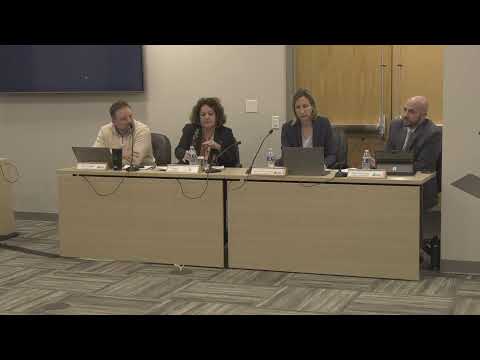
Erie City School District trustees received a legal and procedural overview of the district's student discipline and expulsion process on Jan. 8, with administrators and the district solicitor outlining what state and federal law require and where the board retains discretion.
Solicitor Jennifer Cornall told the board that Pennsylvania law and the Pennsylvania Department of Education regulations set specific due-process steps for students who are suspended or referred for expulsion. "School districts are required to send written notice to parents and students whenever students [are] suspended from school," she said, and districts must provide an informal hearing at the building level for suspensions longer than 3 days.
Cornall stressed a key statutory limit: "School districts are not allowed to suspend students for longer than 10 consecutive school days unless agreed to by the parents." She added that a district may extend an interim suspension to 15 school days if, after an informal hearing, administrators determine that returning the student would pose a threat to the health, safety or welfare of others. Without parental agreement, suspensions beyond 10 consecutive days are treated as expulsions and trigger additional due-process protections.
The district's assistant superintendent and administrative staff walked trustees through current internal procedures for handling referrals for expulsion. Administrators described a weekly expulsion committee that reviews investigation notes and evidence, notifies families via a liaison, and works to identify alternatives such as behavior contracts or stipulations to avoid a hearing when appropriate. The district emphasized efforts to avoid calling student victims or witnesses to testify where possible to reduce the risk of retaliation.
Officials also described how federal law interacts with local practice for students with disabilities. Under the Individuals with Disabilities Education Act (IDEA), school teams must conduct a manifestation determination to decide whether a disabled student's misconduct is a manifestation of their disability; if it is, the district cannot impose disciplinary removals that would amount to a change in placement except in narrow federal exceptions (dangerous weapon, controlled substance, or serious bodily injury).
Cornall and administrators noted one constraint unique to Erie: a 1974 federal consent decree known locally as the Jordan order. That court-approved consent decree requires the district to provide an alternative education placement to students who are removed from regular classrooms for disciplinary reasons and limits unilateral classroom removals by teachers. As a result, Erie Public Schools generally cannot place students in interim alternative programs between initial suspension and a final expulsion decision the way many larger districts do.
Board members asked clarifying questions about who participates in administrative review committees, whether board members can sit on the review committee, and how families access counsel. The district said the review committee is an administrative body composed of central administration staff ("you can't put a board member on that committee," Cornall said, noting due-process separation). Parents are encouraged to secure counsel and the notice letters reference Northwest Legal Services; the district does not provide individual counsel for students but has a hearing attorney to ensure process compliance.
District staff said their immediate goals are to collect feedback at this and a follow-up meeting, draft a board statement of philosophy to guide disciplinary policy, and then have the policy committee review handbook and code-of-conduct language after the statement is adopted. Trustees were invited to submit input to shape a draft philosophy document to be shared ahead of the board's next committee-of-the-whole meeting.