Get Full Government Meeting Transcripts, Videos, & Alerts Forever!
Get email alerts on the Zoning Pet Services topic
No spam. Unsubscribe anytime.
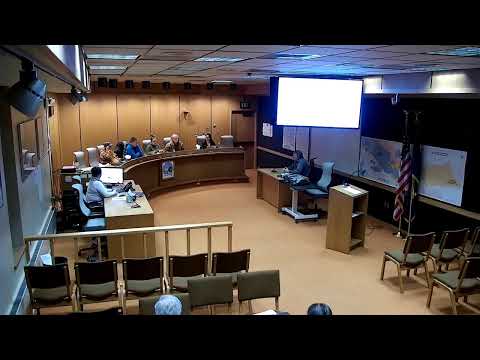
Planning commission advances pet‑boarding ordinance draft, asks staff to add rural residential zones
Summary
The Kodiak Island Borough Planning and Zoning Commission reviewed a draft ordinance to broaden kennel rules into a wider "pet boarding facility" and to add standard conditional‑use criteria. Commissioners asked staff to include rural residential zones and return the draft after borough‑attorney review; no formal vote was taken.
The Kodiak Island Borough Planning and Zoning Commission on Jan. 8 reviewed a draft ordinance that would rename existing "kennel" provisions to a broader "pet boarding facility" category, add a general "pet services" definition and place standard conditions for such uses under the code's conditional‑use section.
The discussion centered on where pet boarding would be allowed, the standards that should apply when a conditional use permit is required, and whether rural residential zoning districts should be included as places where a conditional use application could be filed. The director told the commission the borough attorney had recommended broadening the language so the code would cover more types of animals and associated services.
Why it matters: the draft would change how the borough regulates businesses that board, groom or train animals, and it would create a single place in the ordinance to list standard conditions for conditional uses. That affects where new pet‑service businesses can locate and how existing operations are treated under zoning.
Commissioners and staff discussed three substantive changes recommended by the borough attorney. First, the draft would replace the term "kennel" with "pet boarding facility" to cover animals beyond dogs. Second, the ordinance would add a broader "pet services" definition to include grooming and training. Third, the proposal would insert location for standard conditional‑use conditions in section 17‑260 so that specific conditions for pet boarding could be referenced there rather than being scattered throughout the code.
The director said the staff found examples of similar provisions in other Alaska municipalities, including Ketchikan Gateway Borough and Juneau, and recommended a 50‑foot minimum setback in the draft: "the distance from any building, outdoor run, or play area shall be no less than 50 feet from any adjoining property line with a property that is residentially zoned," language staff reported it had sourced from other boroughs. The commission asked staff to explain where that number came from; staff said the 50‑foot figure appears in the other cited permits and that they did not find larger or smaller standard distances in their review.
Staff also noted that existing pet‑boarding operations in the borough have been approved in different ways — some as home occupations — and that the draft would not retroactively change those approvals. The director told the commission that many conditional‑use approvals in other municipalities include a permit condition requiring Alaska Department of Environmental Conservation (ADEC) approval of a waste‑disposal plan for kennel operations; staff said ADEC's review typically focuses on where waste is disposed so it is not dumped illegally.
During public comment, resident Summer Blaine asked whether the 50‑foot offset applies only when an adjacent lot contains a residence and asked whether the borough could specify minimum offsets for adjacent lots without residences. The commission said staff would take that consideration into account.
On the zoning question, staff said the current code allows boarding in two zones: it reviewed where the use is permitted versus conditional in existing code (staff said the use is only allowed in two zones under current wording). Commissioners raised concerns about parity among rural residential zoning districts and several commissioners asked staff to propose treating all rural residential districts uniformly if the commission extends conditional‑use eligibility to them. The commission directed staff to add the rural residential (RR) districts into the draft as potential locations for conditional‑use applications and to return the revised draft after another review by the borough attorney. No formal motion or vote occurred at the work session.
What comes next: staff will ask the borough attorney to review the revised language, add references to any existing conditional‑use provisions the commission wants retained, and return the ordinance draft for a future meeting and public hearing schedule. The commission signaled it wants the item on the next available agenda once attorney comments are incorporated.
Local context: the change would affect property owners, small businesses that provide pet services, and neighbors near proposed pet‑boarding sites. It also ties to state environmental oversight because staff recommended requiring an ADEC waste‑disposal approval as part of conditional‑use review for pet‑boarding facilities.