Get Full Government Meeting Transcripts, Videos, & Alerts Forever!
Get email alerts on the Gaza Humanitarian Crisis topic
No spam. Unsubscribe anytime.
UN says Gaza humanitarian situation worsening; calls for immediate ceasefire and unrestricted aid
Summary
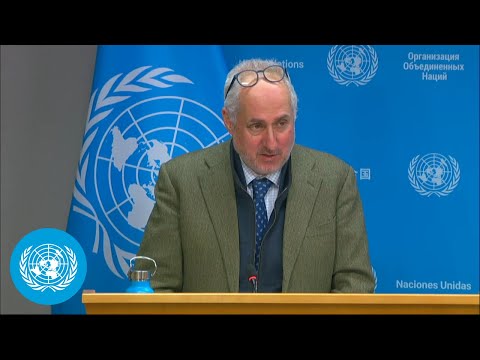
At a United Nations press briefing, the spokesperson warned of rising civilian casualties, critical food and fuel shortages, and restricted humanitarian access in Gaza, and repeated the secretary-general’s call for a ceasefire and the unconditional release of hostages.
The United Nations spokesperson said the humanitarian situation in the Gaza Strip is worsening, with high civilian casualties, dwindling supplies and restricted access for aid agencies.
In the briefing the spokesperson cited figures from the Gaza Ministry of Health saying “over 46,000 Palestinians have now been killed in the Gaza Strip since October of 2023” and that “most of these people were women and children.” The spokesperson added that “8 newborn babies died of hypothermia in the last month alone.”
Why it matters: the briefing said mass civilian casualties, fuel shortages and blocked crossings have sharply limited the delivery of food, medicine and health services across Gaza. The UN called for an immediate ceasefire and the unconditional release of all hostages held in Gaza.
The spokesperson said humanitarian partners report roughly 120,000 metric tons of food assistance remain stranded outside Gaza — “enough to provide rations for the entire population for more than 3 months” — and warned that, without additional supplies, distribution of food parcels will be “extremely limited.” The Office for the Coordination of Humanitarian Affairs (OCHA) and other partners told the briefing that more than 50 community kitchens providing over 200,000 meals a day in central and southern Gaza were at risk of shutting down.
The World Food Programme told the briefing that, as of Monday, only five of 20 bakeries supported by WFP were still operational across the Gaza Strip and that those bakeries rely on ongoing fuel deliveries to keep running. The spokesperson said lack of fuel is also crippling Gaza’s health system: generators are failing, and hospital services are at risk.
The briefing noted that between Dec. 22 and the day before the press briefing partners reported some 560,000 people received primary and secondary health-care services across the strip, but that ongoing hostilities in northern areas have severely disrupted services there. OCHA said Al Aouda Hospital in Jabaliya — described at the briefing as the only hospital in North Gaza that is still partially functioning — has extremely limited access for humanitarian personnel and patients.
The spokesperson described repeated obstacles to UN-coordinated missions to North Gaza, saying that out of 15 coordinated humanitarian movements only five were facilitated, four were impeded, three were denied and three were canceled for security or logistical reasons. The spokesperson urged all parties to respect international humanitarian law and to protect civilians.
The spokesperson summarized the secretary-general’s position: “Civilians must be protected. Civilians must be respected at all times, and their essential needs must be met. There must be an immediate ceasefire and the immediate and unconditional release of all the hostages being held in Gaza.”
The briefing attributed many operational details to OCHA and the World Food Programme and cited figures from the Gaza Ministry of Health.