
Waukesha council approves change to allow residential reuse of former UWM campus
Get AI-powered insights, summaries, and transcripts
Subscribe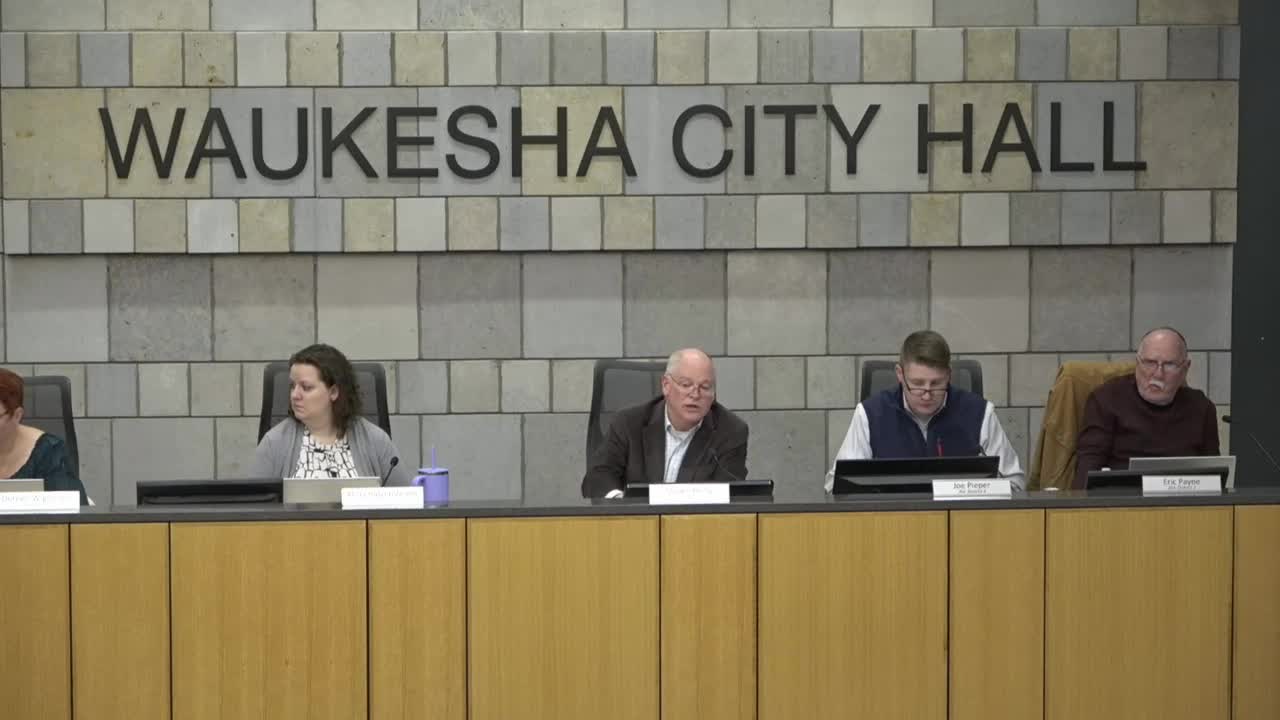
Summary
The Common Council unanimously amended the comprehensive plan to change the 75.9‑acre University of Wisconsin‑Waukesha campus site from institutional to residential flexible land use, setting the stage for future rezoning and developer proposals after public comment and county presentations.
The Waukesha Common Council on Tuesday voted unanimously to amend the city’s comprehensive plan to change the 75.9‑acre University of Wisconsin–Waukesha campus site from an institutional designation to a residential flexible land‑use category.
City staff and Waukesha County officials told the council the change is intended to allow developers to propose residential redevelopment once the site becomes available after the university closes its campus in June 2025.
City planner Doug (Community Development) told the council the site sits between University Avenue, Northview Road and Summit Avenue and is owned by Waukesha County, which also owns the buildings. Doug said subsequent rezoning to specific residential districts will be required before any development can proceed. “You will be seeing more of this in the future,” he said, describing the amendment as the land‑use step that will allow detailed rezoning and development proposals to follow.
Dale (Waukesha County representative) said the county seeks to transfer the property as quickly as feasible. He told the council the county has spent about $11 million on building improvements and that the UW system has been spending roughly $500,000 a year on maintenance. The county estimates about 71 developable acres remain on the 75.9‑acre site and said preliminary demolition estimates for the campus buildings are about $6 million if the county were to fully remove structures, or roughly $2 million if a private developer could reuse demolition aggregate on site. Dale said the state legislature has set aside roughly $2 million in grants to help impacted counties mitigate costs from closing county‑based UW campuses.
Staff and county presentations described topography, wetlands and infrastructure constraints. The site includes steep hill areas likely to remain as open space, wetlands identified north and south of the parking area, and a city water tower that must stay in place and be worked around in any redevelopment. Staff noted University Avenue provides existing utilities and controlled traffic signals at Northview and Summit that would serve future access. Doug said airport height restrictions likely would cap building heights in portions of the site at about 50 feet above current grade.
Public commenters expressed a range of concerns and preferences. Several nearby residents asked that future development include green space or a neighborhood park, requested buffering from new development, and pressed for single‑family or lower‑density housing rather than large multifamily complexes. Maggie Flood of Maple Way North urged “major consideration for having a small green space and a neighborhood park,” citing longstanding ponding and wet soils in the southern portion of the site. Dwayne Minor, whose property abuts a parking lot, asked whether existing hedges and lighting could be preserved during redevelopment. Debbie Pointer and Stan Flack urged the council and county to consider retaining or repurposing campus buildings for recreation and community programming, though county staff said converting the campus buildings to K–12 or similar community use would be prohibitively expensive because of central heating/cooling systems and building mechanicals.
Council members representing nearby wards said they would work with residents and the county as proposals come forward. Alderman Rick Lemke, who represents the district that includes Tallgrass, said the change is the first step: “I will be working with the county and those developers before they come to the planning commission to make sure that you are heard,” he said.
The amendment passed unanimously. The council recorded a quorum of 14 members present at the time of the vote.
What’s next: The comprehensive‑plan amendment does not rezone the property or approve any specific development. Staff said rezoning applications, traffic and stormwater studies and developer proposals will come later and will require plan commission review and subsequent council action.