Get Full Government Meeting Transcripts, Videos, & Alerts Forever!
Get email alerts on the Cell Phone Policy topic
No spam. Unsubscribe anytime.
Wake County Schools begins districtwide review of cell phone, personal-device policy; aims for 2025–26 implementation
Summary
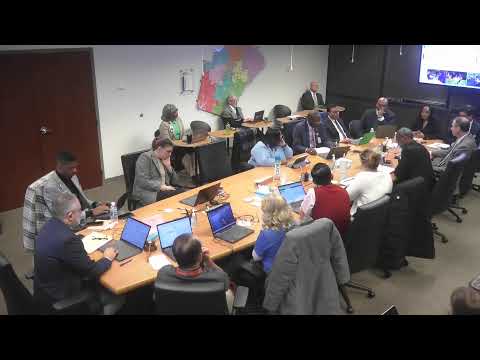
At a Jan. 7 work session, Wake County Schools staff and the board discussed a districtwide review of cell phone and personal-device policy, heard research and local pilot reports, and set a timeline to return a draft for board consideration aimed at taking effect in the 2025–26 school year.
Wake County Schools officials and board members opened a districtwide review of cell phone and personal-device policy at a Jan. 7 work session, with staff saying they aim to present a revised policy for discussion this spring and to have a policy operational for the 2025–26 school year.
The work session focused on how personal devices affect student learning and well-being and on what information the board needs to make a districtwide policy. “Today, we are excited to introduce an important initiative that focuses on revisiting and refining our district's approach to cell phones and and personal devices, as well as a long term educational technology strategies,” said Dr. Wilson Norman, a district staff member who introduced the project. Mike Martin, a consultant with RTI (Research Triangle Institute), told the board staff and RTI plan to gather research and stakeholder input to inform a data-driven, inclusive process: “we really wanna use this time to kind of talk through the essential challenges in thinking about a cell phone policy and really get your input,” Martin said.
Why it matters: Board members and staff framed the review as an effort to support student learning and well-being while minimizing enforcement burdens for teachers. Staff recommended distinguishing policies for district‑issued instructional devices (longer procurement cycle) and personal devices (shorter timeline), and to pursue stakeholder engagement across students, families, educators and school leaders before drafting final language.
What staff presented and the board discussed - Staff outlined a set of framing “understandings” about device use: focused attention is essential to learning; most schools already limit device use during instruction with exceptions for instructional, medical or accommodation needs; enforcement is challenging; policies should be revisited as technology and research evolve. The presentation noted Wake County’s variability across schools and grade levels and that many schools are already piloting approaches. - Timeline: staff said a revised district policy for cell phones/personal devices is intended to be in place for the 2025–26 school year. Changes to district-provided instructional hardware would follow a longer procurement and implementation timeline targeted toward the 2026–27 school year. - Options and implementation approaches discussed included a restrictive end of a continuum (students do not bring phones to school or devices are stored out of sight), middle ground approaches (use allowed during noninstructional times such as lunch or passing periods or at teacher discretion), and more flexible classroom-by-classroom models. - Board members raised enforcement concerns and asked staff to gather examples and outcomes from Wake schools already using different approaches (for example, pouch systems and bell‑to‑bell policies), from comparable districts (the presentation noted examples including Chatham County, Winston‑Salem and Charlotte-Mecklenburg Schools), and from national research such as Pew surveys. - Equity and accommodations: board members emphasized that medical needs, individualized education plan accommodations and language‑access uses (for example, students using phones for translation) must be included as explicit exceptions and considered when drafting policy language. - Practical issues: members asked staff to examine how district software and two‑factor authentication will work if phones are restricted; how smartwatches should be treated; whether policies should allow teacher‑approved, instructional uses (tuning instruments in music class was cited as an example); and how to avoid placing enforcement burdens primarily on classroom teachers.
Board input and next steps - Staff said they will collect wider feedback: focused interviews, focus groups and district‑wide surveys tailored to produce representative input from families, students, principals and teachers. Board members suggested the Community Engagement Committee review survey instruments and methods to ensure samples and questions are not leading and that all parts of the county are represented. - Staff said they will verify posted school policies, speak with other districts about outcomes from pilot programs, and synthesize stakeholder input to return to the board in March and April with analysis and a draft policy for consideration.
Quotes from the meeting include Dr. Wilson Norman and Mike Martin, as noted above, and multiple board members who urged staff to gather practical enforcement experience from schools that have already altered practices. Board members repeatedly stressed: the central aim is supporting student learning and well‑being, not creating a policing role for classroom teachers.
Formal action and meeting close Late in the meeting the board voted to enter closed session. A motion “to go into closed session to consider personal information protected under g s 143 dash 318…” was moved by Mr. Hershey and seconded by Miss Mahaffey; the board took a voice vote in favor and moved to closed session.
What to watch for: staff said they will return in March with summarized findings from Wake County pilot practices, stakeholder feedback and comparable-district policies and, based on that evidence, bring a draft cell phone and personal‑device policy for board deliberation this spring.