Get Full Government Meeting Transcripts, Videos, & Alerts Forever!
Get email alerts on the Cannabis Regulation topic
No spam. Unsubscribe anytime.
Monterey County adopts 2024–26 cannabis strategic plan; enforcement and industry sustainability prioritized
Summary
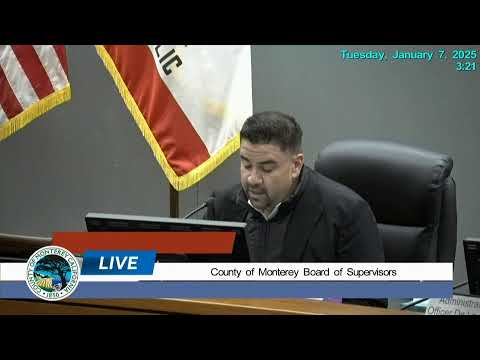
The Monterey County Board of Supervisors voted unanimously on Jan. 7 to adopt the county’s 2024–26 cannabis program strategic plan, a two-year update that will guide permitting, enforcement and industry engagement.
The Monterey County Board of Supervisors voted unanimously on Jan. 7 to adopt the county’s 2024–26 cannabis program strategic plan, a two-year update that will guide the county’s permitting, enforcement and industry engagement.
Michelle House, cannabis program manager, told the board the update “brings the program into alignment with the request from the civil grand jury” and that it keeps the program’s mission while revising goals, strategies and priorities. House said the plan includes 21 strategies and a timeline extending to the current fiscal year; staff will publish performance indicators tied to the updated goals and report results at bimonthly cannabis committee meetings.
Why it matters: County regulation is intended to move operators from the illicit market into regulated businesses, protect public health and the environment, and collect tax revenue to support county services. County staff and industry witnesses said they remain concerned about an oversupply of product statewide and continued illicit cultivation in remote areas.
Board questions and public comment: Supervisor Kate Daniels asked specifically how the plan would address illegal cultivation and the black market. “What part of this strategic planning is going to help us curb that?” she asked during the discussion.
Public commenters included growers and industry representatives who urged the county to preserve access for legacy outdoor cultivators in places such as Big Sur, and others who urged stronger enforcement. Tyler Everett, a Carmel Valley resident who participated in public comment, characterized state licensing and distribution rules as effectively allowing product to reach the illicit market: “The distributor buys the cannabis from the cultivators and then they in turn sell it onto the black market,” he said. Industry representative Joey Espinosa praised the plan’s emphasis on sustainability and called for continued efforts to bring legacy outdoor growers into the regulated market.
Vote and next steps: Supervisor Kate Daniels moved adoption of the plan and Supervisor Glenn Church seconded. The motion carried with all supervisors voting yes. County staff said the program will focus in the coming 12–18 months on the priorities listed in the plan, including strengthening enforcement against illegal operations, continuing quarterly inspections and establishing measurable performance indicators to track progress.
Background: The county adopted its first cannabis strategic plan in 2018 and revised it in 2020 and 2023. The 2024–26 update was developed with input from industry focus groups and county regulatory partners, including the sheriff, district attorney, public health and permitting departments.
Ending: The board directed staff to publish the plan, begin reporting performance indicators at regular committee meetings and continue outreach to legacy outdoor cultivators about pathways into the regulated market.