Get Full Government Meeting Transcripts, Videos, & Alerts Forever!
Get email alerts on the County Leadership topic
No spam. Unsubscribe anytime.
New Maricopa County chair makes public safety, housing and economic development top priorities
Summary
In an organizational address to the Board of Supervisors, the newly elected chair outlined a slate of priorities including a push to extend a jail excise tax, measures to bolster sheriff staffing and pay, a proposal to create a county economic development position, housing regulation reforms, and a plan to review elections procedures.
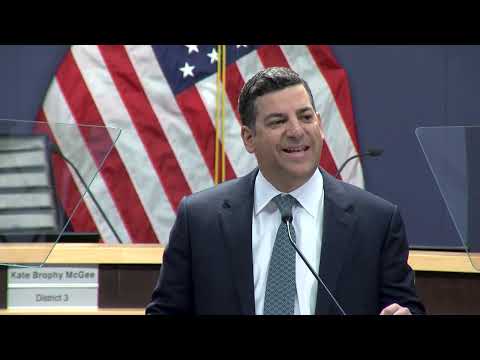
The newly elected chair of the Maricopa County Board of Supervisors used an organizational address to lay out an agenda focused on public safety, housing and economic development, urging state action on a county sales-tax that funds jails and proposing new county positions and programs to spur job growth and streamline housing approvals.
In his remarks to fellow supervisors and invited guests, the chair said county leaders must balance “prosperity and security” and pledged to work with the county manager and elected officials to align county resources with those priorities. “It's an honor to be elected by my colleagues as chairman of the board of supervisors,” he said.
The chair framed public safety as the top fiscal and policy priority for the board. He called attention to the jail excise tax that currently funds adult and juvenile correction facilities, probation services and correctional health care and noted it will expire in 2027 unless the state legislature acts to allow the measure on the ballot. The chair said the county’s citizen-led public safety committee recommended a 20-year extension of the one-fifth of a cent sales tax that has been in place since the 1990s, and urged state approval to put an extension before Maricopa County voters.
He criticized the federal court oversight stemming from the Melendres litigation, saying the county has spent nearly $300 million over the last 15 years related to that oversight and that a court-appointed monitor’s fees have risen. “Has the federal monitor made anyone safer while collecting $1,000,000 in fees? No,” he said, and pledged to work with county attorneys and board colleagues to seek a way to end what he described as counterproductive oversight.
The chair also described internal county priorities for public safety staff. He said vacancy rates for sheriff deputies, detention officers and dispatch operators are too high and that he is “committed to working with this board, with Sheriff [Jerry] Sheridan, and with our human resources professionals to improve the compensation structure at the Sheriff’s office.” He asked county leadership to prioritize filling critical positions this year.
On fiscal management, the chair said he will direct the county manager to implement a performance-management system aimed at reducing waste and aligning resources with board priorities. He reiterated the county’s recent fiscal claims — lowered property tax rates for four consecutive years, an 11% overall budget cut last year, and no general obligation debt — framing them as background for the new performance initiative.
Economic development was another major theme. The chair asked the county manager to create a new, full-time economic development position to coordinate with cities and regional chambers of commerce and to represent Maricopa County’s roughly 4.5 million residents in recruitment efforts for employers and industries. He said the position would help the county compete for companies and support workforce development partnerships already underway.
On housing, the chair said Maricopa County faces a crisis of affordability and proposed reviewing county policies that raise building costs. He said he had convened a “kitchen cabinet” of housing experts to pursue measures such as cutting non-safety-related regulatory burdens, modernizing zoning to allow greater density where appropriate, and updating land-use policies to encourage affordable neighborhoods. He also said county staff indicated that having the county flood-control district take a greater role in revising FEMA flood-plain maps could halve current review times, and he said he will press the federal government on the issue.
The chair addressed elections administration, calling the county’s recent elections “free and fair” and urging an end to baseless claims of widespread fraud. He described a proposed “95 to 1” plan to get 95% of votes tabulated by the end of election night and urged the state legislature to adopt election-law reforms he said would protect election workers and speed results. Specific elements he proposed include a cutoff date for early ballot drop-offs, use of government buildings as polling places, and elimination of emergency voting on the weekend immediately before Election Day in favor of expanded on-site voting.
He also touched on higher-profile local projects and community matters: forming an advisory committee to explore bringing NHL hockey back to the Valley and working with the Diamondbacks on Chase Field while emphasizing the board’s role in protecting taxpayers; supporting transportation projects funded by Proposition 479 and urging more visible advocacy for the proposed I‑11 interstate connecting Phoenix and Las Vegas; and continuing to fund and expand animal-care and county employee supports, including a new onsite childcare center for county employees and recognition programs for high-performing staff.
Throughout the remarks the chair repeatedly invoked collaboration with fellow supervisors, county elected officials and staff and linked the initiative list to county management and state cooperation. He closed by asking for prayers for the board and stressing his intent to be a “board of action.”