
Venice planning commission hears debate over Village at Laurel and Jacaranda site plan; traffic, buffering and stormwater raised
Get AI-powered insights, summaries, and transcripts
Subscribe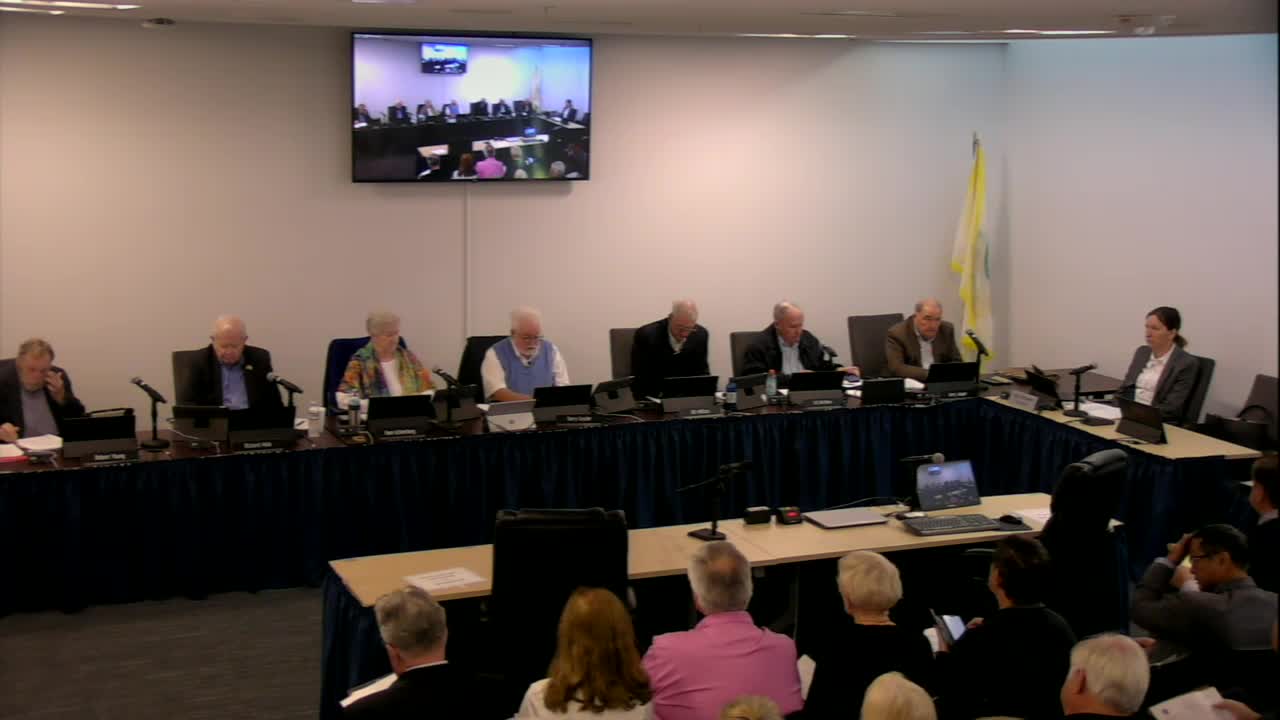
Summary
City staff and the applicant say the 10.42‑acre Village at Laurel and Jacaranda site plan complies with the Milano PUD and city code; nearby residents and neighborhood groups raised unresolved traffic-signal, landscape‑buffer and stormwater concerns during a contested quasi‑judicial hearing.
The Planning Commission on Jan. 7 heard a contested site‑and‑development‑plan for the Village at Laurel and Jacaranda, a proposed 61,375‑square‑foot retail center on a 10.42‑acre parcel at the southwest corner of Laurel Road and Jacaranda Boulevard.
Staff and the applicant told the commission the plan complies with the Milano planned unit development (PUD) and the City of Venice Land Development Code. "There is sufficient information on the record for planning commission to take an action on this site and development plan," Nicole Tremblay, senior planner, said during her presentation. "The cap was 70,240 square feet. They're currently proposing 61,375 square feet."
Why it matters: Commissioners must decide whether the site plan meets local code and the binding master plan while weighing concerns about compatibility, traffic safety and downstream flooding raised repeatedly by affected parties and neighborhood groups. Planning commission decisions on site plans are final unless appealed to city council.
What the applicant says: Jeffrey Boone, attorney for Border and Jacaranda Holdings LLC, told commissioners the written application and supporting materials in the record provide "competent substantial evidence" that the plan meets the city's standards. The proposal includes two retail buildings (a grocery with drive‑through pharmacy and liquor sales, plus six smaller tenant spaces) and an undeveloped future phase area.
Traffic and access: The hearing focused heavily on vehicle access at Laurel and Veneto (the development entrance) and whether a traffic signal is needed. Frank Domingo, the applicant's traffic engineer, said he submitted an administrative variance request to Sarasota County seeking a signal but that the county denied it because the proposed signal "did not meet warrants" under the Manual on Uniform Traffic Control Devices. Domingo said the county had suggested a roundabout as an alternative and that a four‑way stop or flashing beacon were unlikely to meet county criteria.
Residents disputed that the intersection could safely operate without a signal. "This is irresponsible, reckless and unsafe," Ruth Cordner, treasurer of the Venetian Golf and River Club Property Owners Association, told commissioners, urging the applicant to work with the county to secure signalization. The applicant's team said some access improvements and timing changes could mitigate operations and noted Laurel and Jacaranda are county roads; any county permits or alterations would require Sarasota County review and approval.
Buffering and landscaping: Neighbors and the POA disputed whether the submitted landscape plan meets the Milano PUD's commercial buffering standards for Laurel Road. Staff and the applicant said the site plan will comply with the Milano binding master plan standards and that final compliance will be verified in construction plans, but an affected‑party cross‑examination focused on whether required canopy trees and a continuous hedge are shown inside the required five‑foot buffer. Attorney exchanges at the hearing included the applicant agreeing to a measurable lighting standard for parking (0.5 foot‑candle at the property line) and to comply with the Milano buffer standard, while opponents asked for the commission to require a revised landscape plan or a continuance to correct the discrepancy.
Stormwater and flood risk: The North Venice Neighborhood Alliance (NVNA) presented an independent engineering review that flagged modeling and data concerns in the applicant's stormwater analysis. NVNA's representative summarized the review as finding "several issues with stormwater modeling," and said the proposal would fill a wetland and pond that currently provide floodplain storage — the NVNA review stated the proposal would add about 10.5 acre‑feet of fill to the site and recommended an independent stormwater review by the city or county to confirm downstream effects. The applicant indicated it has obtained required state and agency permits and that stormwater design follows South Florida water‑management and regulatory processes.
Stipulations and outstanding items: The applicant presented five stipulations it said it would accept (parking lot light levels, security cameras, prohibition on overnight parking for boats/RVs with signage, no gas pumps, and compliance with Milano PUD landscaping standards). The applicant declined at this hearing to accept requested blanket business‑hour limits proposed by the POA and resisted a condition that the developer must fund or construct a traffic signal as a prerequisite to building permits, citing county authority over those signals and prior county denials of a signal at this location.
Procedural and evidentiary notes: City attorney Kelly reminded commissioners this was a quasi‑judicial proceeding and that decisions must be based on the record of competent, substantial evidence. Staff told the commission the technical review committee (TRC) had not identified outstanding technical issues and that the transportation consultant had issued a compliance notification on the submitted traffic study.
Votes taken during the meeting: The commission approved the Dec. 17 meeting minutes by voice vote. It also granted affected‑party status to the Venetian Golf and River Club Property Owners Association (represented by Mr. Lobeck) and to resident Gary Scott; both requests were approved by voice vote during the administrative portion of the hearing.
Next steps: The hearing was ongoing at the end of the transcript provided; commissioners heard extensive cross‑examination, multiple public comments and expert testimony. Any formal decision on approval, approval with conditions (stipulations), denial or continuance would come later in the meeting record or in a subsequent vote. If denied by the commission, the applicant could appeal to city council.