Get Full Government Meeting Transcripts, Videos, & Alerts Forever!
Get email alerts on the Cannabis Regulation topic
No spam. Unsubscribe anytime.
Monterey County adopts 2024–26 cannabis strategic plan; debate continues over outdoor growers
Summary
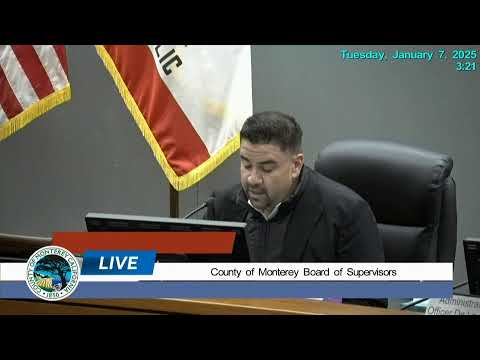
The Monterey County Board of Supervisors voted Jan. 7 to adopt the county’s 2024–26 Cannabis Program Strategic Plan, which updates goals, strategies and performance measures for the cannabis program.
The Monterey County Board of Supervisors voted unanimously on Jan. 7 to adopt the county’s 2024–26 Cannabis Program Strategic Plan, a two-year update that sets revised goals, performance indicators and 21 priority strategies for the county cannabis program.
Michelle House, Monterey County cannabis program manager, told the board the update aligns the program with a civil grand jury recommendation to refresh the plan biennially and incorporates feedback collected from industry focus groups. House said performance indicators will allow the county to “identify areas of improvement” and that progress will be reported at bimonthly cannabis committee meetings.
Debate and public comment: During discussion, Supervisor Kate Daniels urged the county to preserve and find a legal pathway for small-scale outdoor cultivators in Big Sur and Carmel Valley, arguing the county has a unique, regional product that could provide economic sustainability if supported. “We have something very unique about it, the appellation,” Daniels said. But House and other staff cautioned the principal obstacles remain financing, permitting and enforcement costs for remote outdoor operations.
Public commenters again raised the illicit market and enforcement issues. Tyler Everett, who described himself as an applicant to the outdoor pilot program, argued that regulatory design and market dynamics have allowed large licensed operations to flood the market and that federal intervention may be needed to curb illicit distribution. Joey Espinosa, an industry representative, urged continued efforts to “bring our legacy outdoor cultivators into the legal market” and to develop market differentiation for Big Sur-grown product.
Key elements of the plan: The update keeps the program’s mission but revises goal language, and the county identified four updated goals and 21 strategies; staff said the plan includes a timeline and historical tax-revenue figures back to the 2015 program start. One explicit priority listed is enforcement against illegal cannabis operators.
Board action: Supervisor Daniels moved to adopt the strategic plan; the motion was seconded and carried by unanimous voice vote.
What’s next: Staff said it will implement the priority strategies during the next 12–18 months and present performance indicators at regular cannabis committee meetings. Supervisors requested ongoing enforcement coordination and reiterated interest in exploring tailored approaches for small-scale legacy outdoor growers when market and financing conditions permit.