Get Full Government Meeting Transcripts, Videos, & Alerts Forever!
Get email alerts on the Drinking Water Pfas topic
No spam. Unsubscribe anytime.
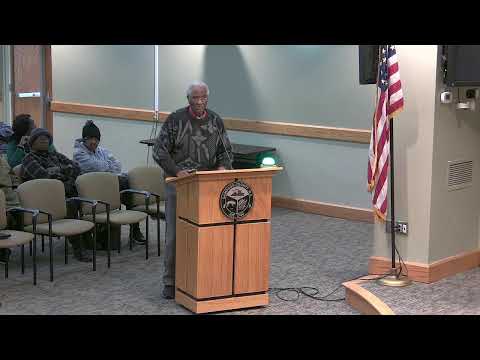
Residents tell Sampson County commissioners PFAS found in wells, urge county to extend water service
Summary
Multiple residents told the Sampson County Board of Commissioners that PFAS was detected in neighborhood wells and urged the board to apply for funding and extend county water to affected areas. Commissioners heard several public comments and later completed routine agenda votes including road naming and appointments.
Residents of Sampson County told the Board of Commissioners at a public meeting that recent tests found PFAS in private wells and asked the board to seek county water extensions and grant funding to address the contamination.
Elaine F. Hunt, who identified herself as a resident at 7171 Old Warsaw Road, told commissioners she and neighbors have been seeking help for two years. “Each 1 told me, like I realized, I can't apply for a grant, but Sampson County Board of Commissioners can to extend water to our area,” Hunt said. She said a state team tested about 16 households in her area; results had been returned for 14 and “half of the ones that were tested have the PFAS.” She said the state delivered bottled water to affected households.
The residents’ requests focused on two concrete items: that the county apply for available grants to extend county water and that the county help prioritize affected neighborhoods for water infrastructure.
Antoinette James, a longtime resident of the Highsmith side of Roseboro, described the personal and financial impacts of contaminated wells. “They bring out the filtration system, but they don't tell you that that filtration system is gonna cost approximately $200 annually to maintain,” James said. She said she had been without running water for 10 days at one point and that recurring repairs and replacement wells impose heavy costs on households.
Jay Ingram, identified as president of the Millside Community Watch, said testing showed shallow wells were more likely to test positive than deep wells. “We found that PFAS was in the water. ... the way it looks, the people that had a shallow well were the ones that came back positive. Deep well, you are okay,” Ingram said. He said a local application for county assistance had been turned down previously but residents still needed answers about why.
Larry Sutton, who said he has county water on Bearskin Road, urged the board to begin setting aside funds for future water infrastructure. “This problem will continue to grow and become more expansive and expensive over the years,” Sutton said, and recommended the county plan for long-term infrastructure needs.
Board members did not take a formal vote on a water-extension plan during the public-comment period. Commissioners heard the public comments during the meeting’s public-comment section and did not announce a specific next step or a staff assignment on record to pursue a grant application during that discussion.
Votes at a glance
- Sheriff’s office: Approved purchase of a whole-body security scanning system using grant funds and an associated budget amendment. Motion made and seconded; vote recorded as carried (mover/second not specified in the transcript).
- Road naming: The road naming committee recommended naming private road PBT1135-3132 “Cromartieville Lane.” The board opened a public hearing, received no public opposition, and motion to adopt the committee recommendation carried.
- Appointments: The board approved two nominations to the Planning and Zoning Board — Dr. Randy Simmons and Tate Naylor. Motion and second were made and the motion carried.
- Consent agenda and adjournment: The board approved the consent agenda and later adjourned; motions carried as recorded.
The meeting record shows the public-comment section included multiple speakers raising similar concerns about private well contamination, costs of filtration, and requests to connect to county water. Speakers urged clearer communication about why prior applications for assistance were denied and asked the board to prioritize infrastructure planning and funding for affected neighborhoods. The record does not include a formal county commitment or timeline to pursue particular funding sources during the public comments.
Ending
Speakers said they would follow up with commissioners and expected the board to address water access and remediation in future meetings. The transcript shows commissioners completed several routine agenda actions later in the meeting but did not announce a formal decision on extending county water to the neighborhoods described during public comment.