Get Full Government Meeting Transcripts, Videos, & Alerts Forever!
Get email alerts on the Food Security topic
No spam. Unsubscribe anytime.
Sudan rejects IPC famine findings, says report rushed and suspends IPC membership
Summary
Sudan told the U.N. Security Council that an IPC report published Dec. 23 was rushed, relied on incomplete data because conflict restricted access, and announced it was suspending its membership in the IPC committee.
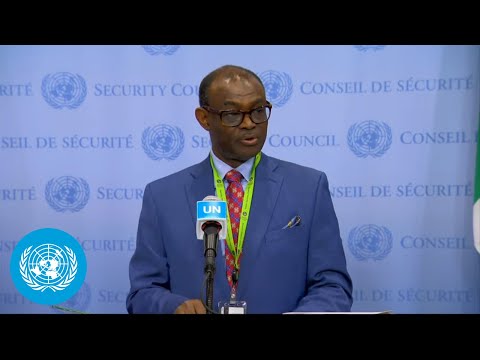
Ambassador Mohammed, speaking before the United Nations Security Council, said Sudan rejects parts of the Integrated Food Security Phase Classification (IPC) report released Dec. 23 and announced that the Republic of Sudan had suspended its membership in the IPC committee.
Ambassador Mohammed said the report was "hurriedly being, publicized, on the 23rd December during the Christmas time, which was an awkward time to us to us. We didn't thought that, such a kind of report would be, released." He said federal and state technical working groups were unable to complete or update analyses because of restricted movement and sieges in parts of the country and that some areas were unreachable by survey teams.
The ambassador told the council the working groups "relied in the data collection processes on the use of phones and social media, such as WhatsApp, whenever available in the state, and the analysis process was done virtually," which he said produced a large gap in information. He said the groups did not collect or analyze data from health and nutrition institutes and that crop and food security assessments were incomplete; he said a completion was expected in "the 2nd week of January." The ministry of agriculture and forestry issued a statement Dec. 24, the ambassador said.
Ambassador Mohammed disputed characterizations in the IPC report that famine conditions prevailed in some areas. "So Sudan cannot be classified as being at risk of famine as it is 1 of the largest agricultural countries in the region, rich with its natural resources," he said, adding that the rainy-season harvest (June–November) covered roughly 16,000,000 hectares and engages about 80% of Sudanese farmers and produces staple crops such as sorghum and millet that feed more than 60% of the population.
At the same time, the ambassador acknowledged food insecurity tied to the conflict, saying the difficulties were often caused by "the militia, which obstruct deliberately the access of food to the affected people in those areas." He said the government does not withhold humanitarian assistance and that "there is a huge deficiency of the required, level of, humanitarian assistance" because donors have not met pledges. He also accused the Rapid Support Forces (RSF) and other militias of blocking or taking control of convoys, saying, "They are they have, refused WFPs, convoys to get through Zamzam, and they are shelling Zamzam, Abu Shook and other, what do you call it, refugees camps. They mean it on daily basis using drones, and they're shelling al Fashir on daily basis." (Quotation as spoken.)
The ambassador listed technical steps he said are required before declaring famine under international standards, including joint technical surveys from village through national levels, survey results showing 20% of a population in IPC Phase 5, and a family review committee of internationally recognized experts to verify conditions. He said only "1 to 2% are, classified under phase 5. That's around, 625,000." He said those technical requirements had not been met in Sudan and that some organizations might declare famine to spur donor funding.
In the exchange that followed, Voice of America reporter Margaret Bashir asked whether the RSF was using food as a weapon of war; Ambassador Mohammed replied it was a contributing factor and reiterated that access obstruction and donor shortfalls both worsened food insecurity. He also discussed international engagement, including U.S. policy and U.N. Security Council Resolution 1591, and said Sudan was prepared to engage diplomatically to resolve security issues.
The Sudanese statement and the suspension of IPC membership were presented as a formal objection to the report's methods and timing; the ambassador said Sudan had "challenged" the report in the Security Council. The statement calls into question the IPC analysis on grounds of incomplete ground verification and restricted access to areas including Darfur, Al Jazirah, Kordofan and Khartoum. The ambassador urged additional technical work and joint surveys before famine declarations.
The remarks underscore two competing claims: the IPC report's published findings (which identified the most severe food security phases in some areas) and the Sudanese government's argument that survey methods and limited access produced incomplete or unreliable findings. The Sudanese government announced its suspension from the IPC committee and asked for further joint technical verification before any declaration of famine.
Votes at a glance: not applicable (no formal vote recorded).