Get Full Government Meeting Transcripts, Videos, & Alerts Forever!
Get email alerts on the Board Bylaws topic
No spam. Unsubscribe anytime.
Cultural Heritage Board votes to allow longer terms for chair
Summary
The Stockton Cultural Heritage Board voted in October 2023 to amend its bylaws to permit the chair to serve up to two consecutive terms, a change members said would improve institutional memory and administrative continuity.
The Stockton Cultural Heritage Board voted in October 2023 to amend its bylaws to allow a chairperson to serve more than one year, extending permissible consecutive service to a maximum of two terms.
Board members said the change was intended to build institutional memory and improve continuity for a body that meets infrequently and has experienced missed meetings and staff turnover. The amendment replaces the bylaws’ final sentence in section 1 from, in effect, a one-year limit to a two-year limit.
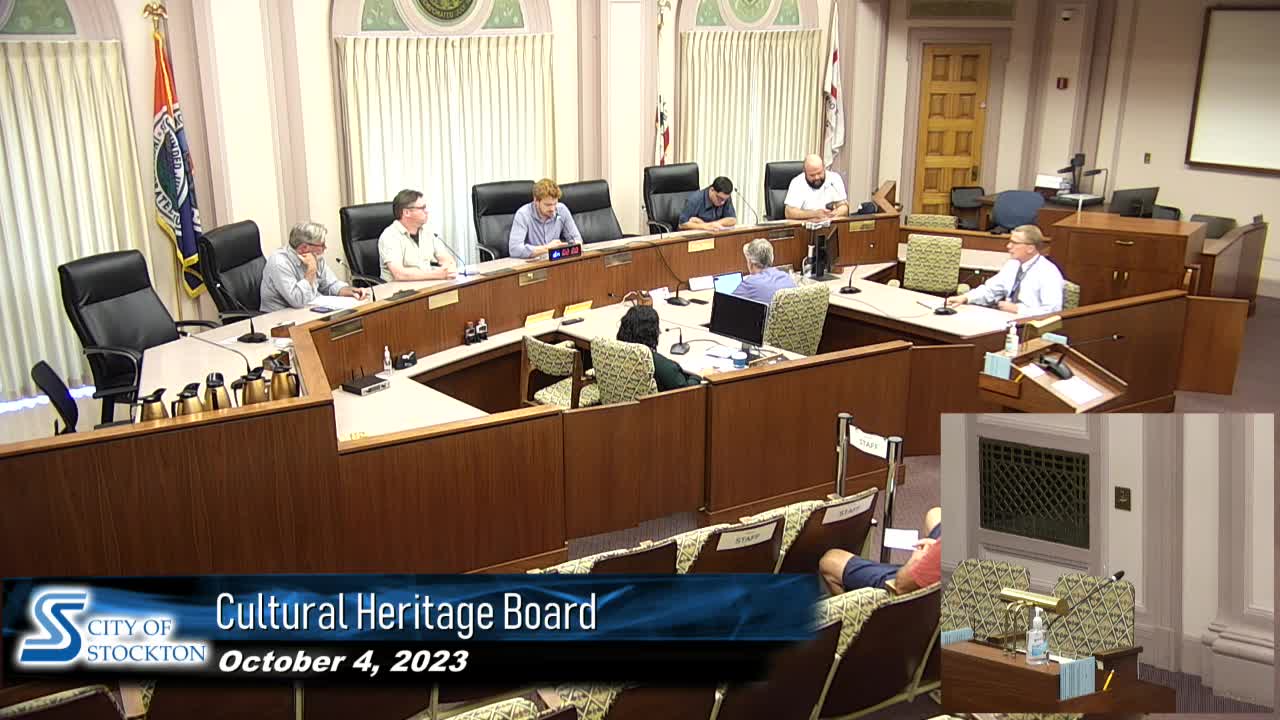
Board discussion began during the new-business agenda item on bylaws. After members debated institutional memory and efficiency, a motion was made to change the final sentence of section 1 to read that “no person shall serve as chairperson for more than 2 consecutive terms.” A second was recorded. The board held a roll-call vote and the motion passed; the roll call recorded approvals by Member Baldeon, Member Maxwell, Member Holmes, Vice Chair Groom and the presiding chair. The chair announced, “Motion passes.”
Supporters said a two-year option would help a chair gain traction on multi-meeting items after frequent absences or staff constraints. One member noted that the amendment would allow continuity without preventing the board from replacing an officer if members were dissatisfied.
City staff and counsel had noted earlier in the discussion that removing or changing the one-year restriction could be a straightforward fix to the bylaws language; the board proceeded to act on that direction. The board did not take separate action on any other bylaw sections in the same motion.
The change was adopted during the meeting; the board did a roll-call vote on the amendment during the same session. The transcript does not record any immediate requirement for further external approval or council ratification specifically tied to this bylaws amendment.