Sponsor Says Bill Would Ban Passing Lobbying and Political Spending to Ratepayers, Require Annual PUCO Disclosure

6647068 · October 22, 2025

Get AI-powered insights, summaries, and transcripts

Subscribe
AI-Generated Content: All content on this page was generated by AI to highlight key points from the meeting. For complete details and context, we recommend watching the full video. so we can fix them.

Summary

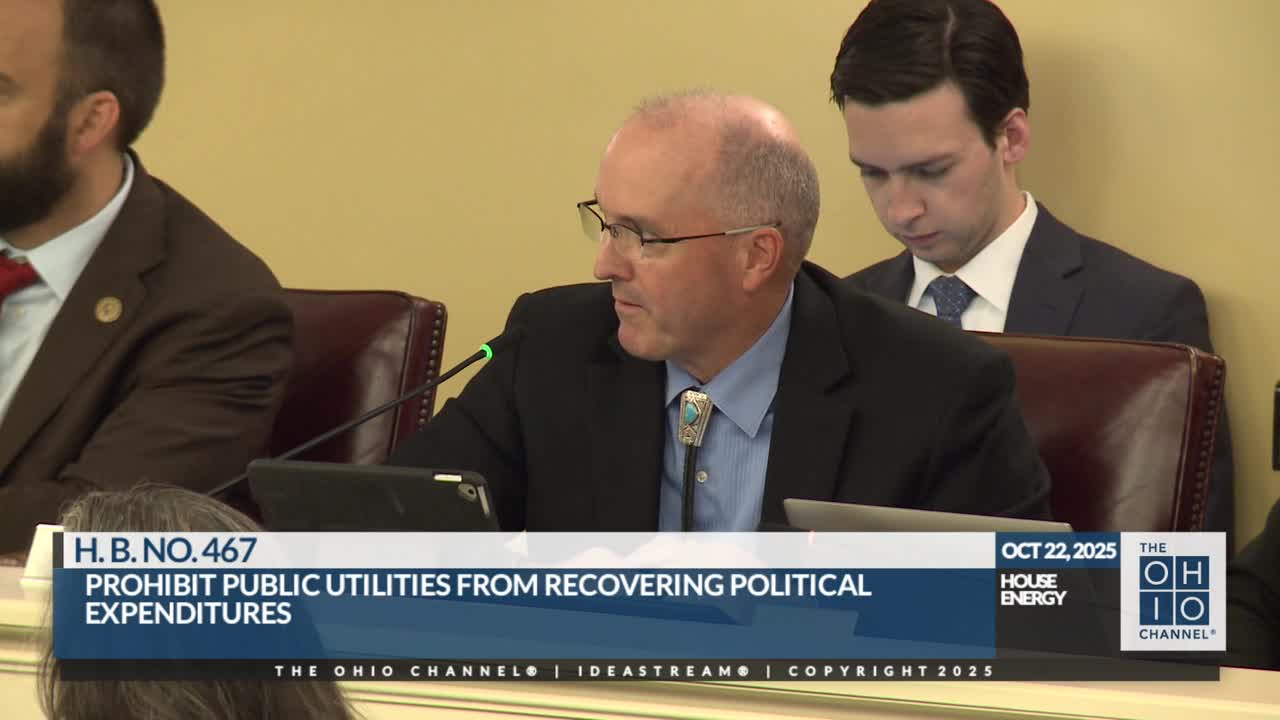
Representative Natalie McNally and joint sponsor Representative Raider presented House Bill 467 to the Ohio House Energy Committee. The bill would prohibit public utilities from passing political, lobbying or public-relations expenses to ratepayers, require annual itemized disclosure to PUCO, and impose fines and a restitution fund for ratepayers.

Representative Natalie McNally, sponsor of House Bill 467, told the Ohio House Energy Committee the bill would “ensure that Ohio ratepayers are not burdened with the cost of their public utility providers’ lobbying expenses” and would require itemized disclosure of political spending to the Public Utilities Commission of Ohio (PUCO).

“when folks pay their light bills to keep their lights on, they're not they're doing that to keep their lights on. They're not doing it to pay for lobbyists,” Representative McNally said during testimony. She described the bill as a consumer-transparency and consumer-protection measure rather than a prohibition on advocacy itself.

The bill would ban utilities from recovering lobbying expenses, political donations and public-relations campaign costs from ratepayers; require each public utility to submit an annual expenditure report to PUCO listing political expenditures, payees, amounts and purposes; and direct PUCO to post the reports publicly. McNally said reports would be submitted "not later than the January of each year" covering the preceding 12 months.

On enforcement, McNally said the bill would create a cost-recovery fund and strengthen penalties: PUCO fines would equal 20 times the amount charged to customers in violation, and collected fines could be routed to assist affected ratepayers, including through the percentage-of-income payment plan program.

Committee members raised questions and objections during the hearing. Representative Kishman asked what the average ratepayer would pay today for such fees; McNally said itemized fees on bills can exceed $50 on some customers’ statements but that exact figures vary and are often not transparent. Representative Klapenstein and others asked whether the bill unfairly portrayed or limited lobbying; McNally and Representative Raider said the bill does not prohibit lobbying or political activity, only who pays for it and that the requirement is to create a clear statutory line so ratepayers cannot be charged for political expenses.

Members discussed historical context. McNally referenced the fallout from House Bill 6 and the FirstEnergy scandal as background for stronger statutory guardrails; she also told the committee that five states have recently enacted laws restricting political costs on utility bills. The hearing included questions about whether the bill could be circumvented by accounting shifts; sponsors said profits and shareholder-side mechanisms exist and the bill is intended to prevent cost-shifting onto ratepayers.

No committee vote was taken; the bill received its first hearing and sponsors answered committee questions.