Get Full Government Meeting Transcripts, Videos, & Alerts Forever!
Get email alerts on the Community Outreach topic
No spam. Unsubscribe anytime.
Planning commissioners call for improved outreach after Supervisor Walton flags 4100 Third Street correspondence
Summary
After a supervisor's office raised concerns about how sponsor letters were characterized at last week's hearing on 4100 Third Street, the Planning Commission asked staff to improve how correspondence is summarized for commissioners and agreed to schedule a staff-led discussion about communications and Bayview Hunters Point outreach.
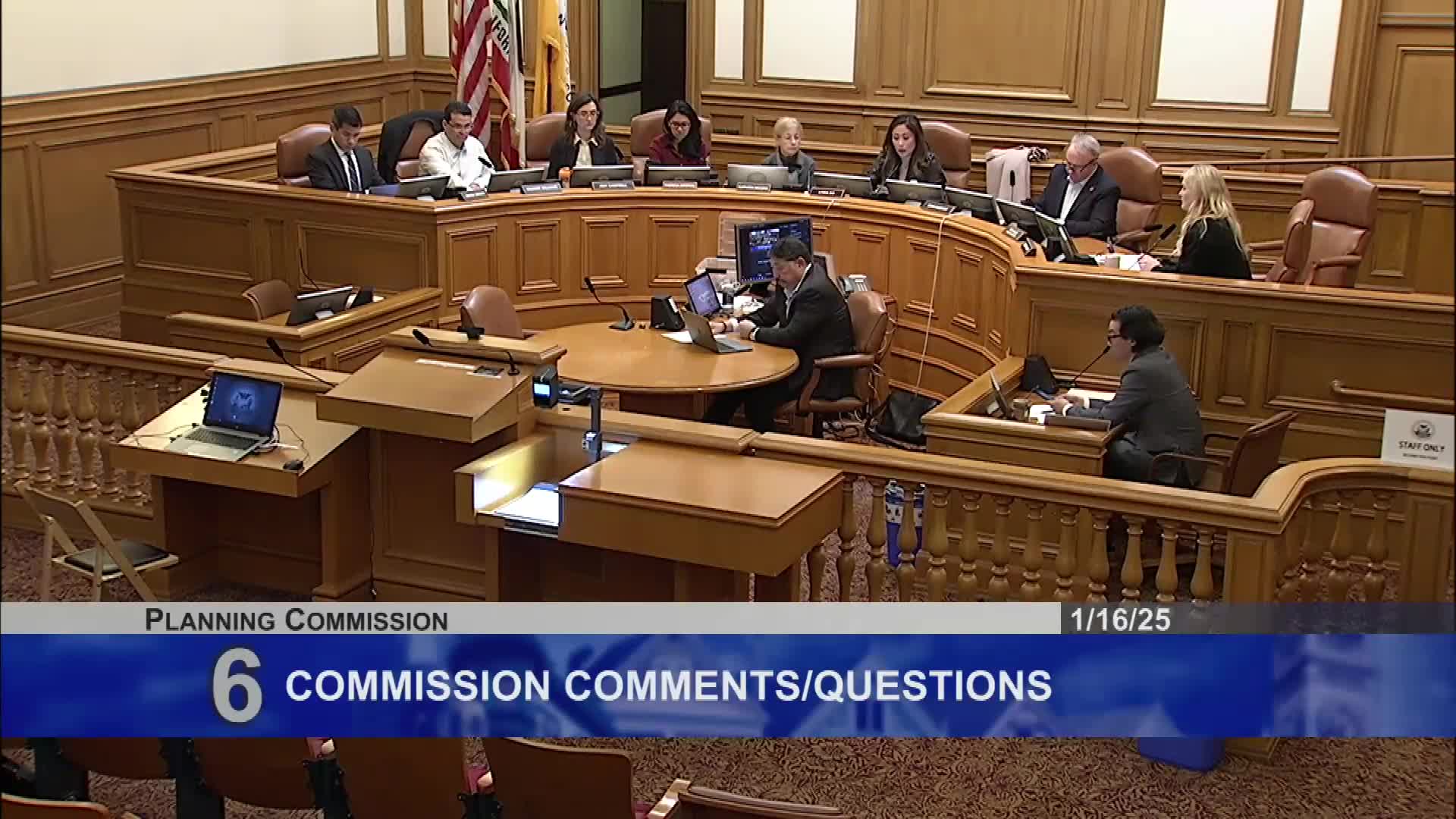
San Francisco Planning Commission members on Jan. 16 pressed planning staff to tighten protocols for handling correspondence after the Office of Supervisor Walton said project sponsor remarks at a recent hearing implied support for a conditional use authorization that staff say applied to a separate grant.
Planning Director Hillis told the commission that planning staff had not forwarded letters that were not about the 4100 Third Street project to the commissioners and that the letters in question referred to support for a grant, not the conditional use (CU) before the commission. Hillis said staff will adopt clearer methods for describing correspondence in future meeting packets so commissioners have time to review materials prior to hearings.
Why it matters: Commissioners said the distinction affected trust between the department, supervisors' offices and the community, especially in Bayview Hunters Point where residents and supervisors have raised concerns about outreach and representation. Several commissioners pressed staff for ways to avoid similar confusion in future project reviews.
What staff said
Planning Director Hillis said staff found the letters in the project file but did not transmit them to commissioners because they did not explicitly reference the project address. Hillis acknowledged that a sponsor's repeated oral references to prior letters at the earlier hearing could be misread by commissioners who had not seen a late-night submission and said staff would aim to include such materials earlier in packets.
"If you hadn't read that letter before walking into the commission chambers and you were just generally listening ... you might have drawn an inference or assumed that support for the grant equated to support for the CU," Hillis said, and he pledged process changes to avoid that outcome.
Commissioners' concerns and next steps
Commissioner Williams said the matter raised particular sensitivity because the project serves Bayview youth and the supervisor who raised the concern is African American, as are many Bayview residents. Williams asked what authority the commission has if it believes misleading information was submitted as part of an application.
Deputy City Attorney Austin Yang told commissioners the Planning Code (Section 303) provides a mechanism for the commission to request reconsideration or abatement of an approved conditional use if there is evidence of misleading information. That process would require a majority vote (four votes) to rehear the matter and, if warranted, could result in revocation or other action after a noticed hearing.
Commissioners and staff agreed on immediate steps: the commission expressed interest in a broader, non-project-specific discussion about how the department and the commission engage with Bayview Hunters Point, and staff said it would set up an informational item for a future hearing so the commission, department staff and supervisor's office could review communications protocols and community outreach resources. Staff also noted the Bayview Community Advisory Committee (CAC) had recently lost quorum and encouraged community members to apply to restore it.
Quotable
"We very much take to heart the clearly, the supervisor's office was very upset by those inferences that they felt were made," Planning Director Hillis said. "We're going to work to really make sure that we get those incorporated into the packet so you've got your full week to read everything, and have time to ask those questions." — Director Hillis
"If you feel there is enough evidence to suggest that there was misleading information presented as part of your review, you can, under Section 303 ... request that the matter be brought back before you by a majority vote of the commission." — Deputy City Attorney Austin Yang
What the commission will do next
Commissioners voiced support for an informational hearing focused on Bayview outreach and interagency communication, to include staff, the supervisor's office and community representatives. No formal rehearing of the 4100 Third Street CU was scheduled at the Jan. 16 meeting; a motion to rehear the CU was moved but not seconded during the session. Staff will return with a recommended agenda item to continue the discussion at a future meeting.
Proper names and references
The supervisors' office involved was identified in commission discussion as "Supervisor Walton's office." Commissioners referred to the Bayview Hunters Point Community Advisory Committee (Bayview CAC) and planning code Section 303 on conditional use abatement.
Ending
Commissioners said they view the episode as a learning opportunity and pressed staff to adopt clearer, earlier disclosure of letters and other correspondence in meeting packets so commissioners and the public have time to review materials before hearings.