Get Full Government Meeting Transcripts, Videos, & Alerts Forever!
Get email alerts on the Education Policy topic
No spam. Unsubscribe anytime.
Santa Cruz Valley USD board approves updates to technology, mandatory reporting, student-records and dress-code policies
Summary
The Santa Cruz Valley Unified School District governing board on Wednesday approved multiple policy updates affecting technology use, mandatory reporting, student records and the student code of conduct, including a requirement to make policies available online and clarifications on cell-phone and ID rules.
The Santa Cruz Valley Unified School District governing board approved a package of policy updates on technology use, mandatory reporting, student records and the student code of conduct during a regular meeting in Rio Rico on Wednesday.
The measures, each approved by voice vote, include a requirement to make district policies available to parents and guardians online, updated language restricting personal devices in classrooms, formal recognition of governing-board members as mandatory reporters under state statute, and changes to how student directory information is released.
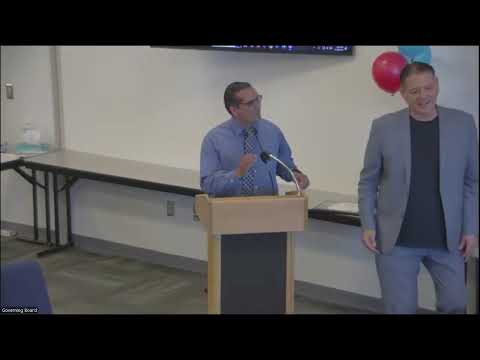
Superintendent Mr. Redugo presented the proposed changes, saying the updates were prompted in part by state law and by operational needs. "There is some policy updates due to legislation and other items that we need to update this evening," he said. He walked the board through individual policies including policy 1401 (parent/legal guardian rights), policy 303 (technology), policy 4204 (mandatory reporting) and policy 5303 (student records).
Why it matters: the changes affect everyday school operations — from how teachers and students use phones and district devices to who may access student directory information and how the district documents those disclosures. Board members repeatedly framed the updates as aligning district practice with state requirements and easing enforcement for school staff.
Key actions and details
- Policy 1-401 (Parent/legal-guardian rights in education): The board approved edited language requiring that policies be made accessible to parents and guardians via the district website or handbook. The motion passed by voice vote; the minutes record a voice "ayes have it," with no roll-call tally provided.
- Policy 3-403 (Technology / appropriate use): The board approved updated language restricting the use of personal wireless communication devices during the school day and directing that students use district-provided devices for instructional activities. The superintendent said the district will permit device use for educational purposes when the district-provided device is unavailable only in limited cases (for example, individualized education program accommodations). The board voted to approve the policy by voice vote.
- Policy 4204 (Mandatory reporting): The board accepted revisions clarifying that governing-board members are included as mandatory reporters under recent changes to Arizona law and reiterated training requirements for board members, substitutes and staff. The motion passed by voice vote.
- Policy 5303 (Student records / directory information): The board approved changes to reflect new requirements from the Arizona Department of Libraries and updated procedures for releasing directory data. The superintendent noted the district will require forms when providing student demographic information to outside agencies, and that school resource officers who are not district employees will not automatically receive access to student records without documented authorization. The board approved the policy by voice vote.
- Student code of conduct and dress code (policy 5305 / related procedures): Board members discussed and approved changes clarifying prohibited attire, headgear rules and a proposed requirement that students wear district IDs. The board and administrators debated whether to list explicitly prohibited garments (for example, tube tops) or keep broader language focusing on items that "present a health or safety risk or cause disruption." The board approved the code updates by voice vote.
Procedures and enforcement
Administrators told the board that the district will update handbooks and the online materials and will require electronic acknowledgments from families. The board directed staff to make the translated acknowledgments available in Spanish and English. District staff said they will provide substitutes with specific mandatory-reporting training and will continue to refine classroom enforcement practices for device and dress-code rules.
On cell phones specifically, board members agreed to tighten language so that classroom use of personal cell phones is not left to individual teachers' discretion. "If they have a device the district provides, they don't need a cell phone," one board member said during the discussion. The district will maintain procedures to allow students to contact parents in emergencies and will keep medical exceptions (for example, students who use phone apps to monitor diabetes) documented on file.
Law enforcement, student interviews and records
Staff also reviewed procedures for law-enforcement interviews, asking for 20 minutes' notice when possible and clarifying steps for staff when law enforcement seeks to question or remove a student. The board discussed past inconsistency in meetings with the sheriff's office and said it wants clearer, regular communication going forward.
Ending
All approved changes will be posted on the district website and reflected in the student handbook; administrators said they will return discipline and implementation matrices for board review in October.