Get Full Government Meeting Transcripts, Videos, & Alerts Forever!
Get email alerts on the Zoning topic
No spam. Unsubscribe anytime.
Planning commission recommends city council approve tighter definitions for A‑1/A‑2 agricultural zones
Summary
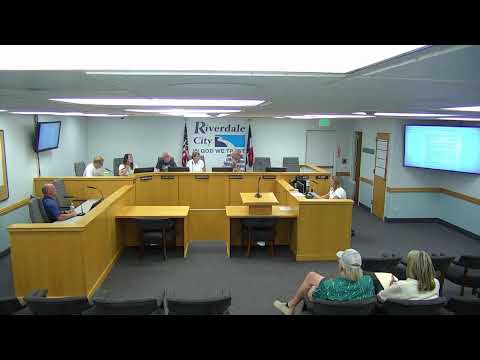
Riverdale Planning Commission members on Tuesday voted to forward a positive recommendation to the City Council for minor text amendments to Riverdale City Code, Title 10 Chapter 8, clarifying that the A‑1 and A‑2 agricultural zones prioritize noncommercial farming and single‑family homes and removing several non‑agricultural permitted uses.
Riverdale Planning Commission members on Tuesday voted to forward a positive recommendation to the City Council for minor text amendments to Riverdale City Code, Title 10 Chapter 8, that rework the stated purpose and permitted uses for the A‑1 and A‑2 agricultural zones.
Planner Mister Cooper presented the revisions at the public hearing, saying the key change is to clarify intent: “The A‑1 and A‑2 zones are intended to support noncommercial farming and keeping of farm animals and fowl alongside single family homes,” Cooper said, noting he struck language that previously described the zones as a catchall or a temporary holding classification for future urban development.
The amendments remove several uses the staff said are not consistent with an agricultural intent. Proposed deletions from the permitted‑use list include cemeteries, churches and similar permanent religious buildings, cluster subdivisions and guest homes. Cooper told the commission that guest homes were removed because the city currently lacks a code regulating short‑term rentals or similar uses, and that those uses would need separate regulation if they were to be allowed.
Cooper said the revision retains traditional farm‑related allowances — household‑scale animal keeping, corral/stable structures for private use, seasonal roadside fruit and vegetable sales, and home occupations — and that the A‑2 zone is intended to be less restrictive because of its larger minimum lot size (including allowing two‑family dwellings on two‑acre parcels). He said noncommercial farming is intended to mean small‑scale, family‑oriented agricultural activity rather than corporate farming.
Commissioners asked about likely existing nonconforming uses. Cooper said uses in place at the time of adoption would be grandfathered as nonconforming and could continue but would have to conform if they changed. He pointed to an existing LDS chapel inside an A‑1 area that the commission’s general plan already treats for rezoning to a civic/religious designation, saying that practice would continue for known cases.
Cooper also addressed whether state‑classed residential treatment facilities for persons with disabilities could locate in the zones. He said the state requires those uses be allowed where residential uses are permitted; they would need to meet the zone’s residential standards (setbacks, parking, landscaping) and therefore could apply in A‑1/A‑2 but commercial agricultural activity would be limited in A‑1.
After discussion the commission voted to forward a positive recommendation to the City Council with an instruction to add clarifying language on commercial agricultural uses in the A‑2 zone. The motion passed by roll call: Commissioners Nye, Herman, Noland, Paulson and Anderson voted yes.
Votes at a glance - Forward positive recommendation to City Council on amendments to Title 10 Chapter 8 (A‑1/A‑2 agricultural zones), with direction to add language clarifying commercial agricultural uses in A‑2: motion carried (Nye: yes; Herman: yes; Noland: yes; Paulson: yes; Anderson: yes). - Set public hearing on proposed amendments to Riverdale Municipal Code 10‑25‑5 (site plan review and approval) for June 24, 2025: motion carried (all in favor; mover not specified in record).
What the change would do If adopted by the Council, the proposed text would (as described by staff): - Replace the existing intent paragraph to emphasize small‑scale, noncommercial farming paired with single‑family dwellings; - Remove certain permitted and conditional uses staff consider incompatible with agricultural intent (notably cemeteries, churches, cluster/PRUD subdivisions, guest homes and several commercial or public facility uses); - Retain accessory and farm‑related uses (private stables, household animals, on‑site seasonal sales, home occupations) consistent with living on or operating a family farm; - Preserve existing uses as nonconforming where they currently exist, meaning they could continue in their present form but could not expand or change into disallowed uses without conforming to the new code.
Next steps Staff told the commission the commission’s positive recommendation will go to the City Council for final consideration at the council meeting next Tuesday. Cooper advised that staff will draft the additional A‑2 commercial‑agriculture language the commission requested before the council hearing.
Reporting note The commission’s public hearing record shows the proposed code changes in redline and strikeout in the packet; staff said the packet contains the full draft language. The City Council will hold the final hearing and vote at its next meeting.