Get Full Government Meeting Transcripts, Videos, & Alerts Forever!
Get email alerts on the Utilities Rate Increase topic
No spam. Unsubscribe anytime.
Advocates Urge Residents to Testify After AES Files Rate Increase That Would Add About $21 a Month
Summary
Citizens Action Coalition and local advocates told a HOPE Team meeting that AES filed a base rate increase that would raise the average customer bill about $21 a month; organizers urged residents to attend public field hearings and submit written comments to the Indiana utility regulator.
Citizens Action Coalition policy advocate Kelly told a June HOPE Team meeting that AES Energy recently filed a base rate increase that, according to the company, would raise the average customer's bill by about $21 a month.
"AES, at the beginning of last week, filed a base rate increase," Kelly said. "According to them, it will raise the average customer's bill by about $21 a month." She urged residents to submit written comments and to attend public field hearings the utility regulator will schedule.
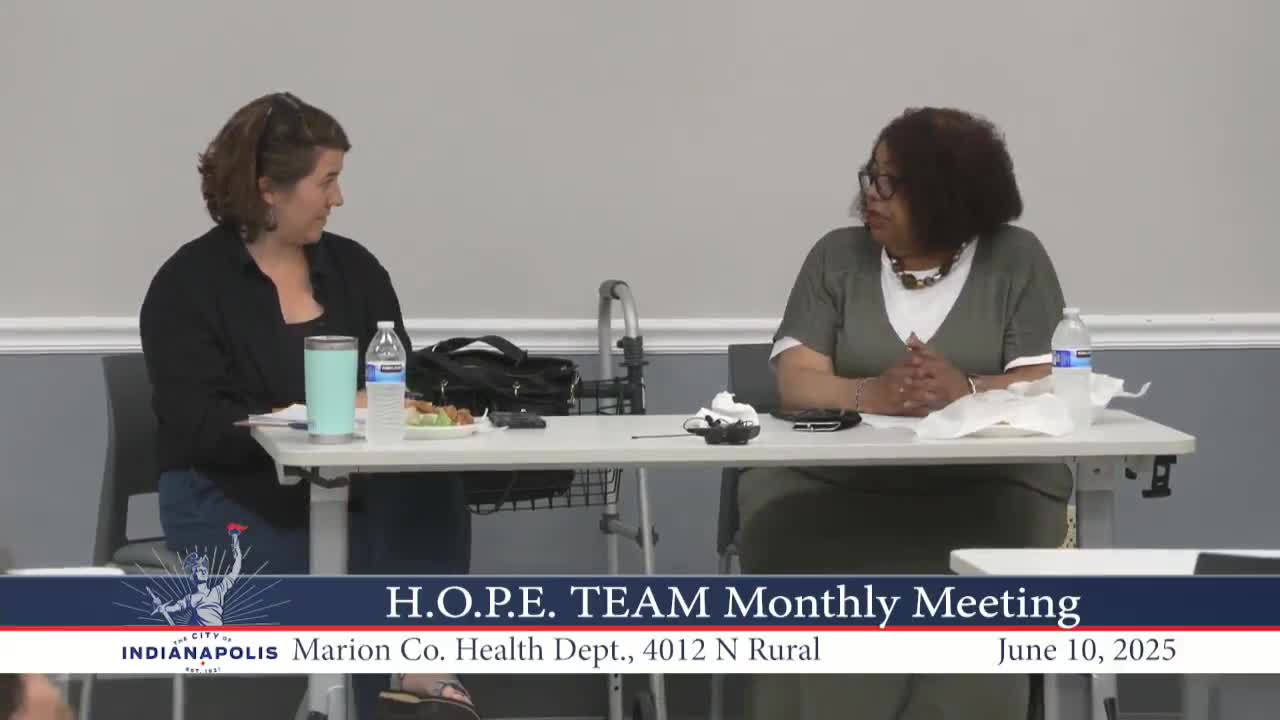
The meeting, convened by Kim Boyd, founder and president of the HOPE Team (Helping Others Prosper Economically), focused on how higher utility costs are affecting Marion County residents. Boyd and other attendees described large bills, disconnections and continuing concerns about utility billing problems that followed AES's transition to a new billing system in late 2023.
Why it matters: Local advocates said the filing comes on top of other increases and legislative changes that let utilities shift more costs to customers. Kelly said the company’s filing follows a string of utility requests across the state and legislative changes since 2013 that have, in her view, shifted costs from shareholders to ratepayers.
Kelly and other advocates also warned that customers face two separate cost pressures: the AES base-rate filing and another already-approved 6% increase scheduled for 2026. "With this $21 a month that AES is saying they want to raise bills. The caveat with that is there's already another 6% increase that will hit your bills in 2026 that have already been approved," Kelly said.
Advocates urged residents to use the regulatory process. Kelly said city councilors requested five public field hearings (one in each quadrant and one downtown) to broaden access; the Indiana Utility Regulatory Commission (IURC) and the Office of Utility Consumer Counselor (OUCC) were working on a schedule, and Kelly expected hearings in August but cautioned dates had not been formally announced.
Public testimony can be submitted in writing to the IURC, and field hearings give regulators a direct chance to hear how bills affect families, advocates said. Kelly noted a recent example in Evansville where six to seven hours of testimony included mayors, county officials and school superintendents describing community impacts.
Billing disputes and consumer help: Meeting participants described large, inaccurate bills tied to AES's 2023 billing-system transition. Kelly said that some overcharges have been settled but advised customers who believe they were overbilled to contact AES first and, if unresolved, the IURC consumer affairs division. "If you think that you have an inaccurately high bill, call AES and talk with them. And if you feel like AES doesn't take you seriously or you're unable to get the issue resolved with AES, you need to call the consumer affairs division at the Indiana Utility Regulatory Commission," she said.
Federal assistance and other programs: Kelly said the Low Income Home Energy Assistance Program (LIHEAP or EAP) remains an important short-term support but faces federal uncertainty and possible cuts. She described LIHEAP as a key tool for households but said nationwide administration and funding arrangements were in flux.
Advocacy and policy options: Speakers discussed policy options pursued elsewhere, including percentage-of-income payment plans (PIP). "That's called a percentage of income payment plan or PIP," Kelly said, noting Illinois and Ohio have programs capping energy costs at a percentage of household income. She said similar bills in Indiana have died without hearings. Advocates at the meeting also said some state bills that would restrict utilities from charging customers for lobbying or other costs failed to receive hearings.
Cost-shifting and new construction charges: Kelly told the meeting that the legislature passed measures allowing utilities to shift certain construction-related costs to customers, including for small modular reactors (SMRs) and other preconstruction costs. "They got a law passed that will allow utilities to charge us for preconstruction costs for small modular reactors," she said. She explained the policy known as "construction work in progress" (CWIP or QUIP) permits utilities to collect some construction costs on customers' bills before a plant produces electricity.
Energy efficiency and federal funding: Kelly and others highlighted energy-efficiency programs and federal funding available under the Inflation Reduction Act. She said the state Office of Energy Development posts information on rebate and heat-pump programs for homeowners and renters and encouraged residents to seek those resources as a way to reduce monthly bills.
Next steps: Advocates asked attendees to spread the word about filing comments and attending public hearings when dates are announced. Kelly said Citizens Action Coalition will provide flyers and updates and asked HOPE Team members to help distribute materials and encourage testimony.
For help: Meeting speakers recommended contacting AES for billing concerns, then the IURC consumer affairs division if unresolved. Advocates suggested following Citizens Action Coalition on social media or signing up for CAC mailing lists to receive hearing announcements and instructions for submitting testimony.
The HOPE Team meeting did not take a formal vote or adopt a resolution on the AES filing. Organizers said they will return next month with more updates and materials for residents who want to participate in the regulatory process.