Prescott Valley officials describe strategy to grow high‑wage jobs, retail and local supply chains
Loading...
Summary
Town economic development staff said they are targeting mid‑sized employers, building college‑to‑work pipelines and encouraging clustered retail growth; officials cited a local supplier expansion, a hospital land purchase and an expected Aldi site as developments to watch.
Prescott Valley economic development staff outlined a strategy on the PV in Focus podcast to attract mid‑sized, high‑wage employers, expand the town’s supplier base for the semiconductor industry and fill local retail gaps.
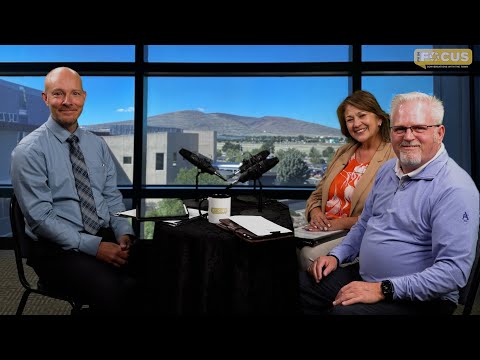
On the podcast, Ryan Judy, introduced in the program as deputy time manager, said the episode would focus on economic development and asked staff about the town’s priorities. Jamie Kerr, a member of Prescott Valley’s economic development team, described the town’s recruitment target and long‑term goals. "Economic development is the creation of high quality net new jobs for the community, sustainable jobs that will last for a couple of generations," Kerr said. "My target is anywhere from 25 to 50 employees per individual business." Kerr added that the town is pursuing companies likely to remain in the community for years rather than very large employers that could cause larger layoffs in a downturn.
Kerr said Prescott Valley is trying to plug into Arizona’s semiconductor supply chain. "We have TSMC, Intel, and up in Prescott, we have Pure Wafer," Kerr said, and noted local suppliers already serving those firms. He cited Granite Mountain, a local cabinet manufacturer, which Kerr said employs "about a 100, and this new fab will create probably 50 more." Kerr said those second‑ and third‑tier supplier jobs are priorities because they can locate near their customers.
Staff emphasized workforce pipeline partnerships. Kerr and other speakers pointed to Yavapai College and CTEC as training sources that allow companies to develop workers locally. "If we integrate them and put them through Yavapai College and the CTEC program, these companies can use that resource to build a model on how to use their equipment and train them," Kerr said. The podcast also identified local manufacturers such as Superior Industries, Ace Hardware distribution, PrintPAC and Yampa Precision Manufacturing as existing employers that have expanded and contribute to the town’s tax base.
Retail demand and site selection were a separate focus. Diana, a member of the economic development team who spoke on retail strategy, said family entertainment, additional grocery options in underserved areas, and specialty retail (for example, larger shoe retailers) are local gaps. Diana discussed the site selection logic used by chains: "It's the company that makes the selection... Many times what they go after is cluster competition," she said, describing why Aldi located next to existing anchors. On Aldi specifically, Diana said dirt will be moving "very, very soon" and that regional staff were targeting the end of the year for initial site activity, though she said no firm opening date was available.
Town staff described incentives and infrastructure work aimed at northern neighborhoods, including a new sewer line and construction sales tax rebates intended to make those areas more attractive to retailers. They cited Roberts Market and a new strip center as examples that drew restaurants and other businesses to a previously underserved corridor.
Speakers discussed the role of traffic and rooftops in retail site decisions. Diana said retailers look for residential rooftops and daily traffic: staff cited Highway 69 traffic of roughly 30,000–40,000 vehicles per day and Highway 89A around 20,000 cars per day as factors retailers consider.
Officials also mentioned health‑care expansion as part of economic growth. The podcast reported that Dignity Health recently purchased about 30 acres near its Prescott Valley campus for future expansion; staff said that long‑term hospital growth could attract specialists and additional medical professionals to town.
On community engagement, Diana urged residents to "support local" through the Shop Local 365 concept and said keeping spending in Prescott Valley’s ZIP code benefits town revenue. Kerr suggested enlisting retirees to mentor students and small businesses, and both staff encouraged residents to contact prospective retailers to express local demand.
The discussion remained informal: the podcast presented staff plans, local examples and timing estimates but did not record any formal town actions, votes or regulatory changes.