Get Full Government Meeting Transcripts, Videos, & Alerts Forever!
Get email alerts on the Education Budget topic
No spam. Unsubscribe anytime.
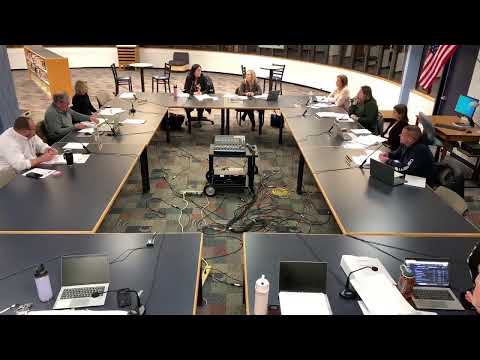
Cromwell School District approves 2025–26 education budget after line-item corrections; board questions Open Choice funding
Summary
The Cromwell School District board approved the proposed 2025–26 education budget at a special meeting after staff corrected detail-page errors. Board members asked about grant-funded positions, professional development costs and the districtOpen Choice program, which covers about 91 students.
The Cromwell School District board approved the proposed 2025'026 education budget at a special meeting after staff corrected detail-page errors and answered board questions about grant-funded positions and Open Choice reimbursements.
Board members and administrators said the cover-page totals did not change when a staff member discovered and corrected errors on underlying detail pages; the corrections aligned the detailed pages with previously presented summary totals. The board then voted to approve the budget by voice vote.
Board members pressed district administrators about several line items before the vote. Questions focused on positions listed as "grant-funded," the district-wide role of instructional coaches, professional development costs, and the financial impact of the Open Choice program.
A district staff member who reviewed the budget said the detail pages had included carryover items that were incorrectly rolled into some sub-totals; after removing those entries the cover-page totals matched figures presented at the prior meeting and no dollar amounts on the cover page changed. The board accepted those corrections and proceeded with discussion.
On staffing, the board sought clarity about positions shown as paid by grant funds. Administrators confirmed some administrator salaries and particular positions have historically been funded in part through grants because the work serves many students across schools; the district said grant restrictions permit that usage. Board members and staff agreed the labeling in the staffing pages needed to be clear so the public can see which positions are supported wholly or partly by grant revenue.
Members also asked whether the two coaching positions listed under certified personnel were specific to special education. Administrators said the coaches are districtwide, oversee multi-tiered systems of support (MTSS), run professional learning communities and engage in "coaching cycles" that include planning, classroom modeling or observation, and teacher reflection. Administrators said the time coaches spend directly with students varies by season and assignment.
On professional development, the board reviewed several items. One leadership coaching line was moved into the curriculum and instruction section and into central administration; that line fell from $25,000 in the current year to $20,000 in the proposed year, according to staff. The district also budgets for outside professional development, ACES-provided coaching and training (including restorative-practices training described by staff as a state mandate), and a teacher induction program that requires scoring of state modules submitted by first- and second-year teachers.
Board members asked where comparative per-pupil expenditure figures came from. Administrators said the district used publicly posted data from the Connecticut State Department of Education and offered to share a link to the state download that lists towns and per-pupil expenditure fields.
The Open Choice program prompted extended questioning. Staff said the district receives just over $1 million in Open Choice grant revenue for approximately 91 students, and noted the grant reimburses roughly $10,000 per student as shown on the grant page. The districtper-pupil expenditure figure cited in the presentation was about $20,000; staff highlighted that the two figures are not directly comparable because state reimbursements often include separate payments for transportation, special education services and paraprofessional support when applicable. Administrators told the board the district receives additional reimbursement for transportation and for special-education services tied to Open Choice students, and said the program remains financially beneficial overall when those factors are included.
Board members asked whether administration had completed a formal cost-effectiveness analysis that accounted for staffing, special-education costs, transportation, instructional materials, technology and any legal or tutoring costs tied to Open Choice students. Administration said a line-by-line classroom-seat analysis had been performed informally to identify where additional seats could be accommodated within existing class-size configurations and that reimbursements for certain specialized services are handled separately, but the district did not present a single consolidated cost-per-student study at the meeting.
After questions and additional clarifications, a board member moved to approve the 2025'026 education budget; a second was recorded and the motion carried by voice vote. No roll-call vote or itemized tally was recorded in the transcript.
In other business, the board heard a request for a volunteer representative to serve on the food-service contract negotiation team for a March 19 meeting. The board also discussed scheduling and a policy work item to be moved to the March meeting.
The special meeting concluded after roughly 22 minutes of discussion, and board leadership thanked administrators and staff for their work on the budget.